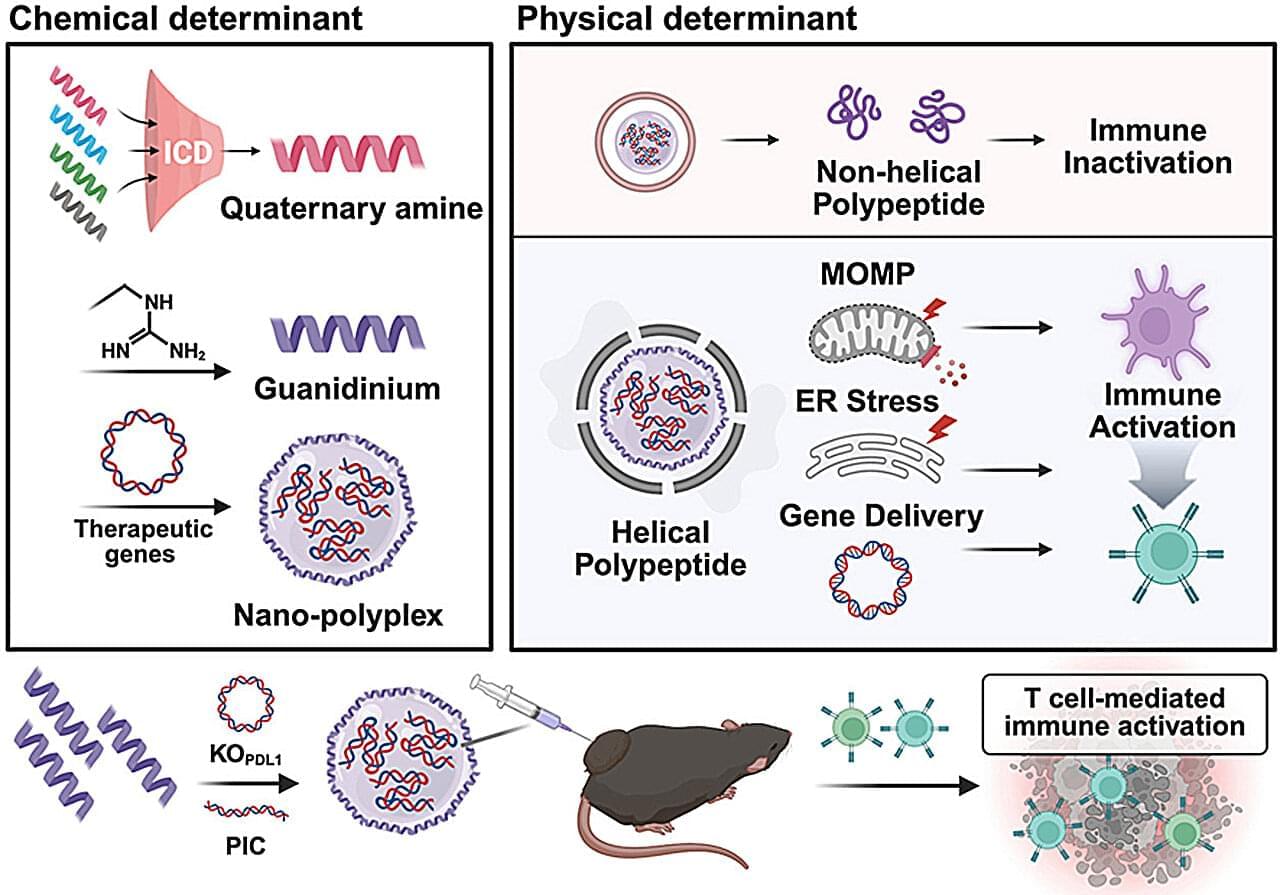
Cancer cells survive by hiding from the immune system’s surveillance. A KAIST research team has developed a new anticancer platform that makes cancer cells send out their own danger signals—prompting immune cells to attack—while simultaneously delivering gene therapy. The approach is expected to offer a new treatment strategy that combines cancer immunotherapy and gene therapy in a single nanoparticle.
Immunogenic cell death (ICD) is a process in which dying cancer cells send danger signals to nearby immune cells, prompting them to attack. A polypeptide is a polymer made of a long chain of amino acids.
A team led by Professor Yeu-Chun Kim from the KAIST Department of Chemical and Biomolecular Engineering developed a “helical polypeptide nanoparticle” platform that induces severe stress inside cancer cells to trigger immunogenic cell death while also delivering a range of gene therapeutics into the cells. The findings are published in the journal Biomaterials.