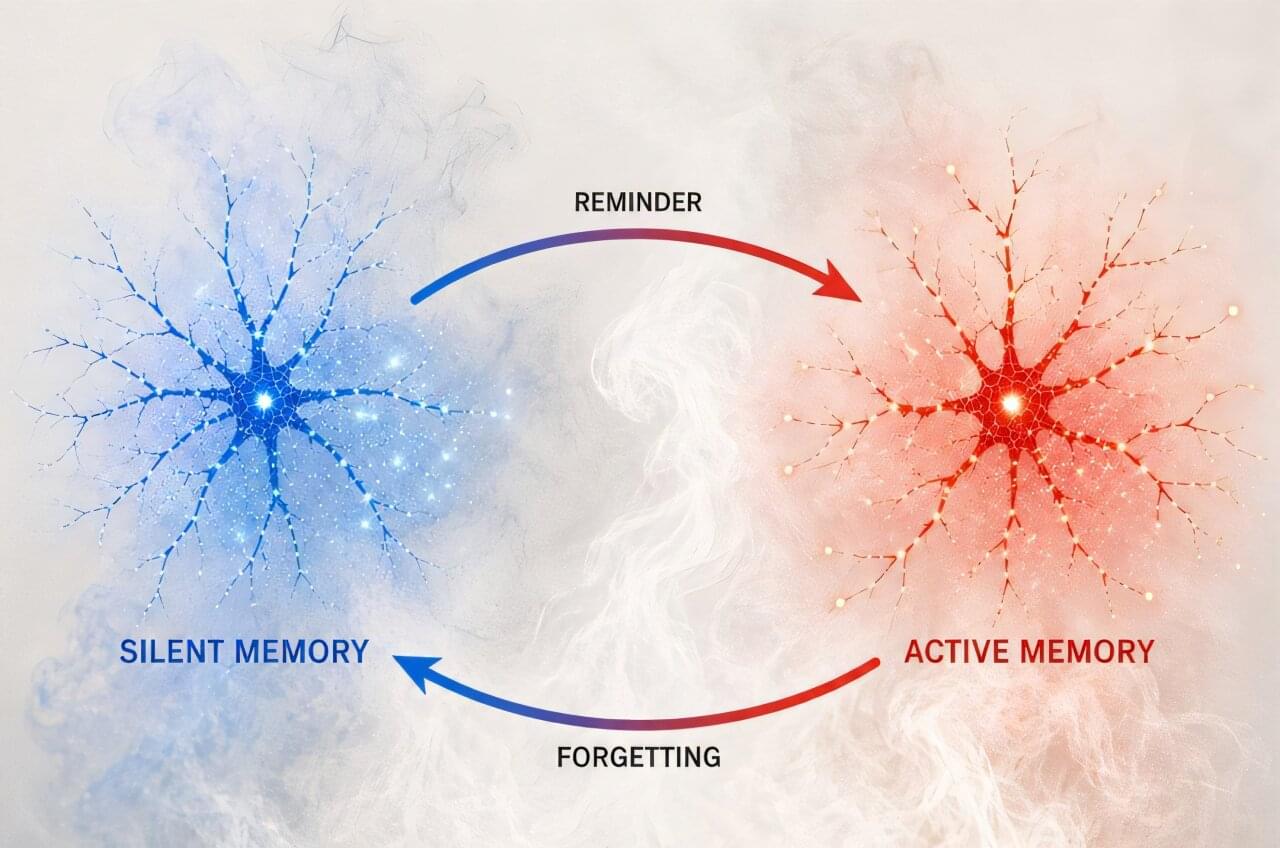
Memory is not a perfect record. Some memories fade, while others remain hidden and can be brought back by reminders. But reminders can also distort what is remembered, and scientists still know little about how the brain accurately recovers memories or forms false ones.
In a new study published in Nature Neuroscience, researchers in the group of Johannes Felsenberg trained fruit flies to associate one odor with mild electric shocks. Soon after training, the flies avoided that odor, but 24 hours later the learned avoidance had faded. When the researchers later exposed the flies to the same odor as a reminder, the aversive memory was recovered, and the flies avoided the odor again.
The reminder only worked when key parts of the original setting, such as the chamber’s texture and lighting, were unchanged, suggesting that the fly brain used both the odor and its context to bring the memory back.