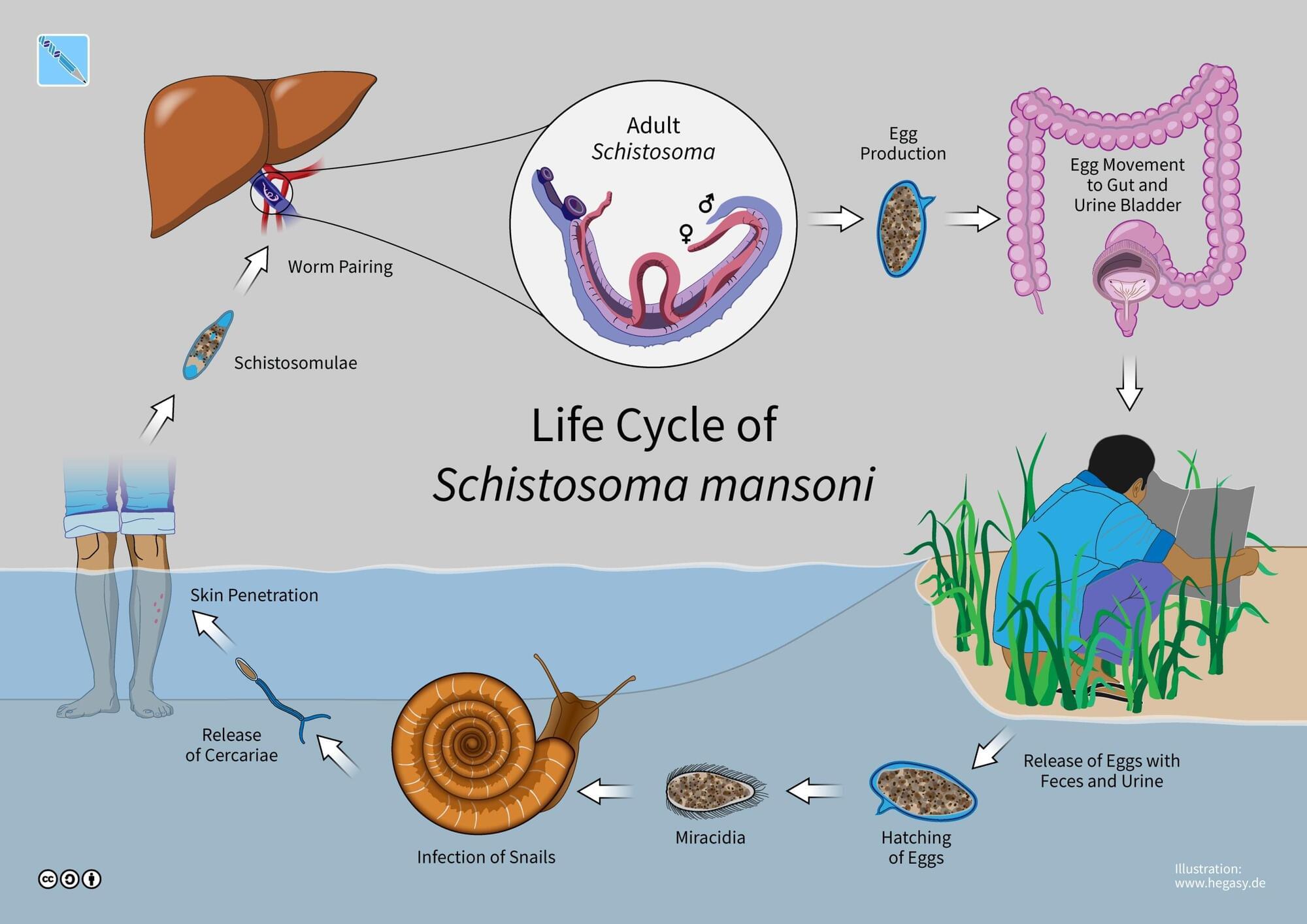
Scientists have identified genetic changes in wild populations of the parasitic worm that causes schistosomiasis that may reduce its response to praziquantel, the only available treatment. The study provides an early warning for disease control and elimination programs.
Researchers from the Wellcome Sanger Institute, the Royal Veterinary College (RVC) and Medical College of Wisconsin (MCW) led a large-scale international collaboration analyzing hundreds of Schistosoma mansoni genomes collected from people in several African and Caribbean countries. The study is the largest genomic analysis of the parasite from human infections to date.
Published in Science Advances, the findings highlight the need for ongoing genomic surveillance to help protect the long-term effectiveness of praziquantel.