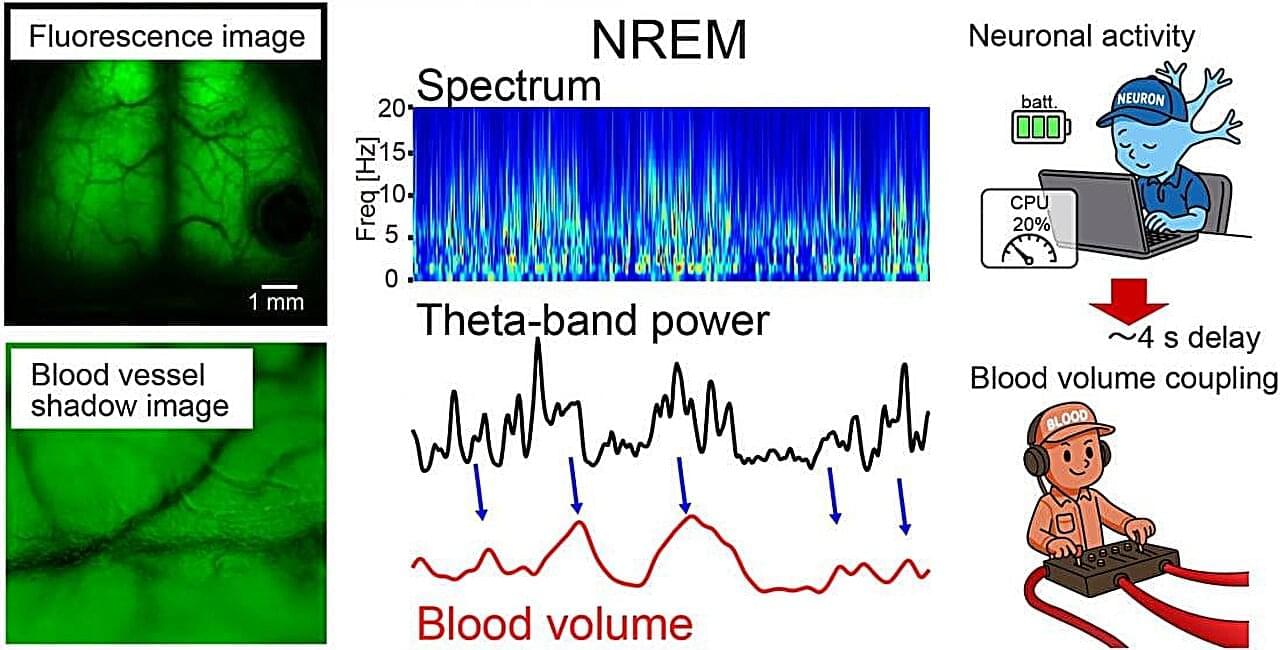
The brain demands a lot of energy compared with other organs. However, it can also make do when energy supplies are scarce, flexibly processing information using what is available. How the brain resourcefully allocates this limited energy across internal states remains a key question in neuroscience.
Sleep provides a useful window into answering this question. Although sleep is associated with rest, the brain remains highly active. This is especially true during rapid eye movement (REM) sleep, the stage closely linked to dreaming and memory processing. REM sleep is sometimes called “paradoxical sleep” because the body is largely still while the brain shows wake-like activity. Researchers at Tohoku University have now uncovered another paradox within REM sleep: While energy supply to the dreaming brain appears to rise, the energy molecule used directly by neurons falls. The findings are published in Communications Biology.
“Ever felt exhausted after a vivid dream?” asks Professor Ko Matsui of Tohoku University. “Sleep may appear peaceful, but the brain is highly active—especially when dreaming. We were intrigued by this paradox and wanted to look into the scientific basis behind why dreaming is somehow tiring.”