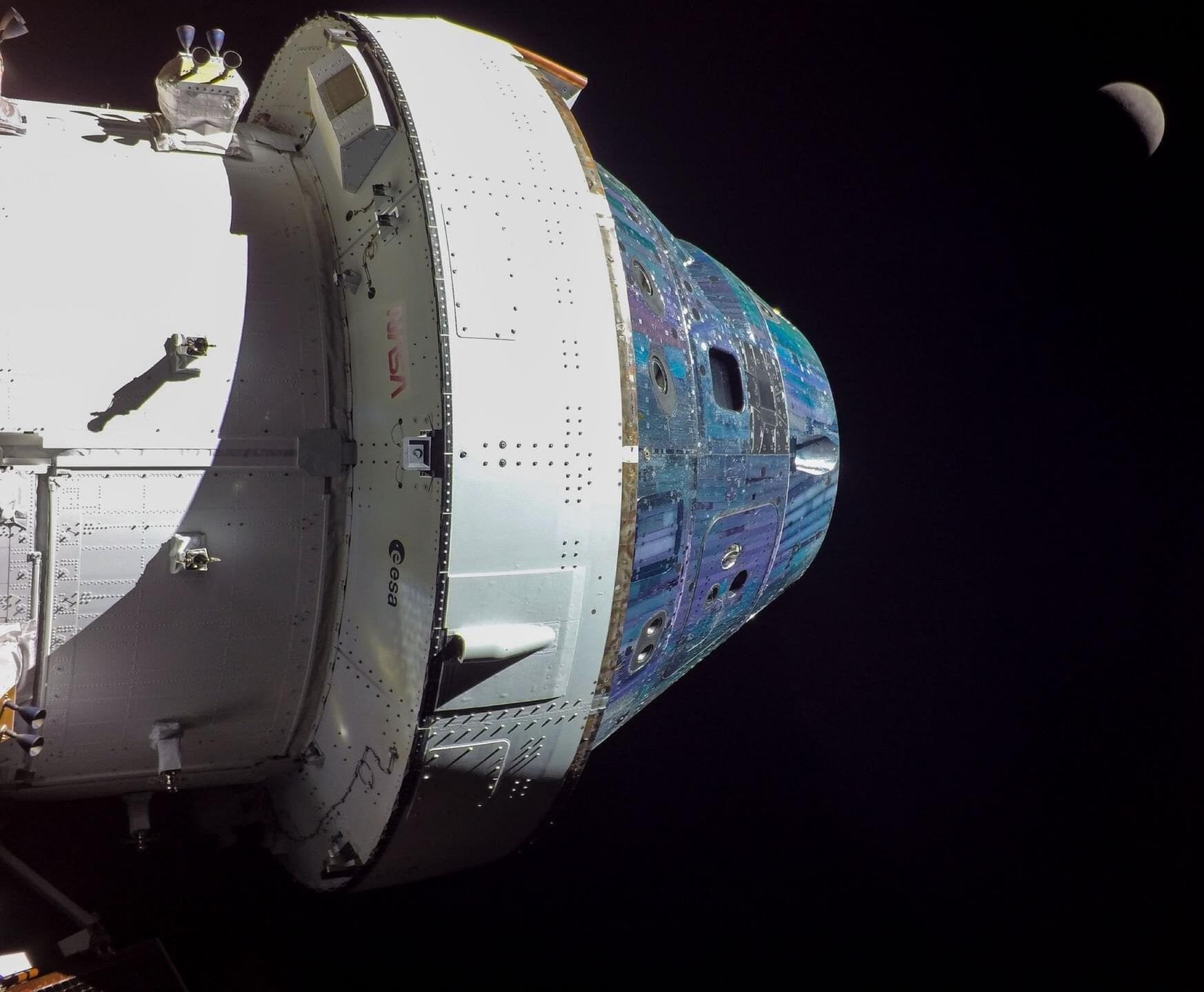
Shielding astronauts from the deadly radiation they face is a central challenge for any designer of a deep-space crewed mission. Even relatively low levels of exposure over long periods can lead to everything from central nervous system damage to cancer. But current solutions, such as passive water shells or active superconducting magnets, have their own limitations. To get around those, a new paper, available in preprint on arXiv by Valerio Parisi and a team of researchers from Italy and Germany, looks at the feasibility of using a permanent magnet (and its associated permanent magnetic field) to potentially block some of that radiation without the costs of competing technologies.
First, let’s look at the specific types of radiation that make it so dangerous. One is galactic cosmic rays (GCR), which are continuous, extremely good at getting through things, and seem to come from everywhere. Another is a ferocious burst of protons known as a solar particle event (SPE)—essentially a solar storm directed at a spacecraft. Each has the potential to devastate the biological payload of any deep-space craft—including living humans.
The most common way to protect against these radiation sources is simply putting a bunch of stuff between them and the fragile biological systems. This technique relies on low atomic number materials, such as aluminum, polyethylene or, in many cases, water (which is needed for many other biological functions on a deep-space craft). The problem with this technique is weight. The tyranny of the rocket equation means getting enough material into orbit to protect the crew from an SPE is extraordinarily expensive—and could amount to bringing tens of tonnes out of Earth’s gravity well.