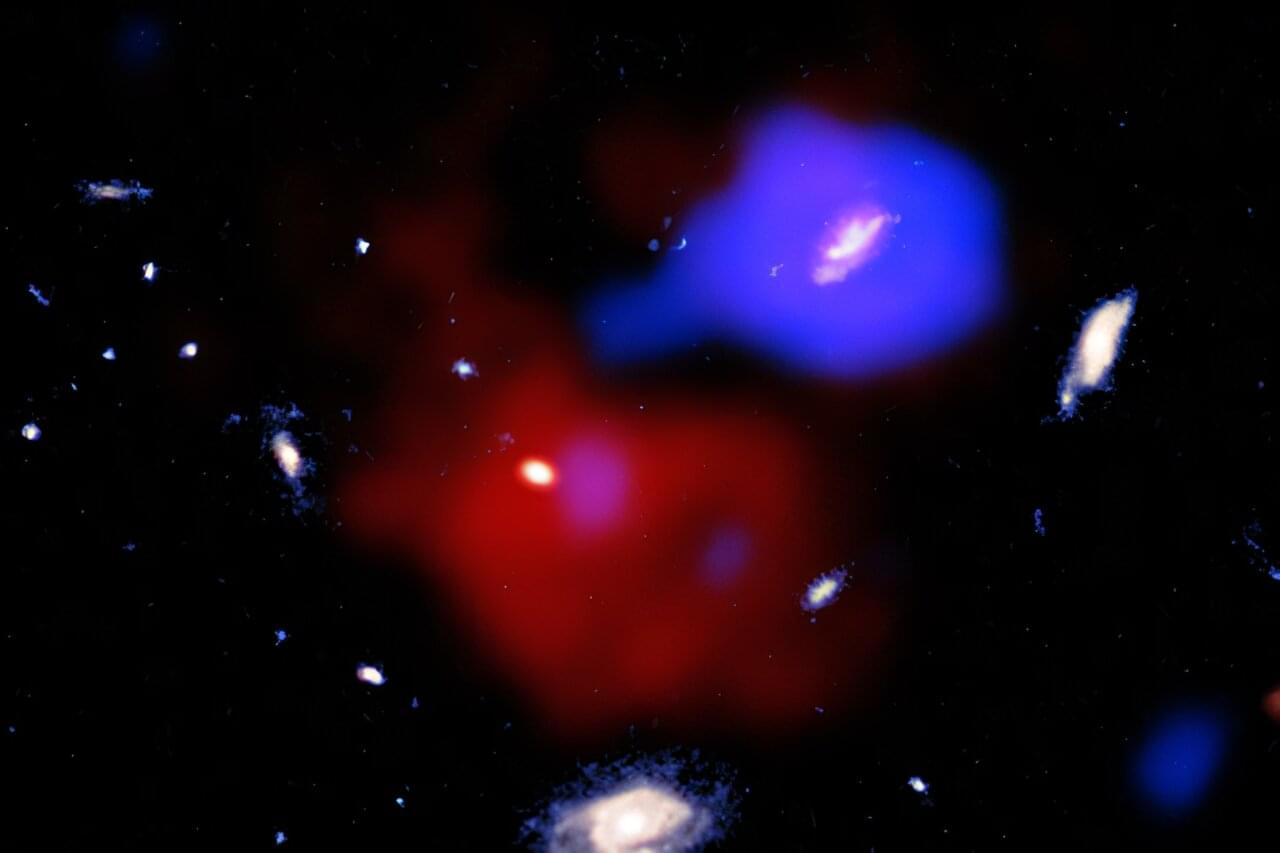
A black hole may be stirring a “pot” of gas containing a neighboring galaxy in the early universe, according to a new study published in Astronomy & Astrophysics that used observations from NASA’s Chandra X-ray Observatory. The galaxy slowly being “cooked” is named MQN01 J004131.9–493704, but astronomers have nicknamed it the “red potato” because of its appearance in images from NASA’s James Webb Space Telescope.
The red potato galaxy is located about 11.7 billion light-years from Earth at an intersection where gigantic web-like structures of galaxies and gas meet. Astronomers targeted this area with Webb because they knew it contained one of the heaviest concentrations of galaxies and growing supermassive black holes yet identified in the early universe.