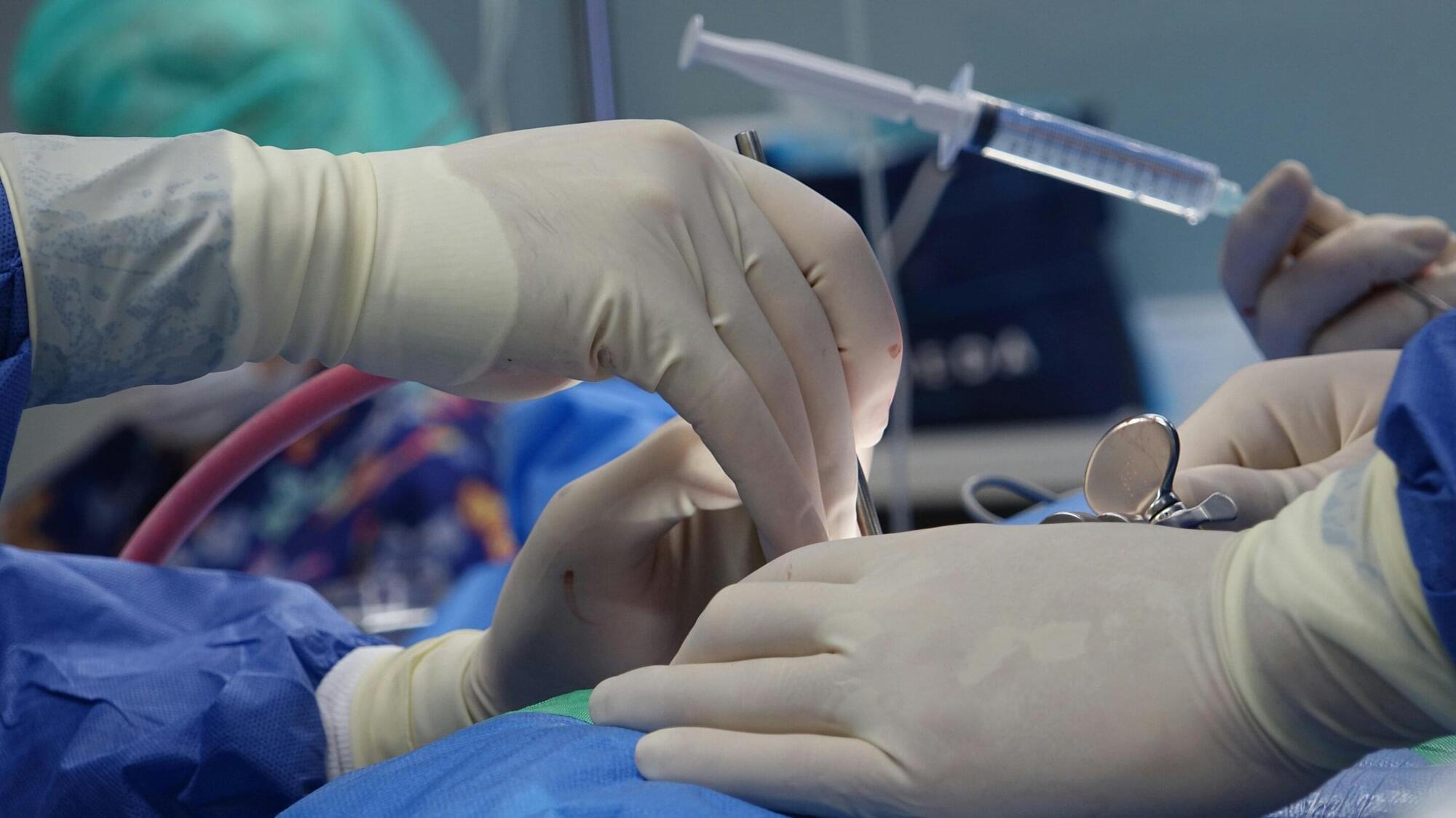
The movements of a surgeon in a procedure—called “surgical gestures”—can be used to predict patient recovery, according to Cedars-Sinai investigators. Their findings, published in npj Digital Medicine, suggest this technology could help surgeons refine their techniques and improve patient outcomes.
The investigators have developed an AI system that analyzes surgeons’ techniques during prostate cancer surgery, helping identify the surgical movements associated with the best patient outcomes while also predicting whether patients are likely to regain sexual function.
The AI system, called Frame-to-Outcome (F2O), analyzes video recorded during the nerve-sparing portion of robot-assisted prostate surgery, when surgeons work to preserve the nerves responsible for sexual function. Rather than relying on experts to manually evaluate each procedure, the system automatically identifies patterns in a surgeon’s movements—called “surgical gestures”—and uses them to predict patient recovery.