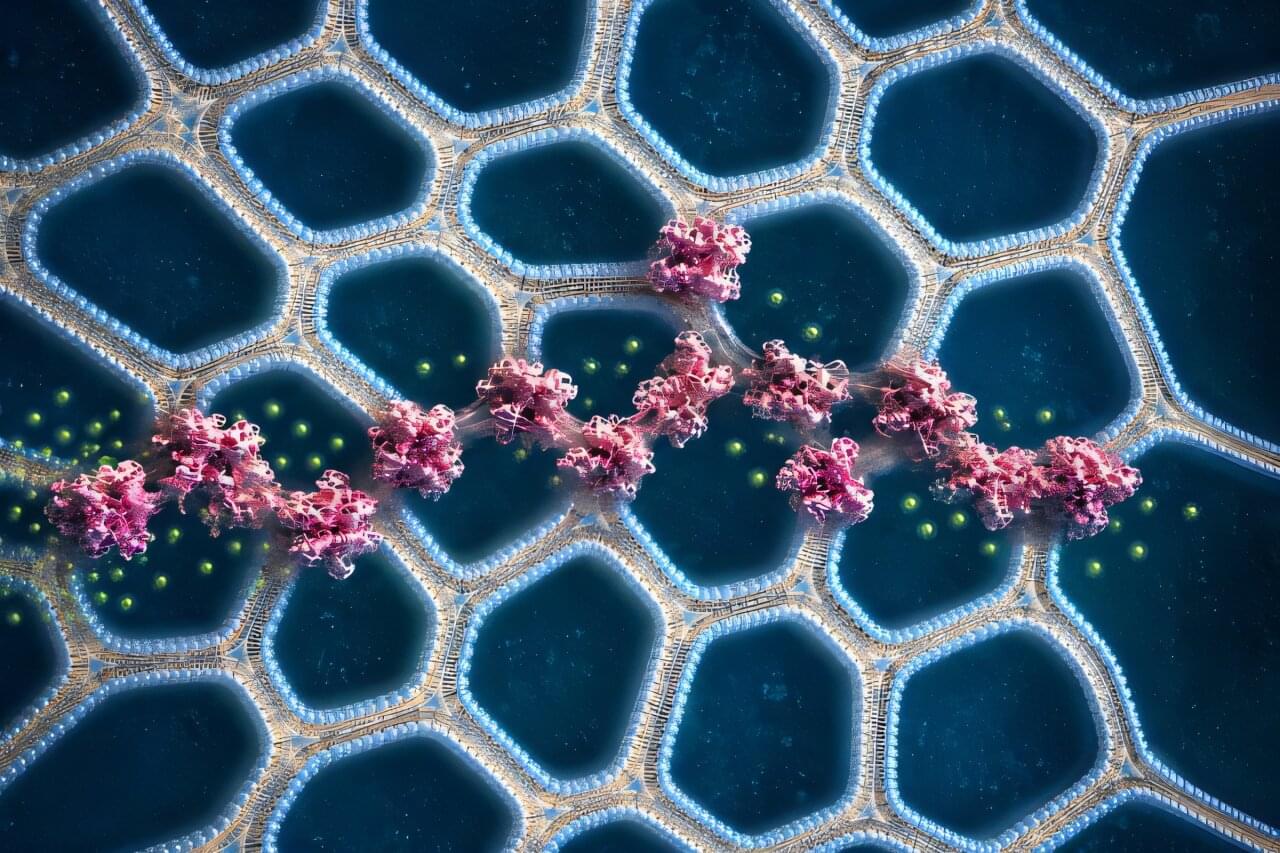
A new type of 3D-printable material developed by researchers at The University of Texas at Austin mimics human tissue’s ability to sort and filter, allowing certain molecules to pass through while keeping others out. This broad functionality means the material can be used in a variety of applications across medicine, water and robotics.
Current methods for building small tissue-like materials don’t scale to sizes that can make applications possible, the researchers say. The team overcame these issues of speed and scalability by jamming billions of tiny water droplets tightly together using simple mixing and centrifuge techniques to form large, tissue-like materials in just a few minutes. Each droplet is separated by a thin membrane, allowing the membranes to link up, similar to cell organization in human tissue.
“Tissues can separate and transport ions and molecules; that’s how our kidneys or intestines work, taking only what they need and leaving the rest behind,” said Manish Kumar, professor in the Cockrell School of Engineering’s Fariborz Maseeh Department of Civil, Architectural and Environmental Engineering and the McKetta Department of Chemical Engineering. This work was recently published in Nature Materials.