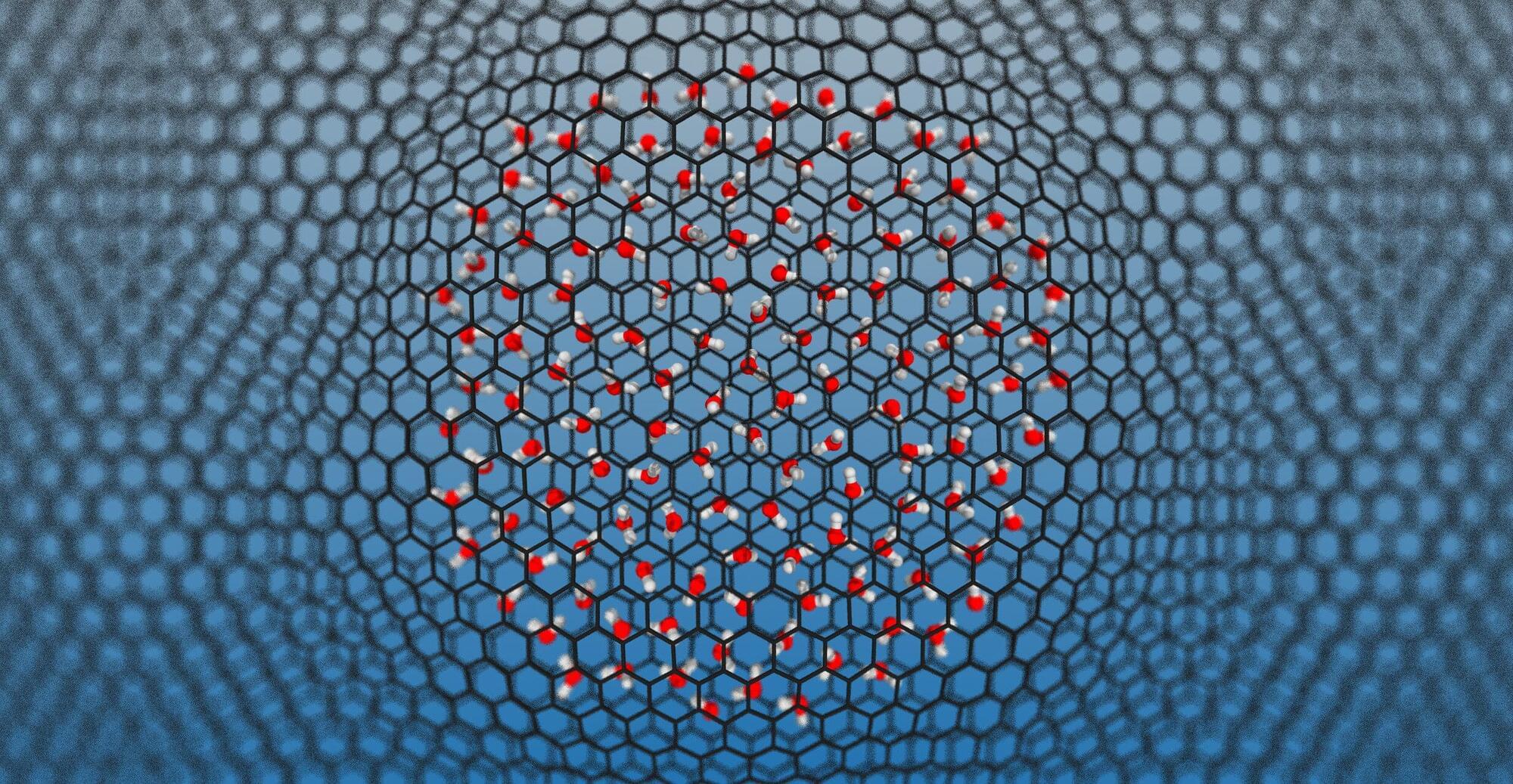
Water is the most studied molecule on Earth, yet a surprisingly basic question has gone unanswered for decades: When water is squeezed into gaps just a few molecules wide—as happens inside nanoscale pores, membranes and biological channels—does it become more or less chemically reactive?
This matters because water’s most fundamental chemical property is its ability to split into two charged species, H₃O⁺ (the hydronium ion) and OH⁻ (the hydroxide ion). This reaction defines the pH, a measure of how acidic or alkaline (basic) a solution is, and underpins all of acid-base chemistry, from how enzymes work in your cells to how electrodes function in batteries.
Through this research, the scientists wanted to understand whether (and how) confining water to nanometer-scale spaces affects this behavior.