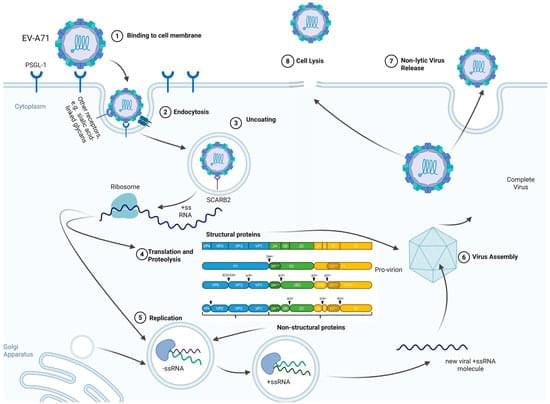
Enterovirus A71 (EV-A71) is a critical global pathogen, primarily causing Hand-Foot-and-Mouth Disease (HFMD) but frequently leading to severe neurological complications, including fatal neurogenic pulmonary edema (PE). This review elucidates the complex interplay between viral pathogenesis and the host immune response. EV-A71 utilizes receptors like SCARB2 and PSGL-1 for entry, while its proteases (2Apro, 3Cpro) efficiently evade innate immunity by cleaving key signaling adaptors (MAVS, TRIF), suppressing Type I IFN response. Critical to disease progression is the age-dependent vulnerability in infants and the subsequent shift toward immunopathology. Severe disease is driven by a systemic cytokine storm and T cell dysregulation, characterized by a loss of control from Treg cells and a profound Th17/Treg imbalance, resulting in high levels of pathogenic cytokines (e.g., IL-17A, IFN-γ).