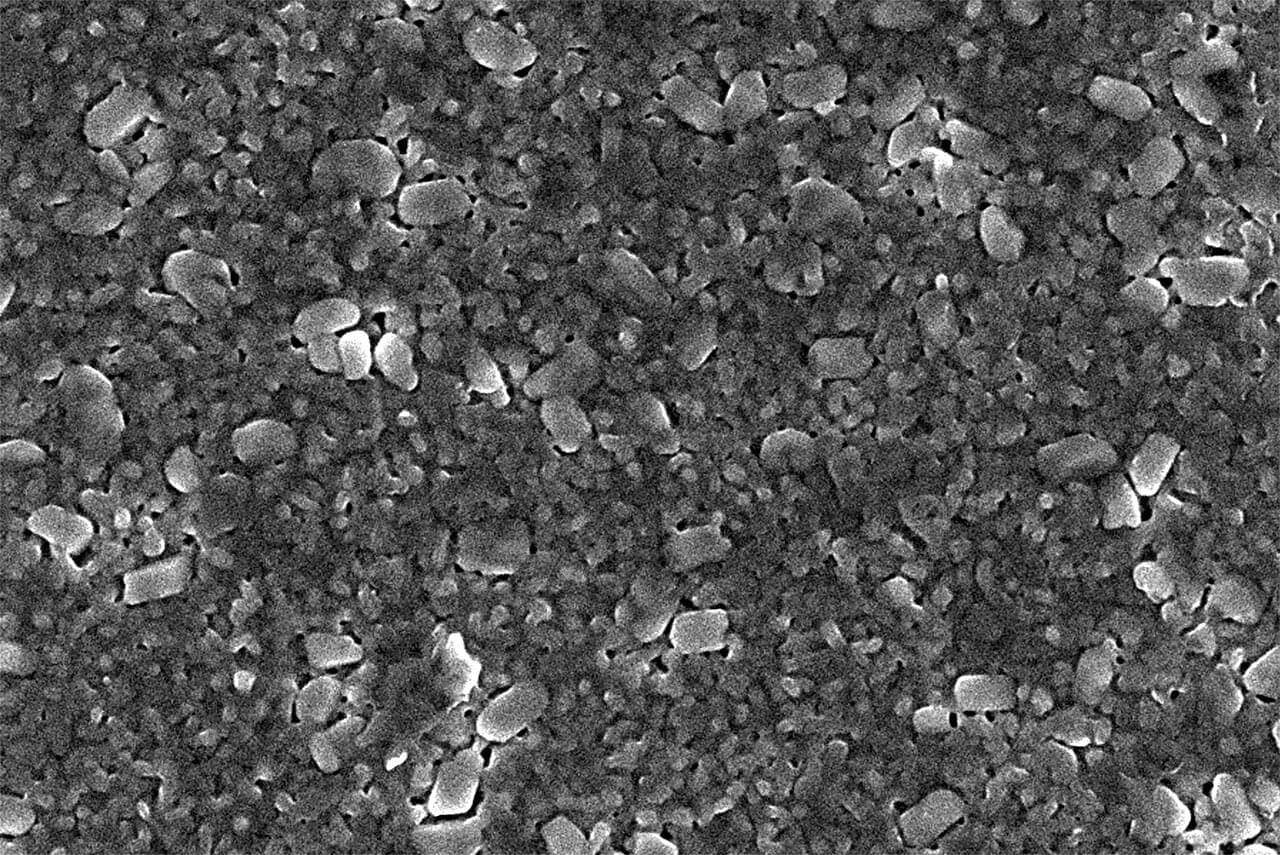
Chiral 2D metal halide perovskites (MHPs) are among the most promising materials for future technologies that exploit the spin of electrons in spin-based optoelectronics, or spintronics, but getting them to perform consistently has proven difficult. Now scientists at Lawrence Berkeley National Laboratory (Berkeley Lab) have developed a data-driven approach that identifies and models key synthesis parameters to optimize their performance.
The difficulty stems in part from the sheer number of factors involved in making these materials. Although chiral 2D MHPs are low-cost and easy to fabricate as thin films, optimizing those films for optoelectronic technologies such as light-emitting diodes (LEDs) or photodetectors is a formidable challenge. Advanced spin-based optoelectronics use circularly polarized light to encode and transmit data. For several years, scientists have searched for ways to enhance these materials’ selectivity for circularly polarized light, but progress has been hampered by a reproducibility problem: Reported performance values for nominally the same material vary by more than two orders of magnitude across different laboratories.
A new study published in the journal Matter offers a roadmap for solving that problem. Scientist Carolin Sutter-Fella and her team at Berkeley Lab’s Molecular Foundry show how systematically tuning several “knobs” in the fabrication process—such as solvent choice, annealing temperature and film thickness—can reliably improve the material’s chiroptical properties, or its ability to interact with circularly polarized light.