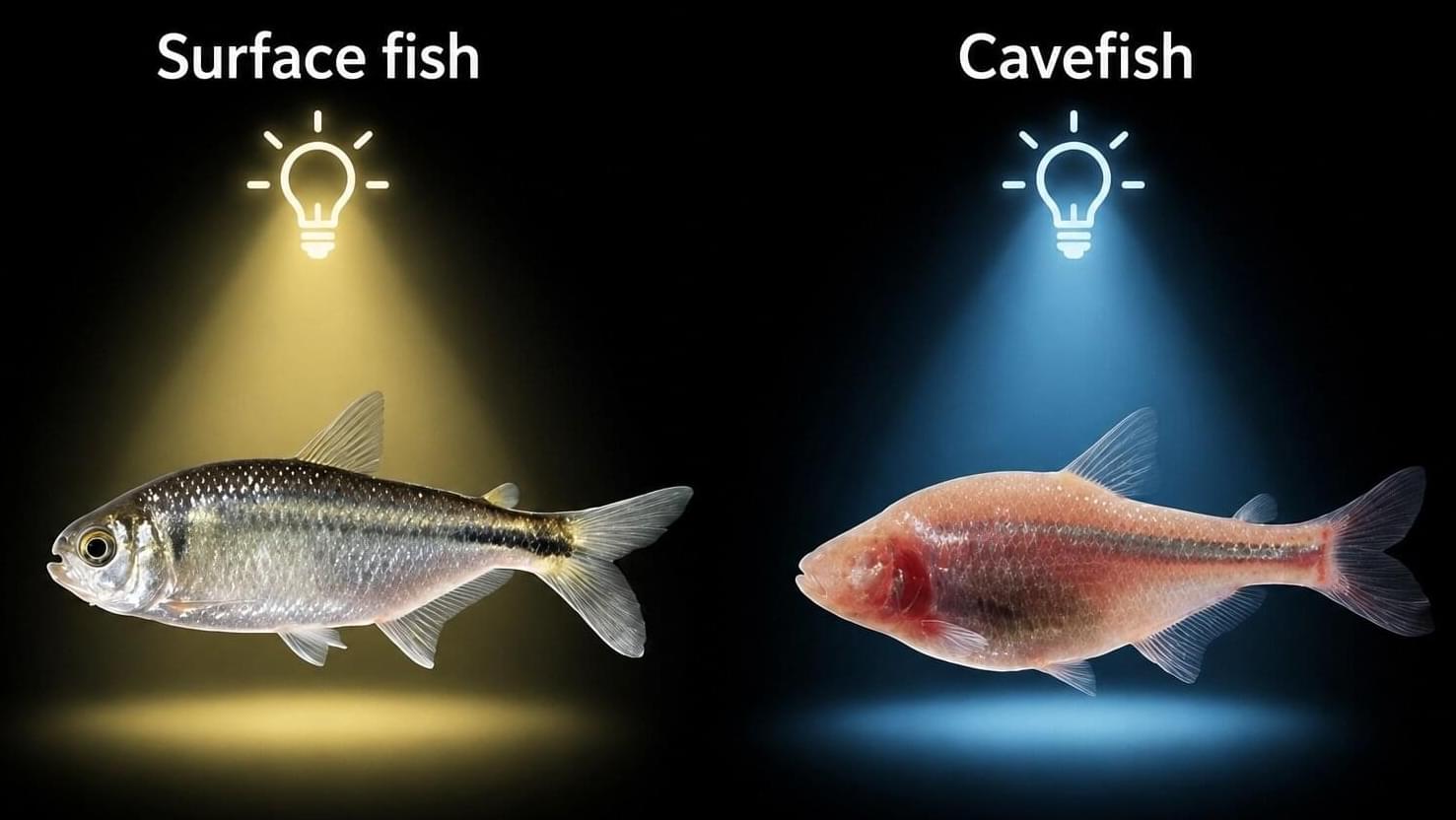
Deep within the dark caves of northeastern Mexico lives a fish that has spent hundreds of thousands of years adapting to a world without light. The blind Mexican cavefish (Astyanax mexicanus) has evolved in perpetual darkness, losing its eyes and pigmentation while developing remarkable adaptations that help it survive in nutrient-poor environments.
Now, scientists are using this extraordinary species to uncover how evolution rewires the brain and shapes behavior. Because Astyanax exists both as sighted surface fish and as more than 30 independently evolved cave populations, researchers can directly compare how life in darkness alters sensory systems, neural circuits and behavior.
With new genetic tools and advanced imaging technologies that allow scientists to watch brain activity in real time, this unique fish is providing unprecedented insights into how animals adapt to extreme environments—and how evolution transforms the brain itself.