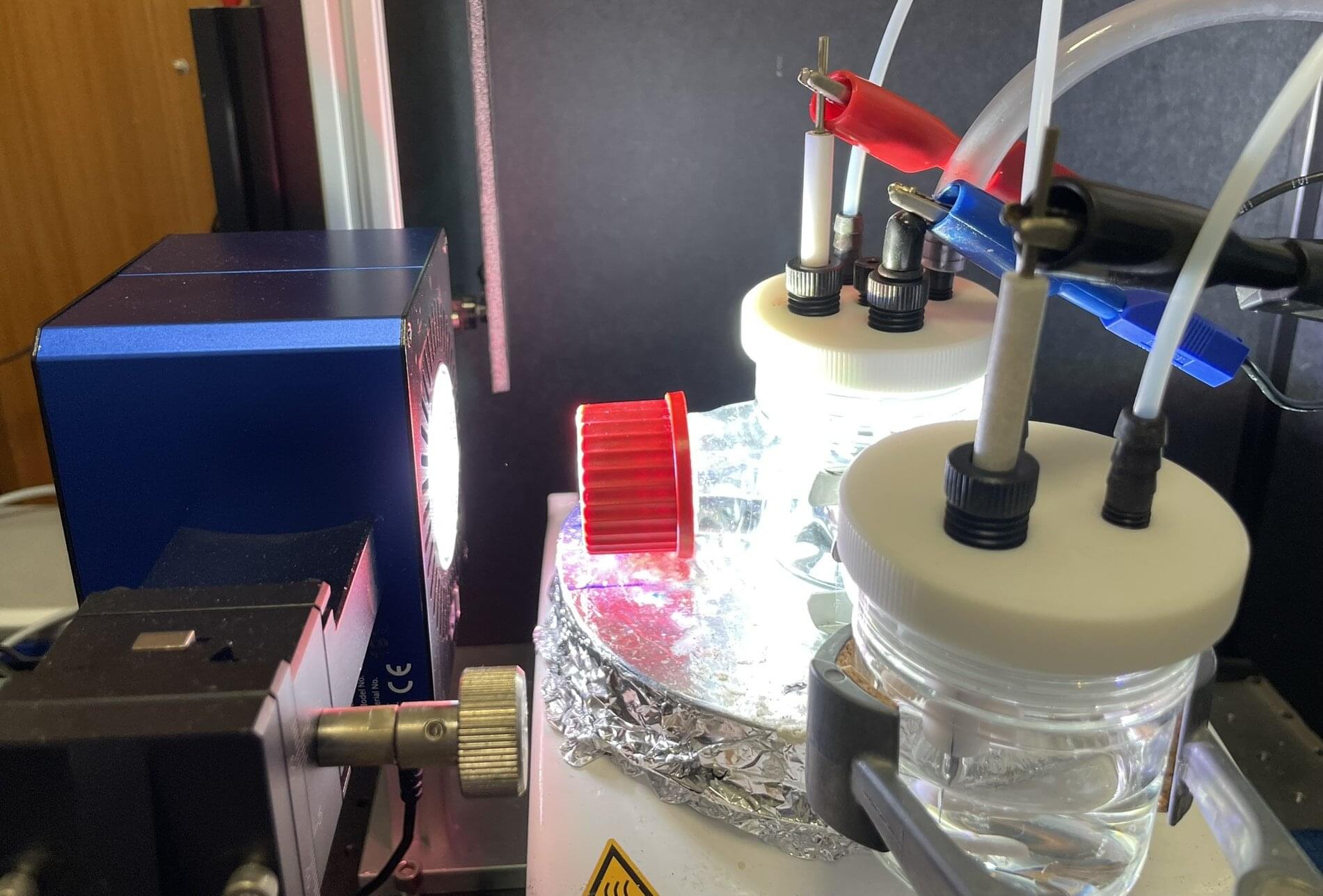
Researchers have developed a solar-driven catalyst material that harnesses the energy of a single photon to reduce carbon dioxide and oxidize organic waste at the same time, producing valuable chemicals in both reactions.
Scientists at the University of Nottingham have created two catalyst materials that, when coupled together within the same reactor, can simultaneously convert carbon dioxide (CO₂) into a valuable chemical and biomass-derived feedstock into building blocks for sustainable plastics, driven solely by solar light. The research has been published in Communications Materials.
A bias-free photoelectrochemical (PEC) reactor consists of two connected compartments, each containing the newly developed catalysts. When sunlight shines on one compartment, each photon drives the oxidation of a biowaste molecule. The electron released during this process is then transferred to the second compartment, where it reduces CO₂ to formate.