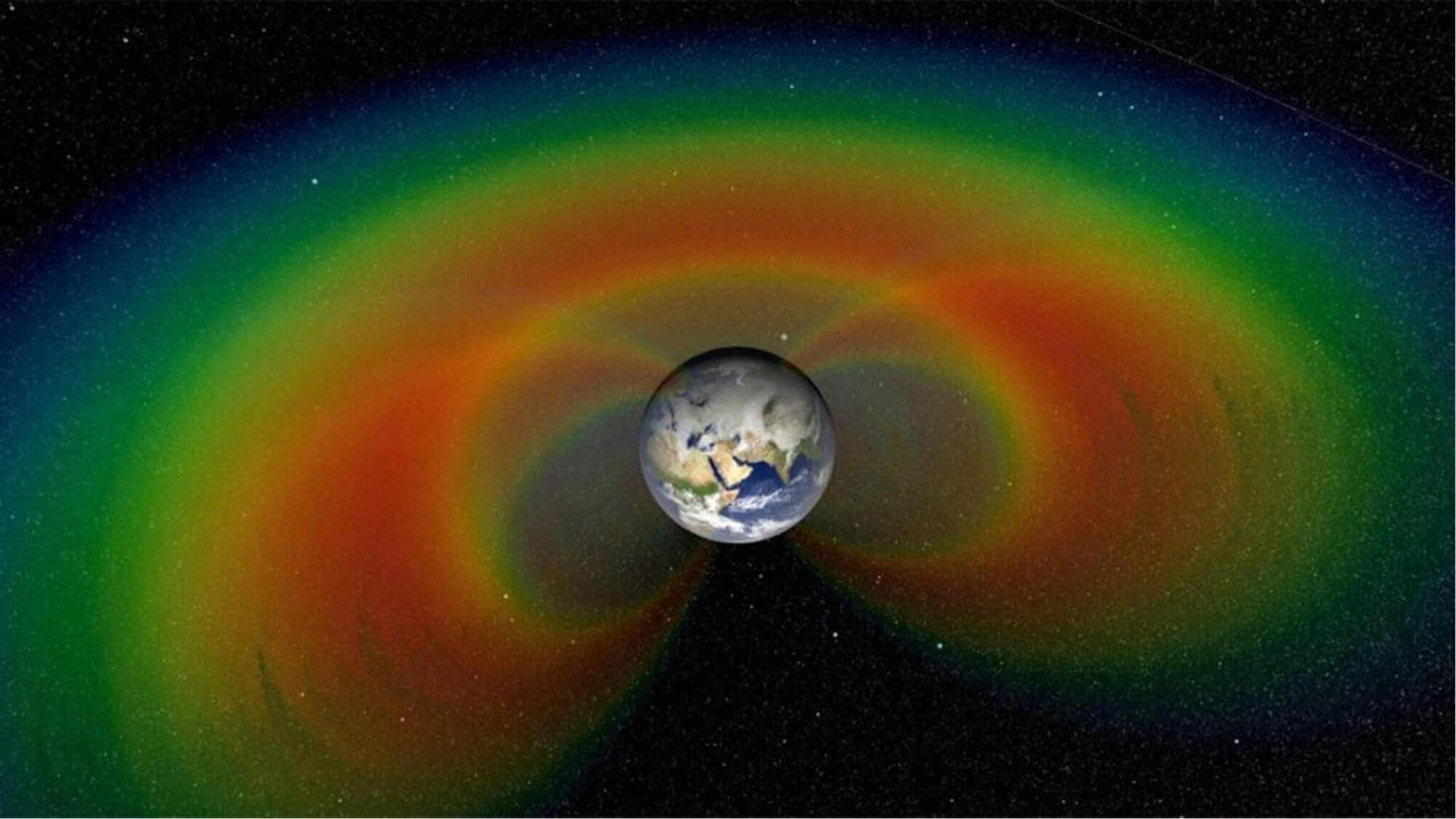
High above our heads, a silent battle is unfolding within Earth’s magnetic shield. For decades, scientists have tracked “killer electrons”—ultrafast particles capable of piercing satellite armor and endangering astronauts as they zip through the Van Allen radiation belts. While we knew these dangerous particles eventually leak out of the belts and into the atmosphere, the primary mechanism “cleaning” the highest-energy electrons has remained a persistent mystery of space weather.
Now, a study published in Geophysical Research Letters has uncovered the culprit by diving into three years of NASA’s Van Allen Probes data. Led by Lixian Yang and a team of researchers, the study identifies a hidden population of chorus waves that defies standard physics models.
Unlike typical space waves that are mostly magnetic, these highly oblique quasi-electrostatic (HOQE) waves possess an electric field so powerful it dominates their character. This unique electric punch allows them to knock electrons with energies up to 2 MeV out of orbit and into the atmosphere, scattering them with a force far more potent than any previous model predicted.