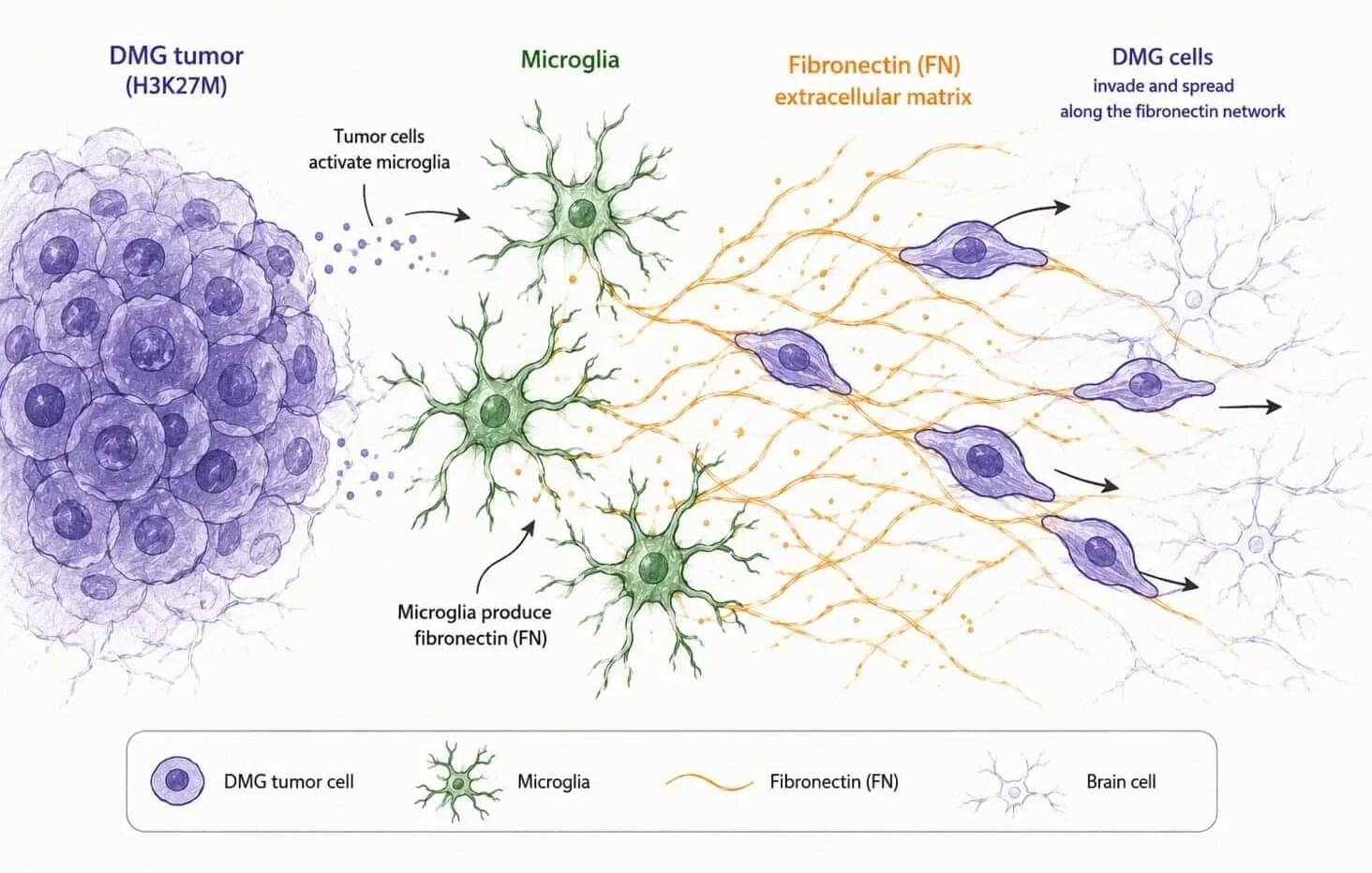
Researchers at the Institute of Environmental Medicine (IMM), Karolinska Institutet, have identified a possible mechanism behind the spread of the aggressive brain tumor diffuse midline glioma. The study shows that the brain’s own immune cells, microglia, may contribute to the tumor’s invasive capacity by producing the protein fibronectin. The results are published in the journal Cell Death & Disease.
Diffuse midline glioma (DMG), also known as diffuse intrinsic pontine glioma (DIPG), is a rare but highly aggressive brain tumor that primarily affects children. There is currently no effective treatment, and the prognosis is very poor.
In the present study, the researchers investigated how microglia—the brain’s immune cells—are affected by tumor cells and what role they play in disease progression.