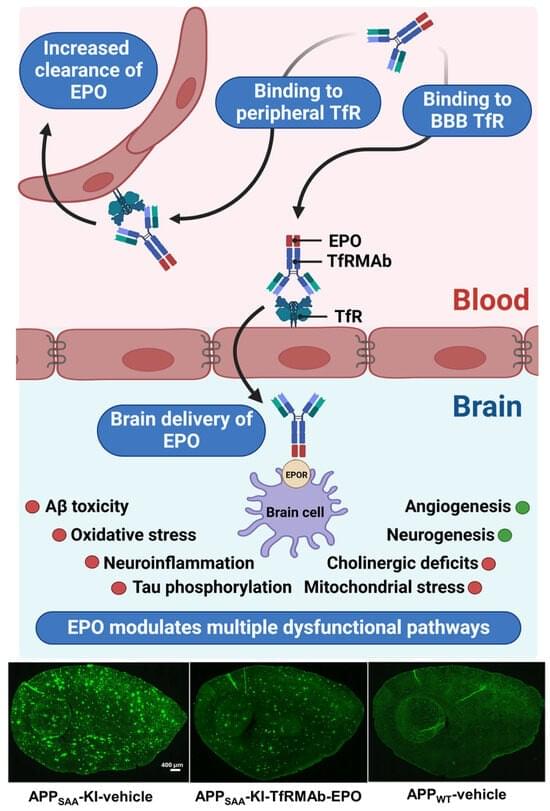
Antibodies directed against β-amyloid (Aβ) have been developed for the treatment of Alzheimer’s disease (AD). However, the in vivo central efficacy is reduced by the poor penetration of antibodies across the blood–brain barrier (BBB). In addition, these antibodies have been associated with adverse effects like amyloid-related imaging abnormalities. Thus, the development of new antibody-based therapies for AD with improved transport across the BBB may improve efficacy and reduce adverse effects. Antibodies targeting the BBB transferrin receptor (TfR) are able to cross the BBB through receptor-mediated transcytosis, producing a global distribution throughout the brain.