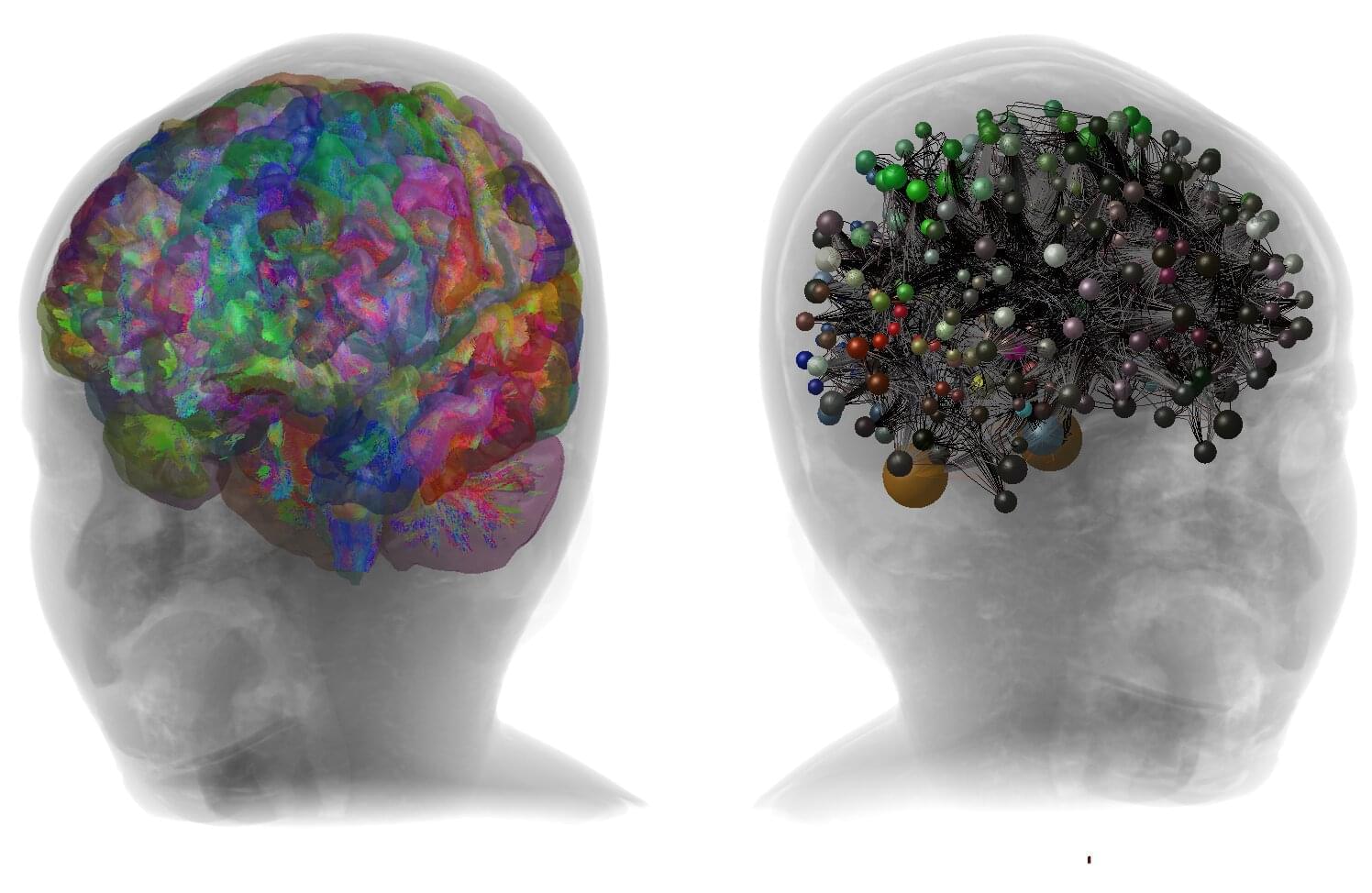
For decades, researchers have been trying to understand the biological roots of autism spectrum disorder (ASD), a common neurodevelopmental condition that shapes how people communicate, learn and interact with the world. One of the major hurdles is that the brain’s neural networks are extraordinarily complex. Existing models still lack the detail needed to capture both the brain’s structure and its dynamic activity in a unified manner.
In a recent study published in PLOS Digital Health, researchers created a new system called FEDE (high FidElity Digital brain modEl) that builds a digital twin, a detailed computer replica or virtual copy of a real-world object. In this study, it was a virtual copy of the brain of a 2-year-old child with ASD.
To build FEDE, researchers combined maps of the child’s brain structure obtained using MRI with mathematical modeling to create a digital brain that can simulate both how the brain is built and how it functions.