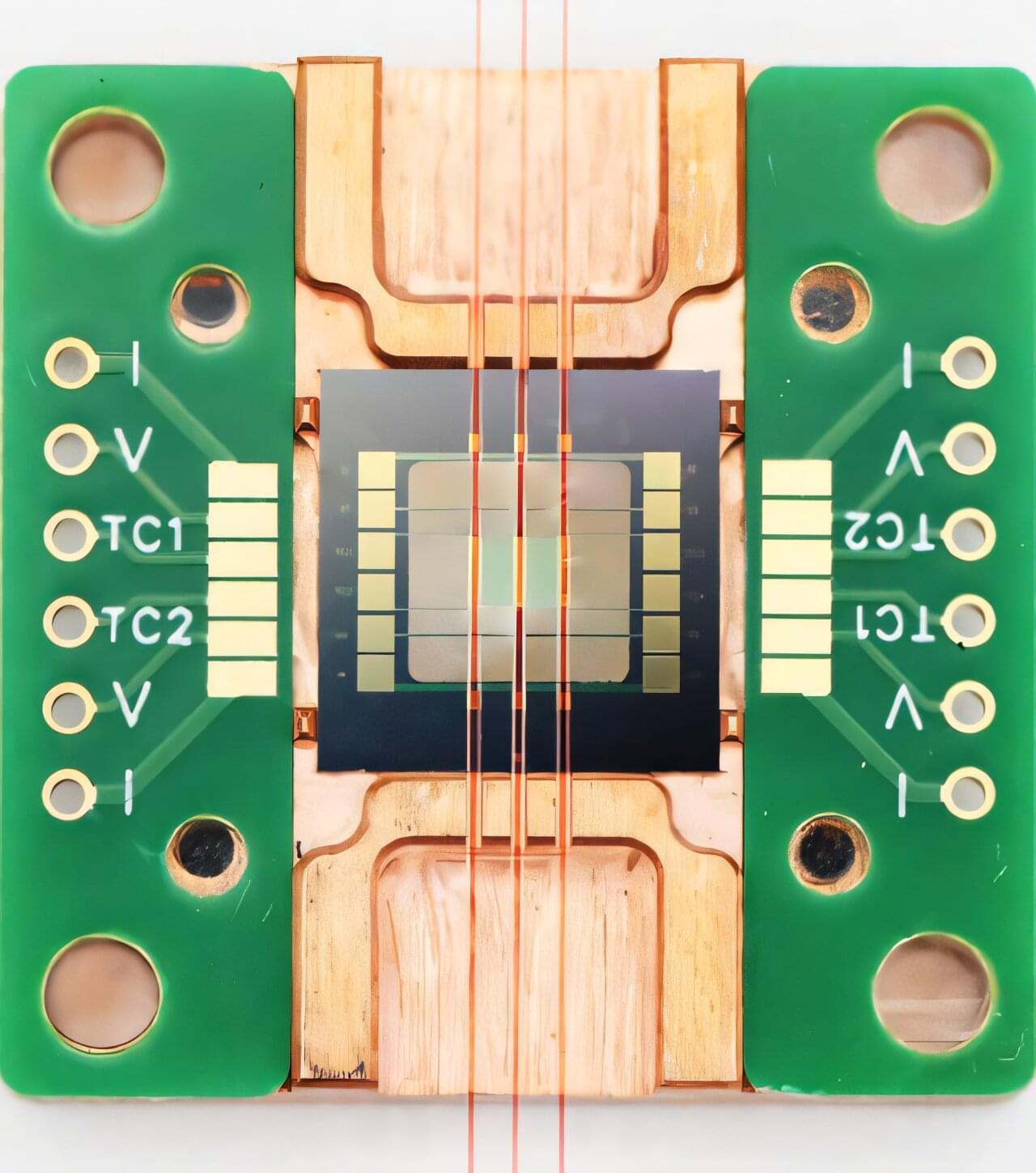
When living cells grow, divide or respond to drugs, they give off tiny amounts of heat that offer information about what the cells are doing. But because these heat signals are so vanishingly small, they have traditionally been impossible to measure directly. Researchers in the Harvard John A. Paulson School of Engineering and Applied Sciences (SEAS) have developed a calorimeter—a device that measures the heat transfer between a living system and its environment—that can detect metabolic heat signals on the order of 100 picowatts, or trillionths of a watt, in living cells.
The device is the most sensitive of any comparable bio-calorimeter to date. The new “pico-calorimeter” can track the metabolism of small populations of bacteria in real time, as well as monitor how bacterial growth changes in response to different antibiotics.
The work is from the lab of Joost Vlassak, the Abbott and James Lawrence Professor of Materials Engineering, and was carried out by Harvard associate Juanjuan Zheng, a former postdoctoral researcher in Vlassak’s lab. The research is published in the Proceedings of the National Academy of Sciences.