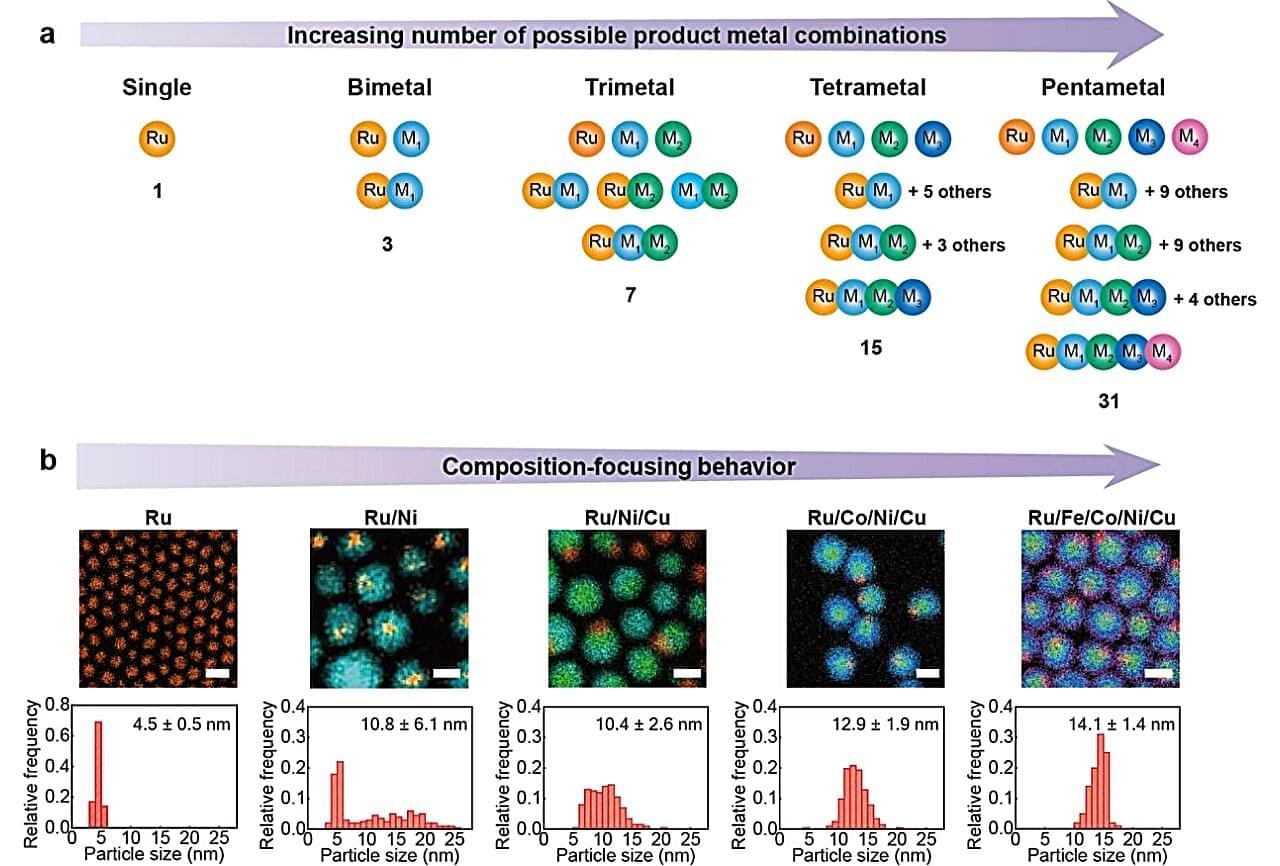
A nanocrystal is an extraordinarily tiny piece of material—composed of anywhere from a few to a few thousand atoms—in which atoms are arranged in a precise, ordered structure. Think of it like taking a piece of gold and shrinking it down to the size of a few hundred atoms. It’s still gold, still crystalline, just almost incomprehensibly small.
Nanocrystals are in the transistors inside computers and smartphones, in smartphone displays and TV screens, in the gold-nanoparticle sensors that power COVID and pregnancy tests, and in the pipes of your car exhaust system, among countless other innovations.
Their small size gives them a dramatically higher ratio of surface area to volume, making them especially useful as catalysts—materials that speed up chemical reactions without being consumed in the process.