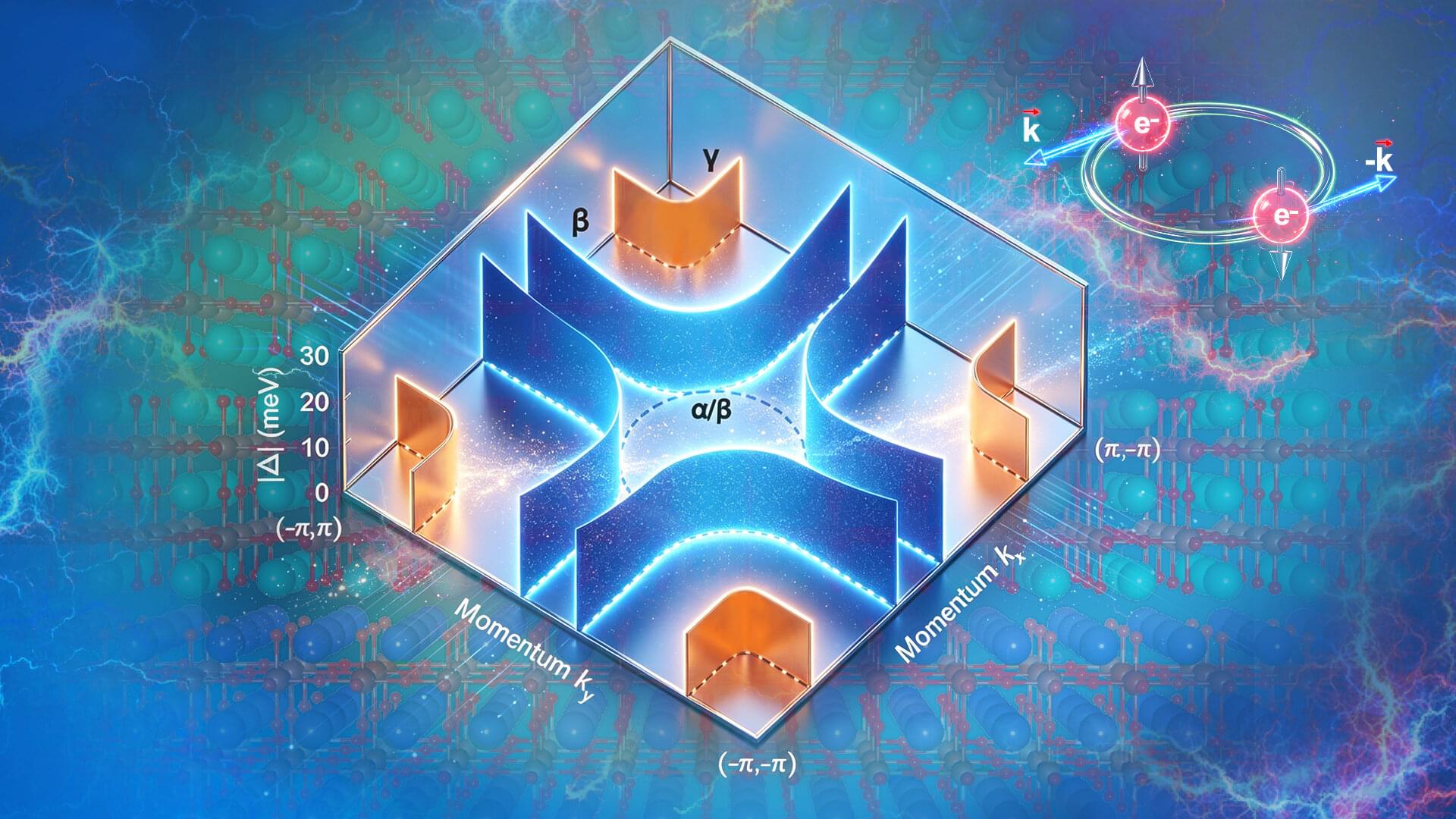
The mechanism of high-temperature (TC) superconductivity is a key challenge in condensed matter physics. Recently, Chinese scientists made significant progress in the study of high-TC nickelate superconductors.
For the first time, scientists observed a nodeless superconducting gap and discovered electron-boson coupling by measuring the electronic structures of Ruddlesden-Popper bilayer nickelate superconducting thin films. These results provide crucial evidence for two fundamental issues in the mechanism of high-TC nickelates: “superconducting gap symmetry” and “superconducting pairing mechanism.”
This study, conducted by a team led by Prof. He Junfeng from the University of Science and Technology of China (USTC) of the Chinese Academy of Sciences, in collaboration with a team led by Prof. Xue Qikun and Prof. Chen Zhuoyu from the Southern University of Science and Technology (SUSTech), was published in Science.