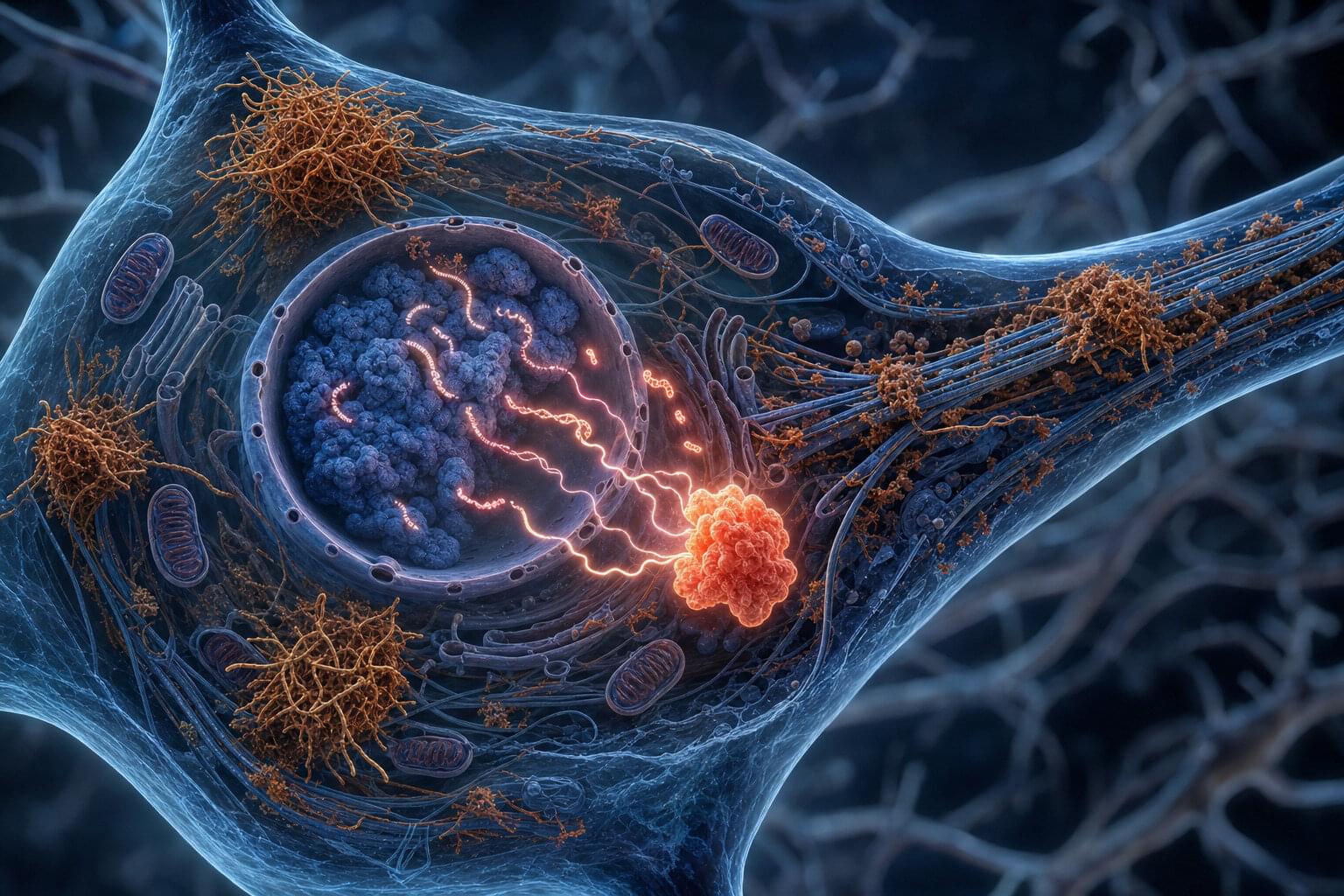
Alzheimer’s disease is a neurodegenerative disease characterized by a progressive decline in mental functions and memory loss. Along with frontotemporal dementia and some other neurodegenerative disorders, Alzheimer’s disease has been associated with an accumulation inside neurons of abnormal clumps of a protein called “tau.”
The tau protein is important for brain health, stabilizing structures called microtubules inside neurons. In Alzheimer’s disease and other tauopathies (i.e., diseases linked with the abnormal accumulation of tau), tau proteins aggregate into toxic and insoluble clumps that are harmful to brain cells, gradually leading to their death.
Researchers at Zhejiang University, Xiamen University and other institutes in China recently carried out a study aimed at better understanding the processes via which tau aggregation contributes to the death of neurons in patients with Alzheimer’s disease. Their findings, published in Nature Neuroscience, suggest that these tau clumps prompt the reactivation of transposable DNA elements in neurons, which can in turn lead to their death.