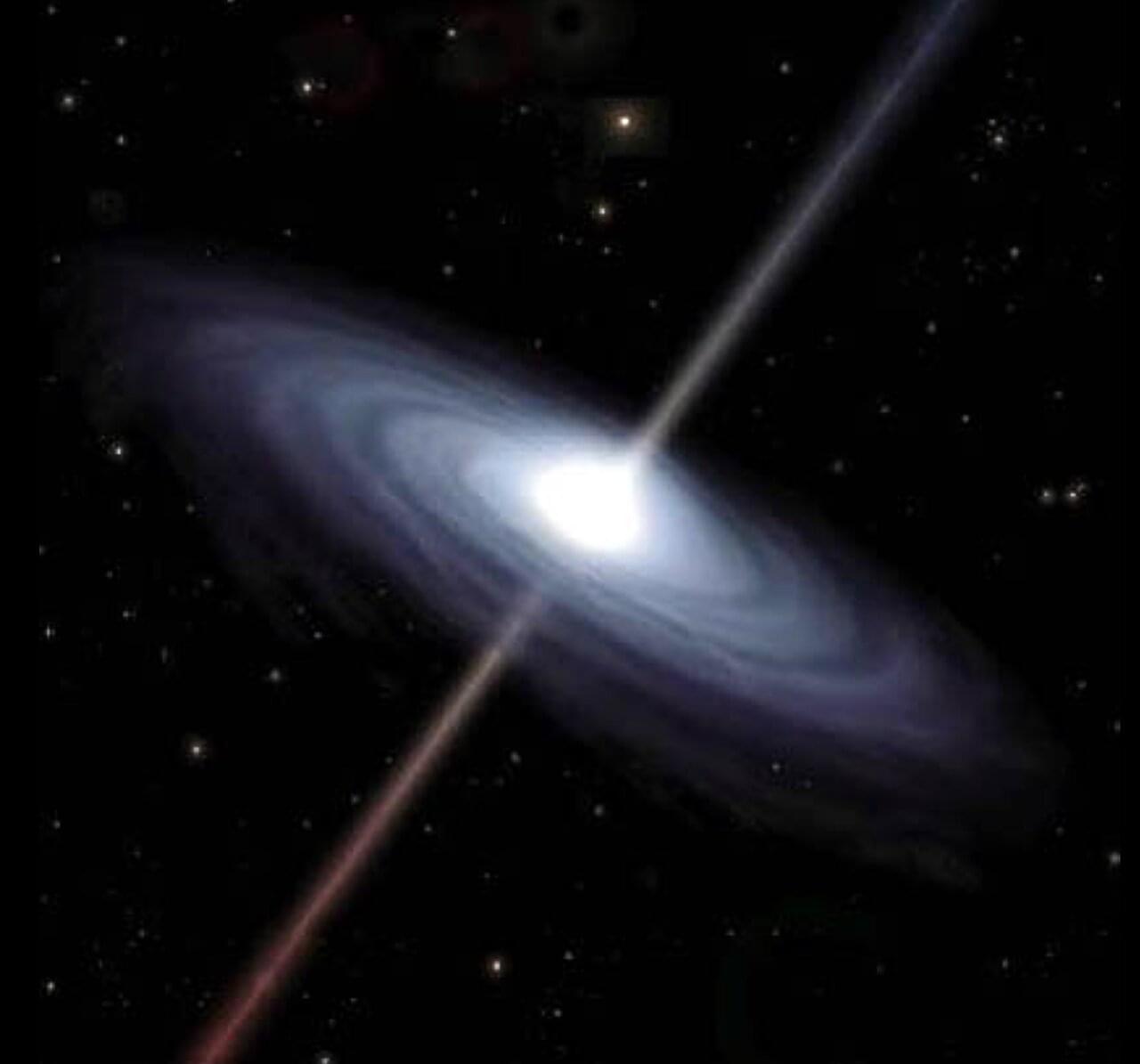
Black holes are regions in space where gravity is so strong that nothing, even light, can escape. Einstein’s theory of general relativity breaks down inside black holes, either by the presence of a so-called “curvature singularity” or “Cauchy horizon.”
A curvature singularity is a point where density and spacetime curvature become infinite, the laws of physics break down, and matter is crushed into an infinitely small space. A Cauchy horizon, on the other hand, is a boundary beyond which the future cannot be reliably predicted by known physics theories.
Francesco Di Filippo, a researcher at the Institute for Theoretical Physics in Frankfurt, recently carried out a theoretical study that challenges the assumption that black holes must inevitability possess either a singularity or a Cauchy horizon. His paper, published in Physical Review Letters, shows that the combination of electromagnetic repulsion from electric charge and quantum effects described by Stephen Hawking’s radiation theory could prevent the formation of singularities and Cauchy horizons in some black holes.