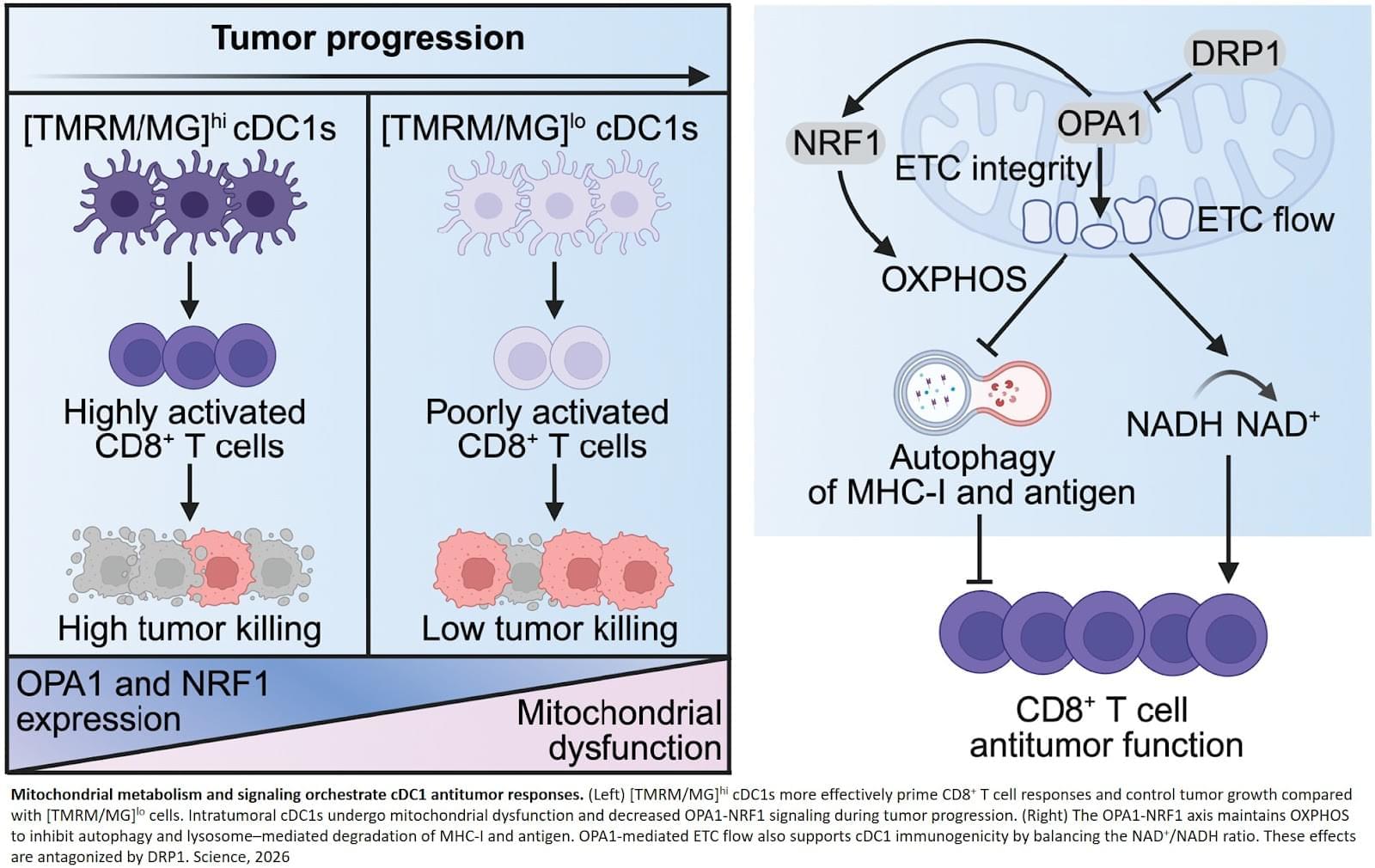
To counteract this effect, researchers introduced dendritic cells with high mitochondrial activity into tumors in preclinical mouse models, restoring immunogenic activity and improving tumor control.
Immunotherapies for cancer, such as immune checkpoint blockade, have greatly improved care for many malignancies, but have not been successful in all cancers. To determine if their findings could help make immunotherapy more effective in tumor-bearing mice, the investigators compared the therapeutic effects of administering dendritic cells with high mitochondrial activity in combination with immune checkpoint blockade with those of either treatment alone.
“We saw the most pronounced therapeutic effect in mice treated with the combination of dendritic cells that had high mitochondrial activity and immune checkpoint blockade,” said co-first author. “Those combinations synergistically slowed or stopped tumor growth and extended survival far more than either treatment alone.”
To test one combination therapy’s long-term effects, the researchers exposed treated mice to a new tumor months later. Those mice also stopped the new tumor’s growth, indicating durable, long-term immune memory was successfully established.
To better understand the relationship between mitochondrial function and dendritic cells, the researchers examined key metabolic pathways affected by the tumor microenvironment. They identified a signaling axis composed of two proteins, OPA1 and NRF1, that regulate communication between mitochondria and the nucleus. Their expression was greatly downregulated in dendritic cells during tumor progression. Within tumors, that circuit’s downregulation acts as a metabolic switch, in effect telling the cell that it is in an energy crisis, leading dendritic cells to shut down their nonessential functions, including immunogenic activity. Science Mission sciencenewshighlights.
Scientists have discovered how tumors disable immune “gatekeeper” cells that alert the rest of the immune system to the presence of cancer — and how restoring their energy production can improve immunotherapy. Dendritic cells activate the cytotoxic immune cells that destroy cancer. The researchers found that tumors reduce dendritic cell function by decreasing their mitochondrial fitness, thus preventing formation of the anticancer immune response.
The results, published in Science, also show that boosting mitochondrial function in dendritic cells enhances antitumor immune activity and strengthens the efficacy of existing immunotherapies.
Dendritic cells alert and activate tumor-killing immune cells as a critical part of anticancer immune response. However, within the nutrient-sparse tumor microenvironment (the complex mixture of chemicals, cells and other factors near cancer cells), dendritic cells progressively lose their energy-producing mitochondrial activity. That loss drives dendritic cell dysfunction and weakens the body’s immune defenses against cancer.