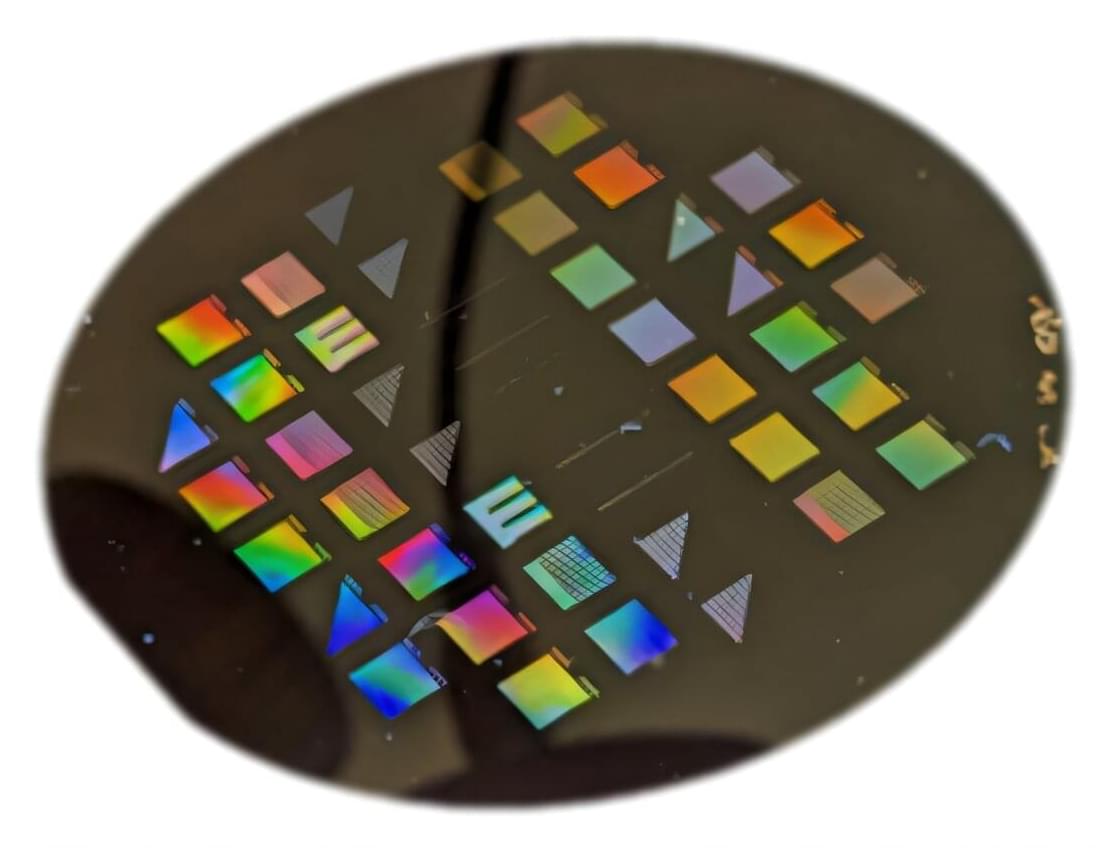
Computer chips that cram billions of electronic devices into a few square inches have powered the digital economy and transformed the world. Scientists may be on the cusp of launching a similar technological revolution—this time using light.
In a significant advance toward that goal, National Institute of Standards and Technology (NIST) scientists and collaborators have pioneered a way to make integrated circuits for light by depositing complex patterns of specialized materials onto silicon wafers. These so-called photonics chips use optical devices such as lasers, waveguides, filters and switches to shuttle light around and process information.
The new advance could provide a big boost for emerging technologies such as artificial intelligence, quantum computers and optical atomic clocks.