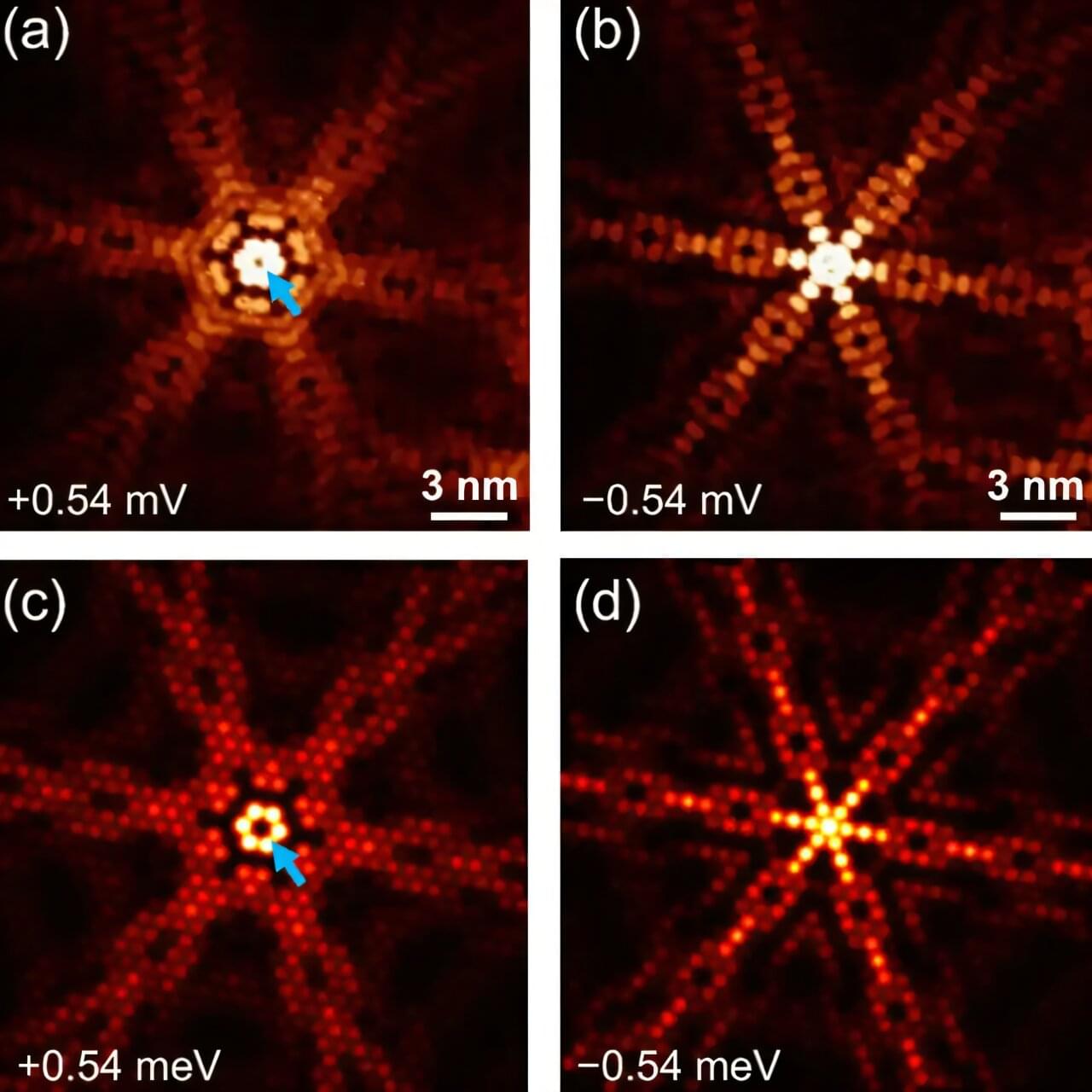
With a carefully designed experiment and a handful of tin atoms, University of Tennessee, Knoxville’s physicists have found a long-sought form of superconductivity, taking one more step toward creating custom quantum materials.
Scientists have known about superconductivity for more than a century. At low temperatures, resistance in certain materials vanishes and they carry electrical current without losing any energy. Superconductors are part of particle accelerators and magnetic resonance imaging machines. While they need extremely cool environments to work, the mechanism that drives them is quite well understood: electrons, which normally repel each other, form pairs and carry the current.