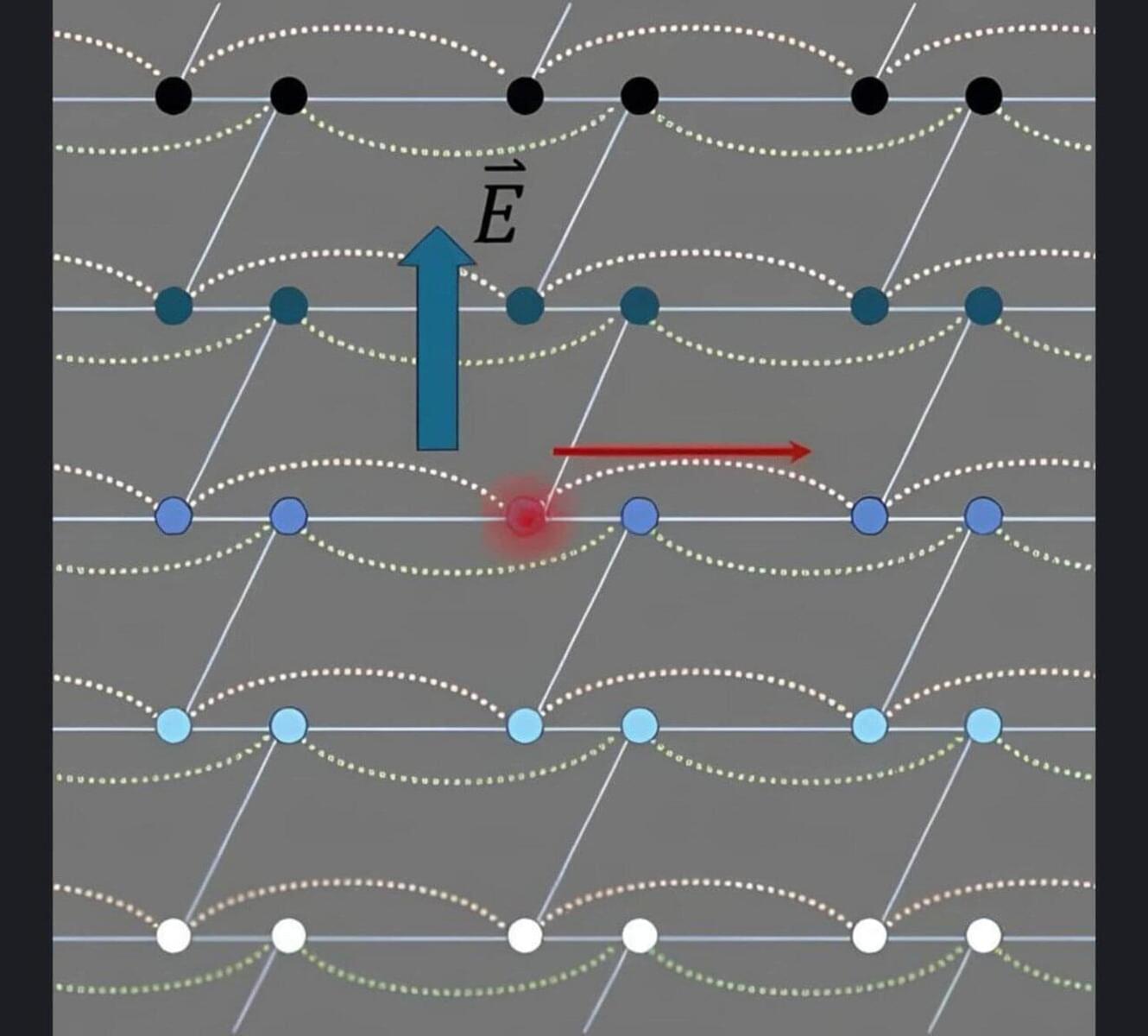
In physics, the classical “Hall effect,” discovered in the late 19th century, describes how a transverse voltage is generated when an electric current is exposed to a perpendicular magnetic field. Simply put, the magnetic field causes the electrons, which are negatively charged, to drift sideways, creating a negative charge on one edge of the conducting strip and a positive charge on the opposite side.
For decades, this voltage difference has been used as a diagnostic tool to measure magnetic fields with precision and characterize material doping levels, that is, the addition of a tiny, controlled amount of impurity to a pure material to change how it conducts electricity.
In the 1980s, experiments at ultra-low temperatures with ultra-thin conductors—imagine a sheet of paper—revealed that under intense magnetic fields, this voltage difference increases not in a straight line but in perfectly defined steps.