JNeurosci: Lu and Matsunami analyzed gene activity to find proteins that help odor-detecting receptors reach the cell surface. They identified three helper genes—Gfy, Clgn, and Syt1—that support receptor function as olfactory cells mature.
▶️
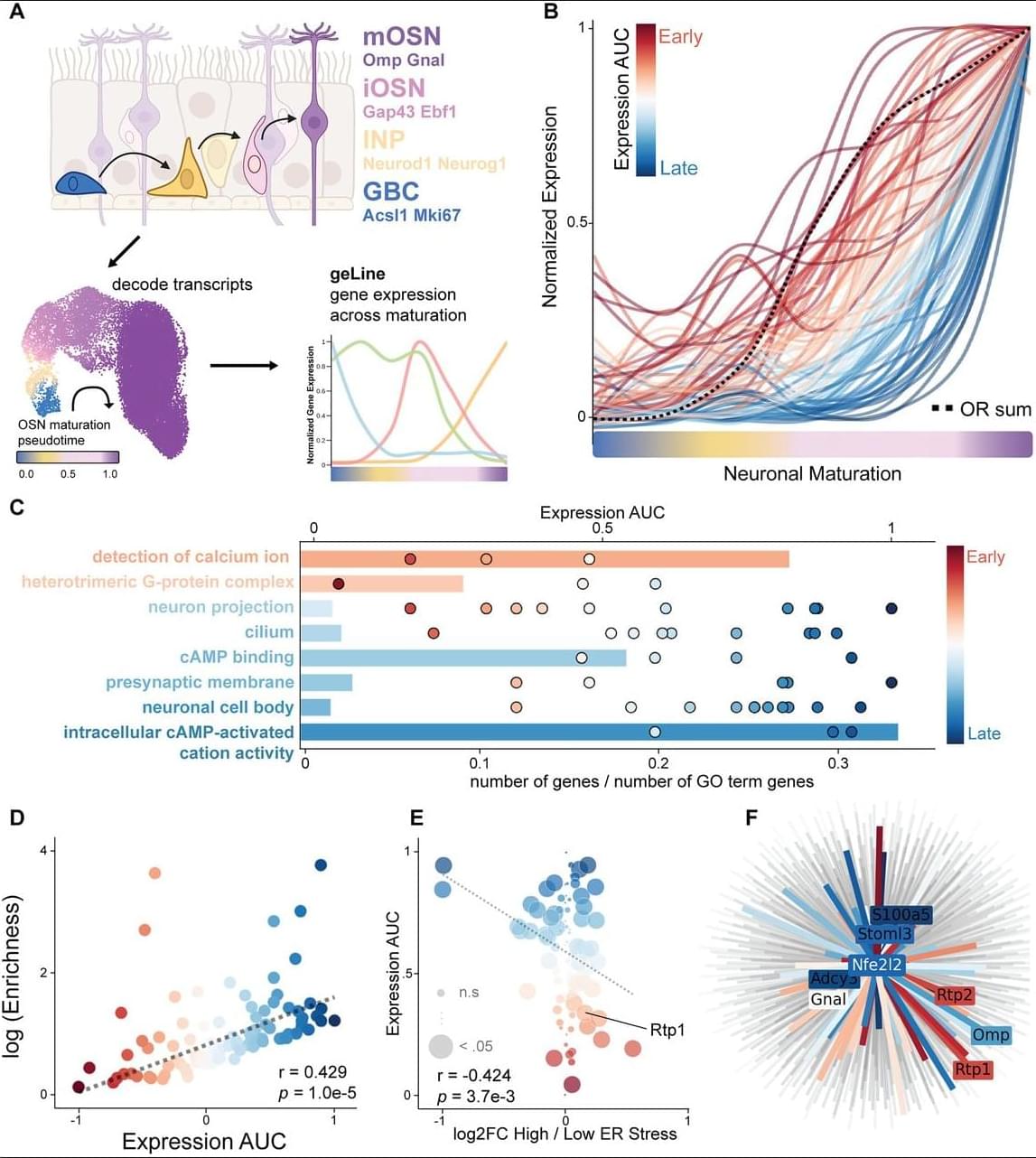
Odor detection in mammals is primarily mediated by odorant receptors (ORs), the largest family of G-protein-coupled receptors, expressed in olfactory sensory neurons (OSNs; [Buck and Axel, 1991][1]). However, most ORs exhibit little or no cell surface expression in nonolfactory cell types ([Lu et al., 2003][2]; [Hague et al., 2004][3]). While the accessory protein RTP1 and RTP2 enhance the expression of certain ORs, we hypothesized that additional proteins coregulated with RTP1 and RTP2 during OSN maturation may further enhance OR cell surface expression ([Saito et al., 2004][4]; [Zhuang and Matsunami, 2007][5]). To test this, we developed a computational pipeline based on publicly available single-cell transcriptomic data to create an interactive tool for exploring gene expression during OSN maturation.