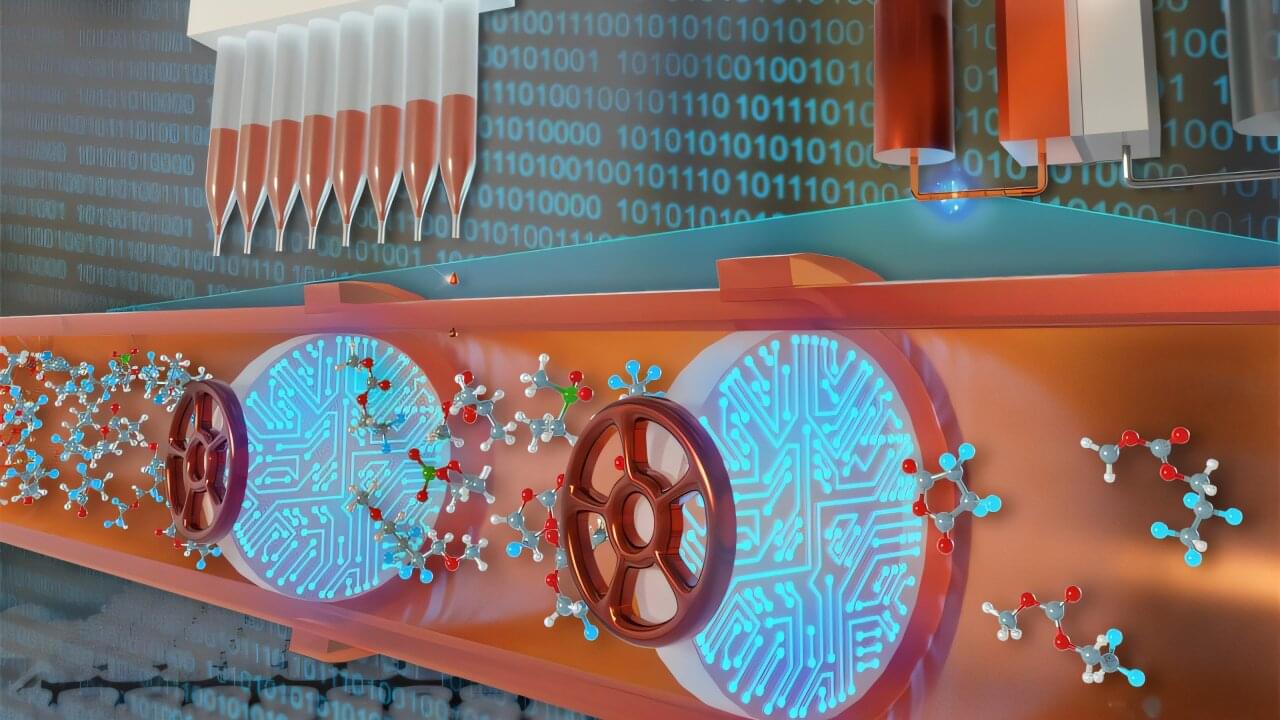
In numerous scientific fields, high-throughput experimentation methods combined with artificial intelligence (AI) show great promise to accelerate innovation and scientific discovery.
Case in point: In just five months, researchers at the U.S. Department of Energy’s (DOE) Argonne National Laboratory used robotics, automation and AI to conduct more than 6,000 experiments on chemicals in a type of rechargeable energy storage called organic redox flow batteries (RFBs). Such a monumental effort would have taken five to eight years with traditional experimentation.
Organic RFBs use carbon-based—that is, organic—molecules instead of traditional metal ions. Through their work, the researchers made a crucial finding about these batteries: A fundamental barrier at the molecular level limits their stability. The insight is expected to inspire exciting new directions in battery chemical research.