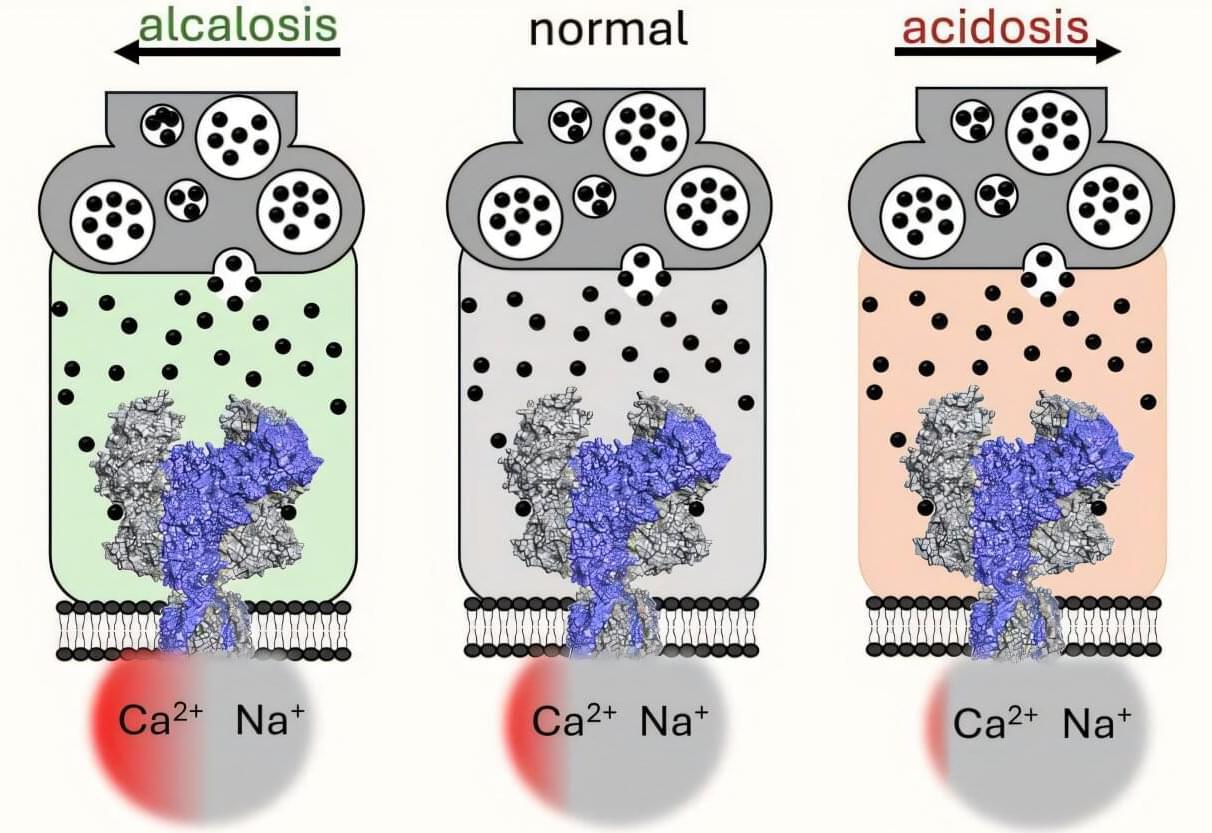
Drugs that act on NMDA (N-methyl-D-aspartate) receptors, which are essential for learning, memory and moment-by-moment consciousness, are key for treating neuropsychiatric disorders. These drugs were developed based on the assumption that the proportion of calcium in the current produced by these receptors remains constant. That assumption turns out to be false, according to University at Buffalo research published last month in the Proceedings of the National Academy of Sciences.
“Our research reveals that small variations in the brain environment in which NMDA receptors operate can increase or decrease the amount of calcium in the currents fluxed by these receptors,” explains Gabriela K. Popescu, Ph.D., corresponding author and professor of biochemistry in the Jacobs School of Medicine and Biomedical Sciences at UB. “This, in turn, could mean the difference between normal and impaired learning, memory and cognition, symptoms that accompany many neuropsychiatric conditions.”