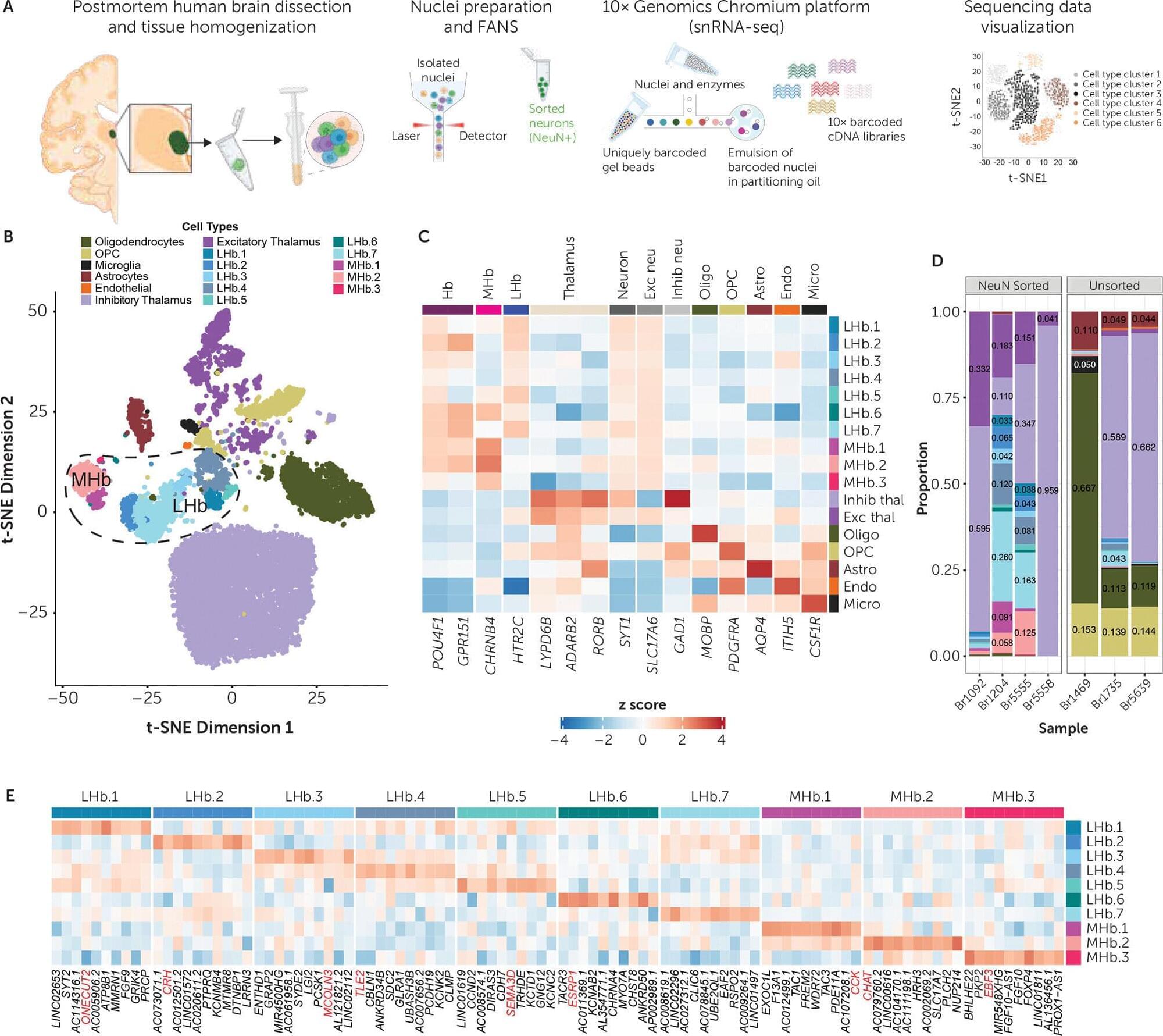
New research published in the American Journal of Psychiatry provides new molecular insights into the role of the habenula, a pea-sized brain region that helps regulate motivation and mood, in contributing to the risk of schizophrenia. A team of researchers at Lieber Institute for Brain Development and Johns Hopkins found that many schizophrenia-related molecular changes appear to be specific to this region, suggesting the habenula could be a potential target for future treatments.
Schizophrenia is a heritable disorder, and a combination of multiple genetic variants contributes to it. This study sought to understand how molecular changes in the habenula region of the brain contribute to the development of schizophrenia. The authors note that they focused on the habenula because of its “emerging role in psychiatric disorders and functional influence on neurotransmitter systems impacted in schizophrenia.”
The study team, led by Ege A. Yalcinbas, Ph.D., used cutting-edge molecular techniques to analyze postmortem human brains, resulting in the creation of the first cell-by-cell and within-cell gene expression map of the human habenula (Hb). They then compared brain tissue from 35 individuals with schizophrenia and 33 nonpsychiatric donors.