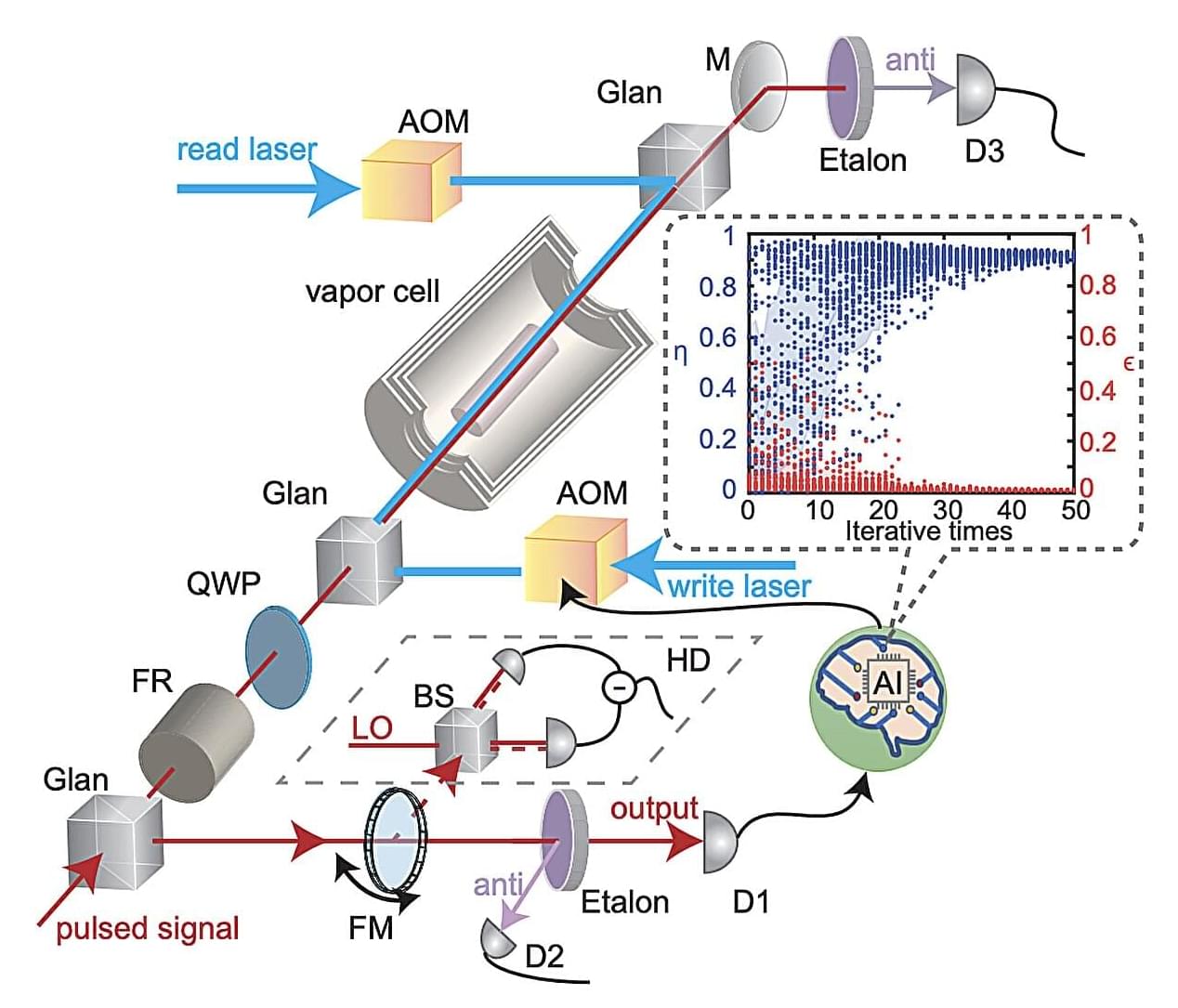
Over the past decades, quantum physicists and engineers have developed numerous technologies that harness the principles of quantum mechanics to push the boundaries of classical information science. Among these advances, quantum memories stand out as promising devices for storing and retrieving quantum information encoded in light or other physical carriers.
To be viable for real-world applications, quantum memory must deliver both high efficiency and high fidelity. In other words, they should be able to store and retrieve most of the input quantum information —typically over 90%—and ensure that a recovered state closely matches the original one.
Notably, most previously proposed strategies to develop efficient quantum memories were found to produce undesired random fluctuations (i.e., noise). These fluctuations could in turn degrade quantum information, reducing the system’s fidelity.