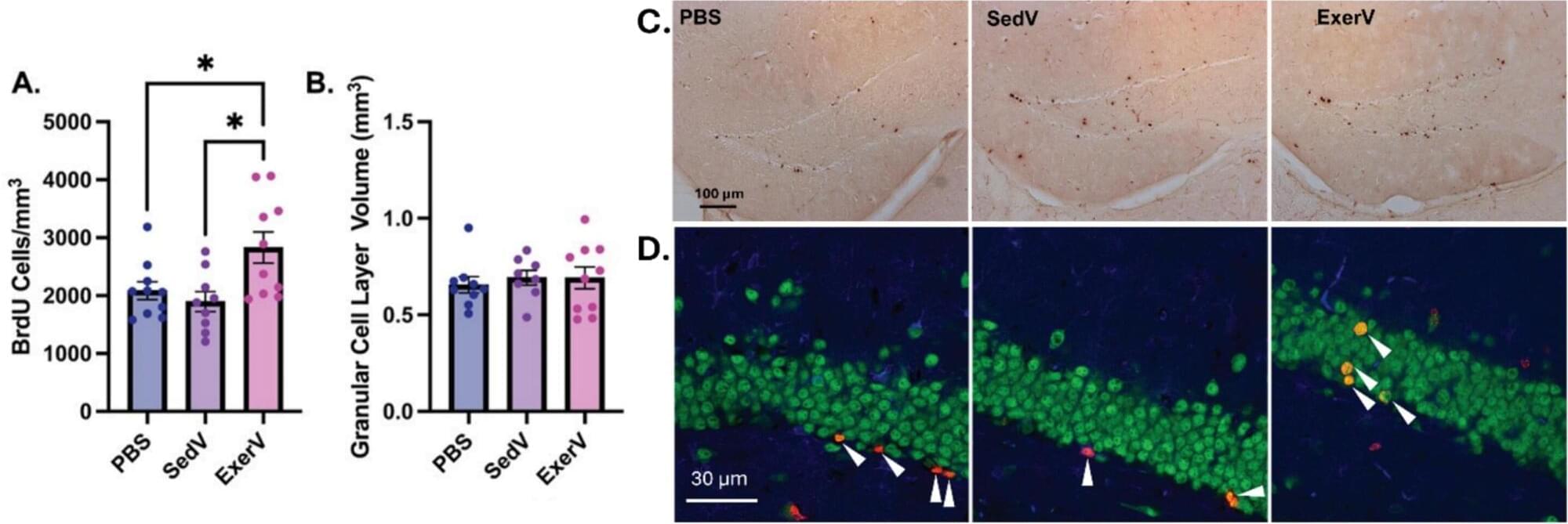
Researchers at the University of Illinois Urbana-Champaign report that extracellular vesicles released into the bloodstream during aerobic exercise can, on their own, drive a robust increase in adult hippocampal neurogenesis when transferred into sedentary mice, even without changes in hippocampal vascular coverage.
Aerobic physical activity preserves cognitive function across the lifespan and repeatedly links to structural and cellular plasticity in the hippocampus. Evidence from plasma transfer experiments indicates that bloodborne factors from exercising animals can transfer pro-neurogenic and pro-cognitive effects to sedentary or aged recipients, partly through reduced inflammation.
Many circulating molecules have been implicated in this exercise–brain connection, including vascular endothelial growth factor, insulin-like growth factor 1, platelet factor 4, selenoprotein P, irisin, cathepsin B, L-lactate, and interleukin-6. Each contributes to specific aspects of neurogenesis or neuronal survival.