Toggle light / dark theme

Get the latest international news and world events from around the world.

Log in for authorized contributors

Scientists build a quantum computer that can repair itself using recycled atoms

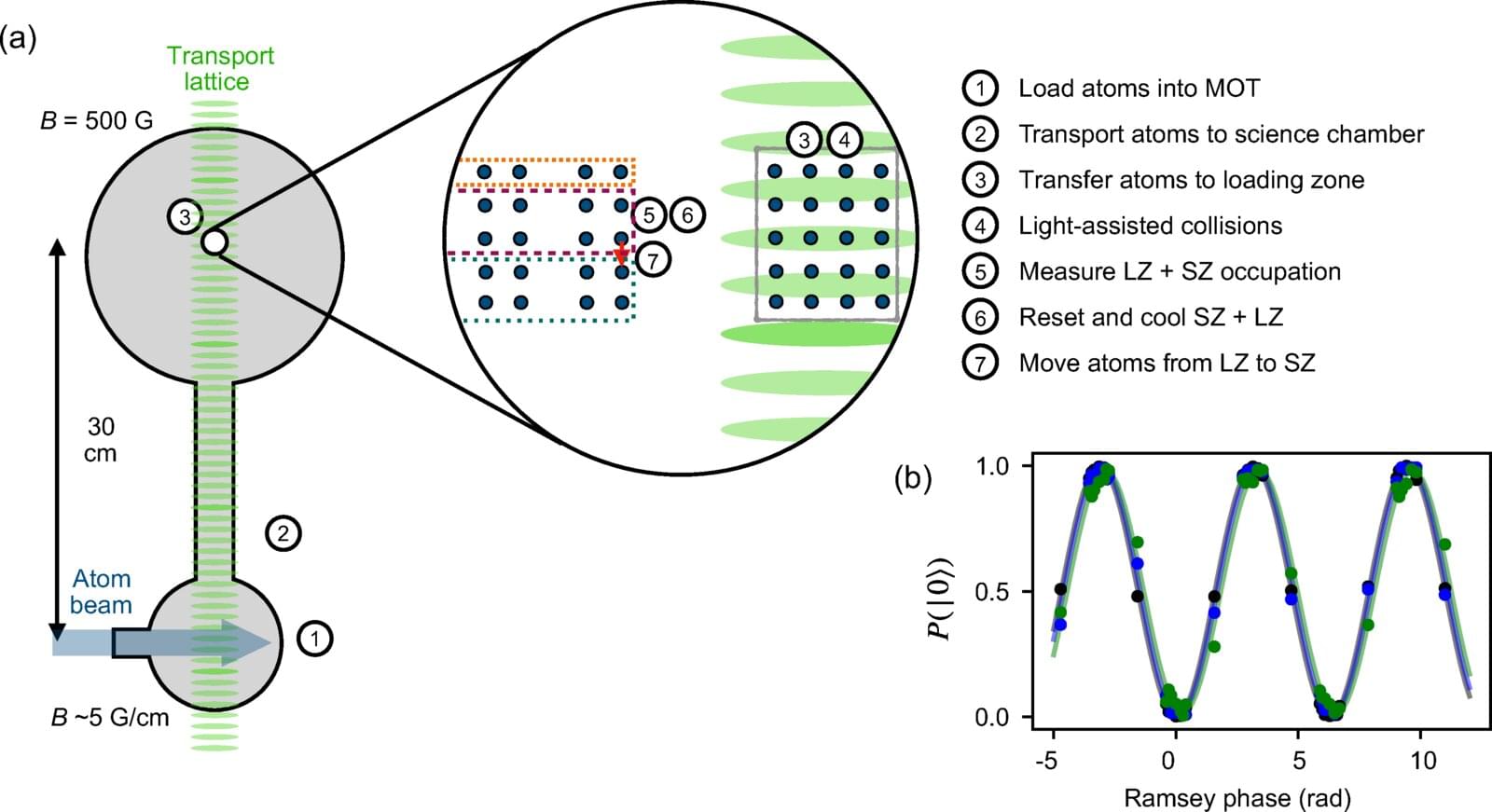
Like their conventional counterparts, quantum computers can also break down. They can sometimes lose the atoms they manipulate to function, which can stop calculations dead in their tracks. But scientists at the US-based firm Atom Computing have demonstrated a solution that allows a quantum computer to repair itself while it’s still running.

The team zeroed in on quantum computers that use neutral atoms (atoms with equal numbers of protons and electrons). These individual atoms are the qubits, or the basic building blocks of a quantum computer’s memory. They are held in place by laser beams called optical tweezers, but the setup is not foolproof.

Occasionally, an atom slips out of its trap and disappears. When this happens mid-calculation, the whole process can grind to a halt because the computer can’t function with a missing part.
Elegant solution for measuring ultrashort laser pulses discovered

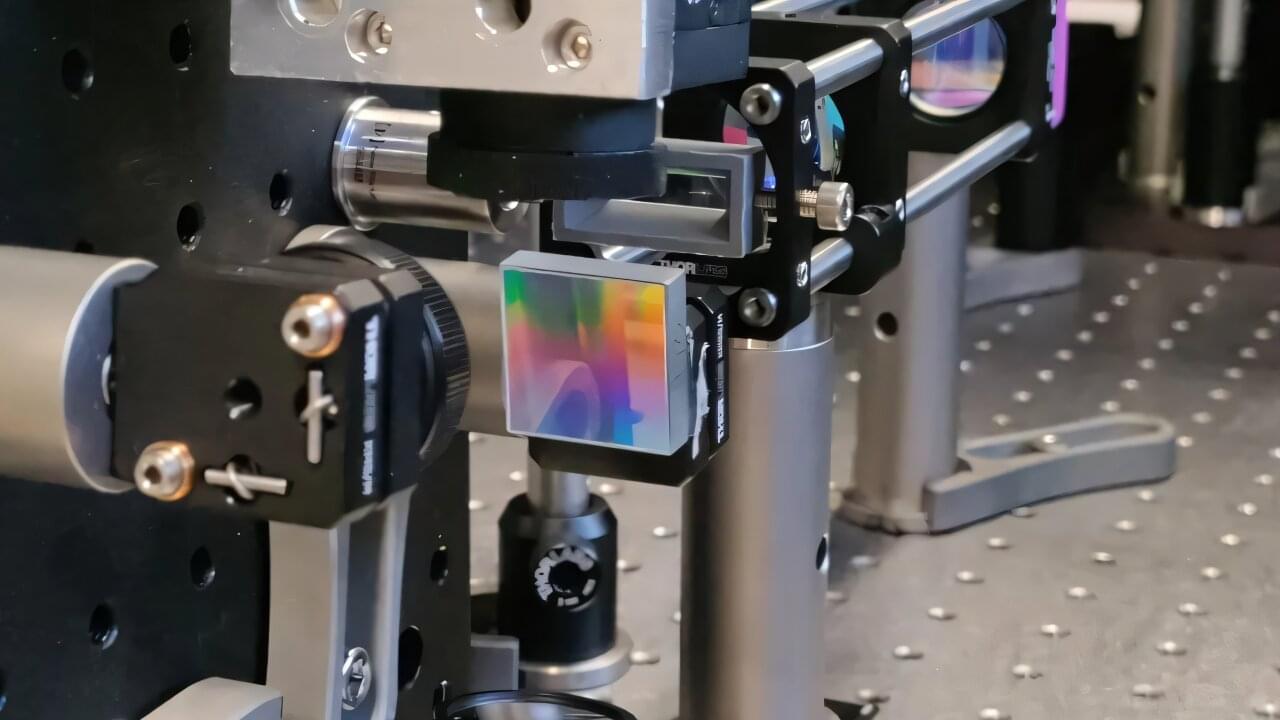
Ultrashort laser pulses—that are shorter than a millionth of a millionth of a second—have transformed fundamental science, engineering and medicine. Despite this, their ultrashort duration has made them elusive and difficult to measure.

About 10 years ago, researchers from Lund University and Porto University introduced a tool for measuring pulse duration of ultrafast lasers. The same team has now achieved a breakthrough that enables the measurement of individual laser pulses across a wider parameter range in a more compact setup.

“The current standard measurements for femtosecond lasers, typically used in industry and medicine, give just an estimate of the pulse duration. Our approach gives a more complete measurement and can contribute to unleashing the whole potential of ultrafast laser technology,” says Daniel Díaz Rivas, doctoral student in Atomic Physics at Lund University.

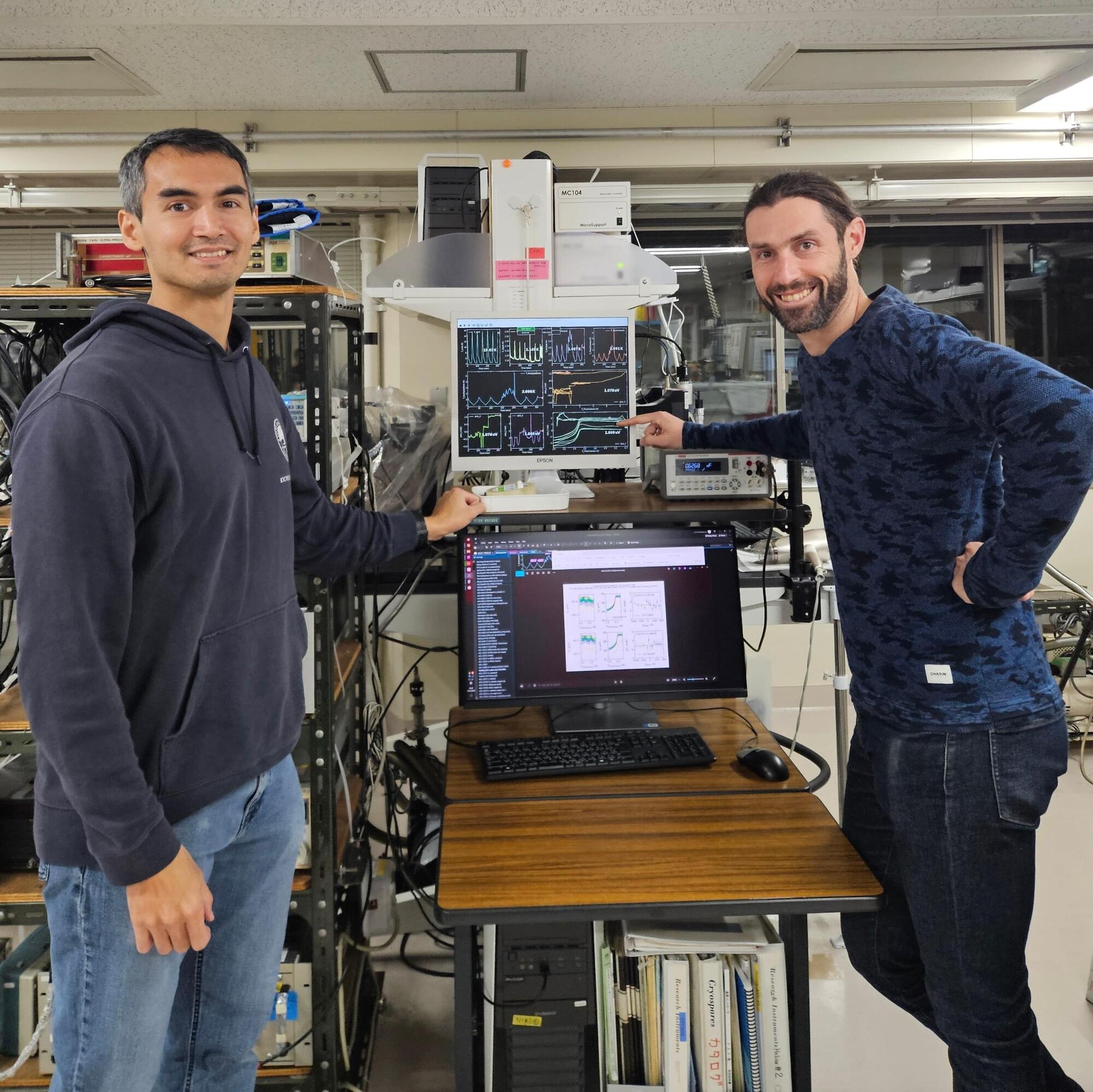
Flat Fermi surface in altermagnets enables quantum limit spin currents

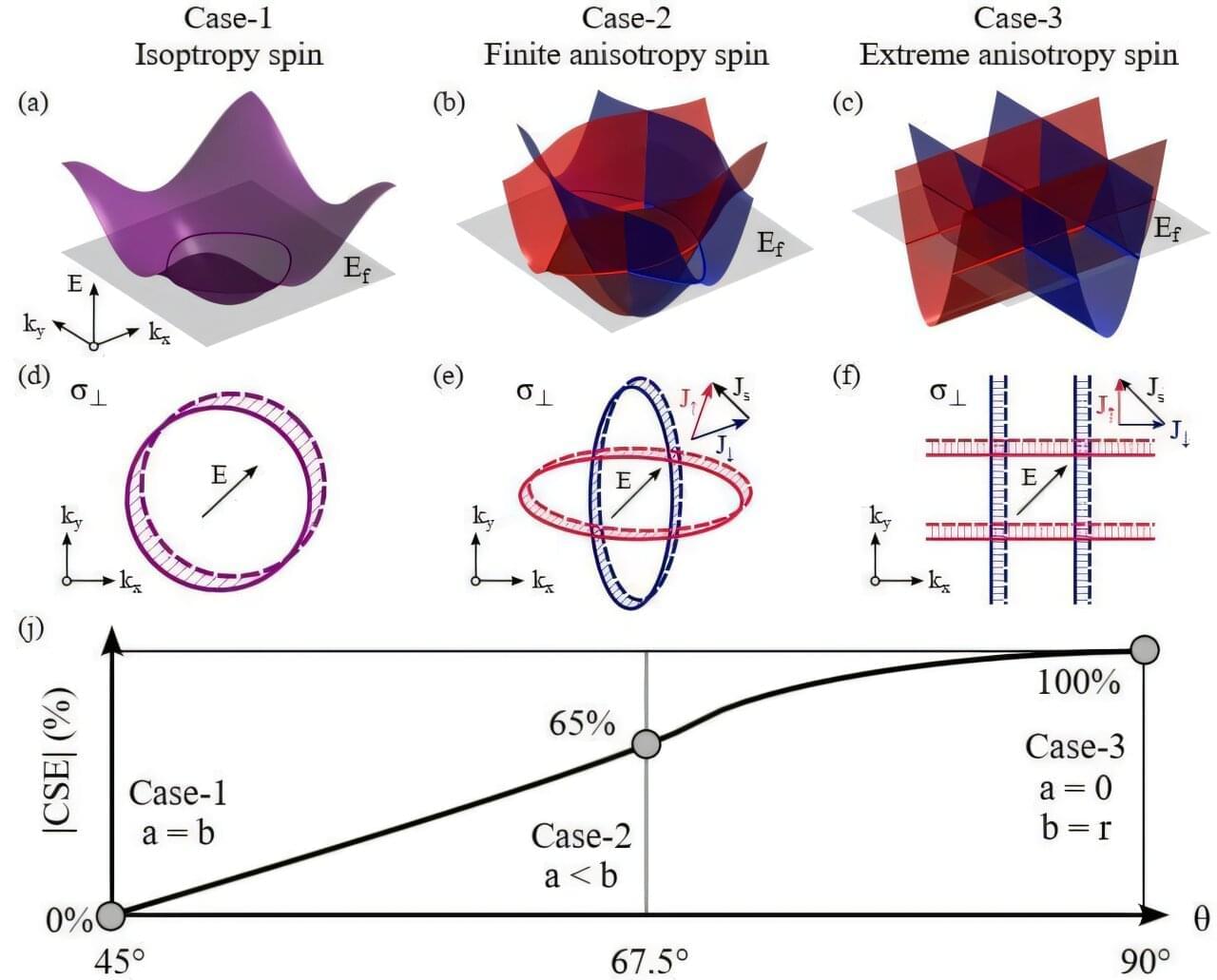
The key feature of spintronic devices is their ability to use spin currents to transfer momentum, enabling low-energy, high-speed storage and logical signal control. These devices are usually manipulated by electric currents and fields. The charge-to-spin conversion efficiency (CSE) is a key metric for evaluating their performance.

Now, scientists from the Institute of Metal Research (IMR) of the Chinese Academy of Sciences have proposed a new deep correlation between the spin splitting torque (SST) and the Fermi surface geometry, achieving a quantum limit of 100% in a system with a flat Fermi surface. These results were published in Physical Review Letters on December 16.

Super strain-resistant superconductors

Superconductors are materials that can conduct electricity with zero resistance, usually only at very low temperatures. Most superconductors behave according to well-established rules, but strontium ruthenate, Sr₂RuO₄, has defied clear understanding since its superconducting properties were discovered in 1994. It is considered one of the cleanest and best-studied unconventional superconductors, yet scientists still debate the precise structure and symmetry of the electron pairing that gives rise to its remarkable properties.

One powerful way to identify the underlying superconducting state is to measure how the superconducting transition temperature, or Tc, changes under strain, since different superconducting states respond differently when a crystal is stretched, compressed, or twisted.

Many earlier experiments, especially ultrasound studies, suggested that Sr₂RuO₄ might host a two-component superconducting state, a more complex form of superconductivity that can support exotic behaviors such as internal magnetic fields or multiple coexisting superconducting domains. But a genuine two-component state is expected to respond strongly to shear strain.

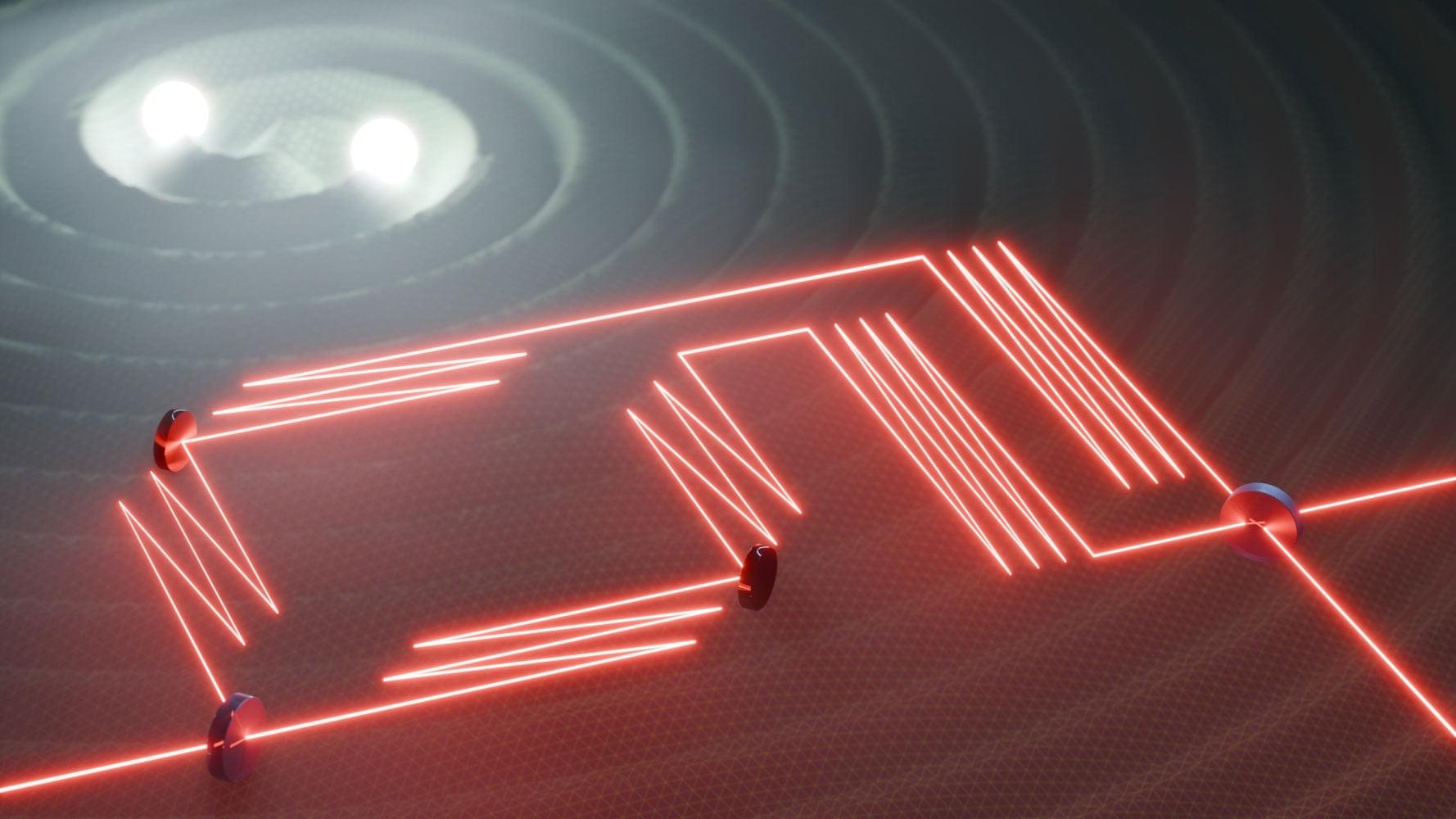
Physicists Propose First-Ever Experiment To Manipulate Gravitational Waves

When massive cosmic objects such as black holes merge or neutron stars crash into one another, they can produce gravitational waves. These ripples move through the universe at the speed of light and create extremely small changes in the structure of space-time. Their existence was first predicted by Albert Einstein, and scientists confirmed them experimentally for the first time in 2015.

Building on this discovery, Prof. Ralf Schützhold, a theoretical physicist at the Helmholtz-Zentrum Dresden-Rossendorf (HZDR), is proposing a bold new step.

Schützhold has developed a concept for an experiment that would go beyond detecting gravitational waves and instead allow researchers to influence them. The proposal, published in the journal Physical Review Letters, could also help clarify whether gravity follows quantum rules, a question that remains unresolved in modern physics.

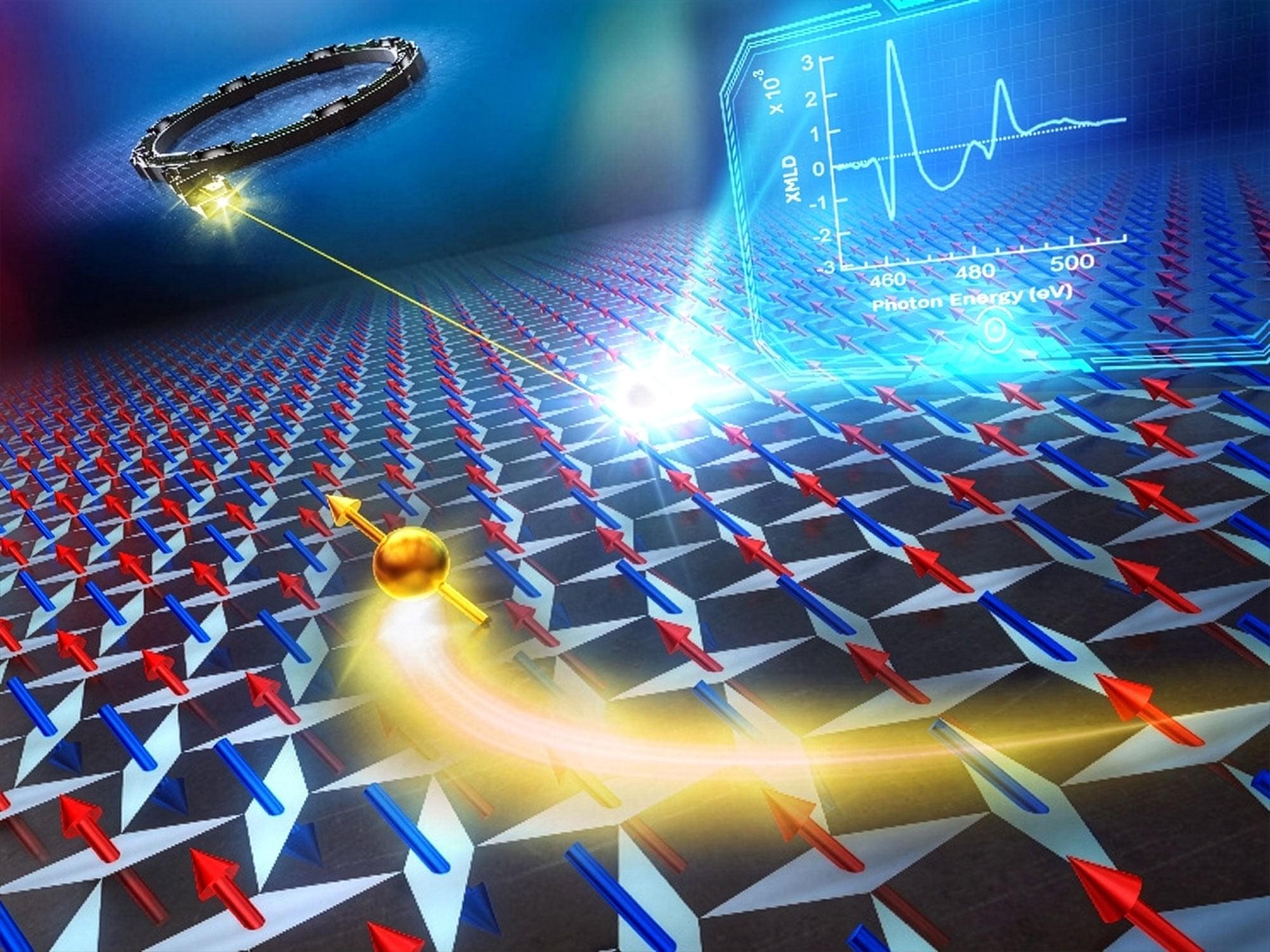
Scientists Identify Promising New Magnetic Material for the AI Era

A newly validated magnetic state could open a path toward ultra-fast, high-density memory for future AI and data-center technologies. A collaborative team of researchers from NIMS, the University of Tokyo, Kyoto Institute of Technology, and Tohoku University has shown that thin films of ruthenium

Alaska’s Arctic Is Burning Like Never Before in 3,000 Years

Wildfires across Alaska’s North Slope have been more frequent over the last century than at any point in the previous 3,000 years, according to new research published in the journal Biogeosciences.

The work was carried out in Arctic Alaska by an international group of scientists representing institutions in Germany, Poland, the United Kingdom, Romania, and the University of Alaska Fairbanks’ Toolik Field Station.

Angelica Feurdean, the study’s lead author and a senior researcher at Goethe University in Germany, explained that the team combined multiple scientific methods to piece together a long-term record of fire activity. The results suggest that the recent surge in wildfires is linked to expanding woody vegetation and increasingly dry soils, both of which are associated with rising temperatures.

New Pill Could Finally Treat Sleep Apnea Without a Mask

Sulthiame reduced breathing interruptions in sleep apnea patients, pointing toward a viable drug treatment. A European clinical trial has found that the drug sulthiame can reduce breathing pauses and improve sleep quality in people with obstructive sleep apnea, with researchers from the Universit

/* */