NVIDIA today introduced Clara Holoscan MGX™, a platform for the medical device industry to develop and deploy real-time AI applications at the edge, specifically designed to meet required regulatory standards.
Get the latest international news and world events from around the world.

Microsoft confirms it was breached by hacker group
Microsoft (MSFT) has confirmed it was breached by the hacker group Lapsus$, adding to the cyber gang’s growing list of victims.
In a blog post late Tuesday, Microsoft said Lapsus$ had compromised one of its accounts, resulting in “limited access” to company systems but not the data of any Microsoft customers.

More than 300 new hyperscale datacentres in development globally
Regardless of Pandemics, Wars, Supply chain shocks…the Planets digital brain capacity continues its near exponential growth.
When added to the 728 hyperscale datacentres that were in operation at the end of 2021 and factoring in [the] many new datacentre plans that will be announced over the next two to three years, we forecast that by the end of 2026 there will be an installed base of nearly 1,200 hyperscale datacentres around the world.
“Almost 40% of the world’s operational hyperscale datacentres are located in the US, and the bulk of the developments in the pipeline will also be US-based, with China and Ireland name-checked as the second and third countries with the most new builds planned.” The future looks bright for hyperscale operators, with double-digit annual growth in total revenues supported in large part by cloud revenues that will be growing in the 20–30% per year range,”
The number of hyperscale datacentre facilities in operation across the world is on course to hit the 1,200 mark by the end of 2026, according to forecast data shared by Synergy Research Group.
This prediction is based on the analyst house’s hyperscale market tracker service, which is designed to keep tabs on the activities of 19 cloud and internet service provider companies that meet its hyperscale definition criteria.
At the end of 2021, there was a total of 728 hyperscale facilities in operation around the world, its data shows. And – with a further 314 already in the pipeline – the installed base of large-scale server farms is on course to exceed the 1,000 mark in three years’ time, and will continue to grow rapidly in the years that follow.

Nadia Carlsten drives Amazon’s quest for a quantum breakthrough
The senior product manager leading hardware and software product development at the Center for Quantum Computing wants to make fault-tolerant quantum computing a reality.
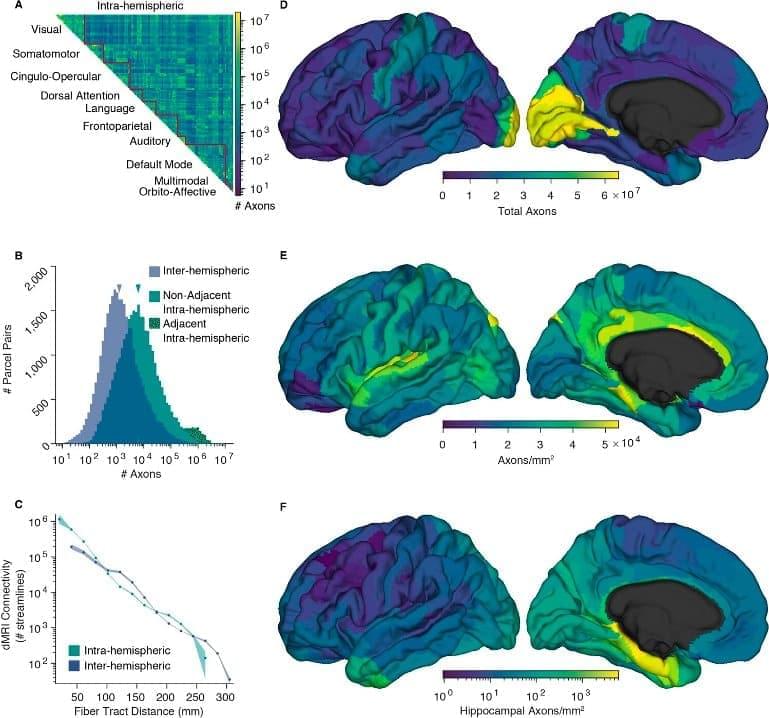
Distant Regions of the Human Brain Are Wired Together
Summary: Study reveals axon density is lower than previously believed between distant regions of the brain.
Source: PLOS
Understanding how the brain functions, particularly how information is processed during different activities, is difficult without knowing how many axons are in the brain and how many connect different functional regions.
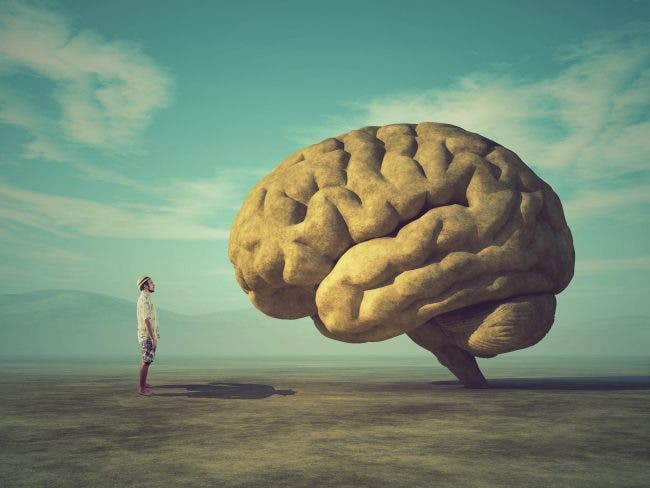
“Matter Into Consciousness” —Most Ancient Part of the Human Brain Reveals Its Secrets
“The human brain has 100 billion neurons, each neuron connected to 10 thousand other neurons. Sitting on your shoulders is the most complicated object in the known universe,” observes physicist Michio Kaku. The neocortex, observed Carl Sagan is where “matter is transformed into consciousness.” Located deep in the brain’s center, the subcortex, the most evolutionarily ancient part of our brain, processes everything from our basic senses to long-term memories.
“Most Perfectly Organized Part”
Noble Prize laureate Roger Penrose suggest that the human brain and its cerebral cortex, the folded gray matter that covers the first couple of millimeters of the outer brain like wrapping paper, is more complex than our Milky Way Galaxy. “If you look at the entire physical cosmos,” Penrose says, our brains are a tiny, tiny part of it. But they’re the most perfectly organized part.”
