Toggle light / dark theme

Get the latest international news and world events from around the world.

Log in for authorized contributors

Cerebral sulci and fissures

Cerebral sulci and fissures are grooves between the adjacent gyri on the surface of the cerebral hemispheres. By allowing the cortex to invaginate to form sulci and gyri the surface area of the cortex is The result is that the surface area of the human cortex is 2,200 cm2, only a third of which can be seen on the surface 4.

Gyri and sulci vary slightly in their dimensions and morphology between individuals or even between hemispheres. Some may not be present in a number of individuals and others deep enough to produce elevations on the surface of the ventricles (e.g. collateral sulcus, calcarine sulcus/calcar avis) 4. However, these variations are generally of no functional significance. In contrast, disorders of cortical formation can be associated with numerous and significant neurological symptoms and deficits.

Radiopedia:.
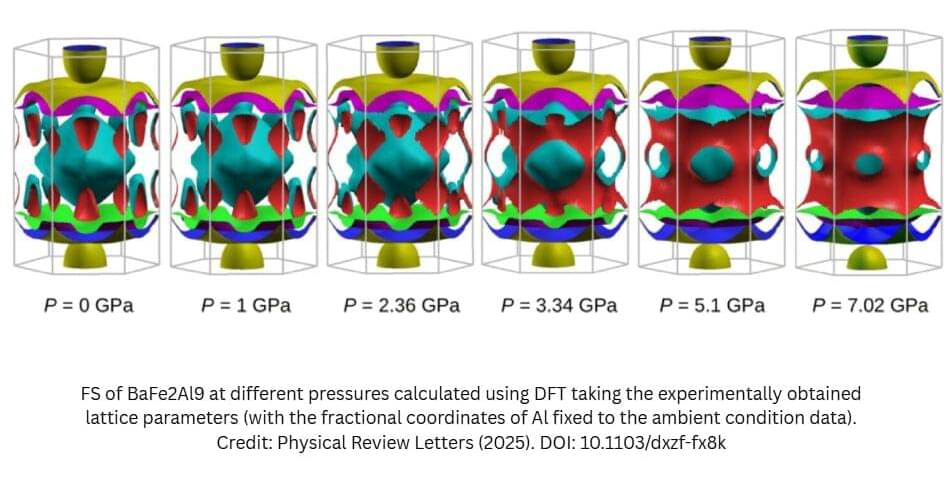
Room temperature electron behavior defies expectations, hinting at ultra-efficient electronics

Scientists have discovered a way to efficiently transfer electrical current through specific materials at room temperature, a finding that could revolutionize superconductivity and reshape energy preservation and generation.

The paper is published in the journal Physical Review Letters.

The much-sought-after breakthrough hinges on applying high pressure to certain materials, forcing their electrons closer together and unlocking extraordinary electronic behaviors.

Supernova immersion model suggests Earth-like planets are more common in the universe

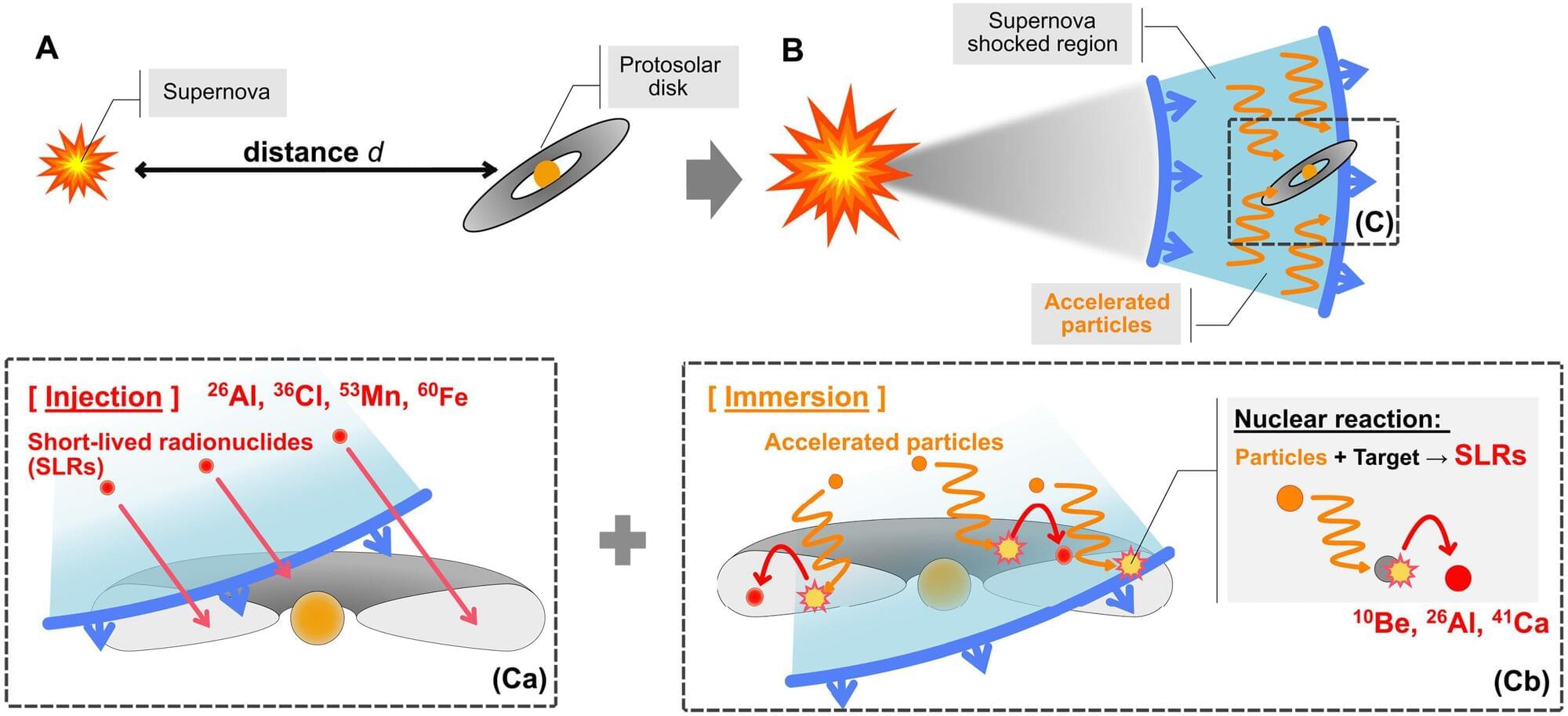
Rocky planets like our Earth may be far more common than previously thought, according to new research published in the journal Science Advances. It suggests that when our solar system formed, a nearby supernova (the massive explosion of a star near the end of its life) bathed it in cosmic rays containing the radioactive ingredients to make rocky, dry worlds. This mechanism could be ubiquitous across the galaxy.

Earth-like planets are thought to form from planetesimals (objects made of rock and ice) that were dried out early in the solar system’s history. This process required a lot of heat, which came primarily from the radioactive decay of short-lived radionuclides (SLRs), such as aluminum-26. Previous analysis of meteorites, which are ancient records of the early solar system, confirmed the abundance of SLRs at this time.

Flaws in previous models However, models that explain supernovae as the sole source of these SLRs cannot accurately match the quantity of the nucleotides found in meteorites. To deliver enough radioactive material, the supernova would have to be so close to the early solar system that it would have destroyed the disk of dust and gas where the planets were forming.

Science history: Richard Feynman gives a fun little lecture — and dreams up an entirely new field of physics — Dec. 29, 1959

In a short talk at Caltech, physicist Richard Feynman laid out a vision of manipulating and controlling atoms at the tiniest scale. It would precede the field of nanotechnology by decades.

The Physicist Who Says We’ve Already Quantized Gravity

Professor John Donoghue explains why quantum physics and gravity actually work perfectly together. He tackles quadratic gravity, effective field theory, and random dynamics, arguing that grand unification and naturalness aren’t required for a theory of everything.

As a listener of TOE you can get a special 20% off discount to The Economist and all it has to offer! Visit https://www.economist.com/toe.

SUPPORT:
Support me on Substack: https://curtjaimungal.substack.com/su

  • Support me on Crypto: https://commerce.coinbase.com/checkou
  • Support me on PayPal: https://www.paypal.com/donate?hosted_
  • JOIN MY SUBSTACK (Personal Writings): https://curtjaimungal.substack.com LISTEN ON SPOTIFY: https://open.spotify.com/show/4gL14b9… TIMESTAMPS:

    • 00:00:00 — Limits of Quantum Mechanics
    • 00:06:35 — Effective Field Theory
    • 00:12:24 — Gravity: Geometry or Force?
    • 00:18:46 — QFT and Gravity Tension
    • 00:24:59 — Quadratic Gravity Theory
    • 00:34:16 — Dueling Arrows of Causality
    • 00:41:57 — Random Dynamics and Anti-Unification
    • 00:48:13 — The Naturalness Problem
    • 00:53:40 — Questioning Hidden Assumptions

    LINKS MENTIONED:

    SOCIALS:

    • Twitter: / toewithcurt
    • Discord Invite: / discord

    Guests do not pay to appear. Theories of Everything receives revenue solely from viewer donations, platform ads, and clearly labelled sponsors; no guest or associated entity has ever given compensation, directly or through intermediaries. #science.
    Support me on Crypto: https://commerce.coinbase.com/checkou
    Support me on PayPal: https://www.paypal.com/donate?hosted_

    JOIN MY SUBSTACK (Personal Writings): https://curtjaimungal.substack.com.

    LISTEN ON SPOTIFY: https://open.spotify.com/show/4gL14b9

    TIMESTAMPS:

    Physicists Crack a New Code To Explore Dark Matter’s Hidden Life

    A new computational breakthrough is giving scientists a clearer view into how dark matter structures evolve. Dark matter has remained one of the biggest mysteries in cosmology for almost a hundred years, shaping the universe while remaining invisible and poorly understood. A new study from resear

    The “Robot Singularity”: When AGI Automates the Physical Economy

    Grab the Guide here👉: https://technomics.gumroad.com/l/ai-survival-guide.

    Everyone is obsessing over chatbots, but the true Singularity isn’t happening on a screen. It starts the moment super-intelligence gets a body.

    In this video, we break down The Robot Singularity: the moment AGI enters the physical economy and makes human labor mathematically obsolete.

    Video Timestamps:

    00:00 — The Hook: Why Digital AGI is Just the Beginning.

    00:48 — The Roadmap: Realizing Science Fiction.

    Bose-Einstein Condensate; When Atoms Act As One

    Bose–Einstein Condensate (BEC) explained: Cool a dilute gas of atoms to billionths of a degree above absolute zero and they merge into one coherent matter wave—a Bose–Einstein condensate. This video covers laser cooling, magnetic/optical traps, evaporative cooling, the onset of quantum degeneracy, and why a BEC behaves like a superfluid. See signatures: interference fringes, quantized vortices, long coherence length, and frictionless flow. Applications include atom interferometers (precision gravity and rotation sensing), quantum simulation of complex materials, and space-based experiments (ISS Cold Atom Lab). We also touch on first BECs (1995, rubidium/sodium), critical temperature, and why bosons condense while fermions do not.

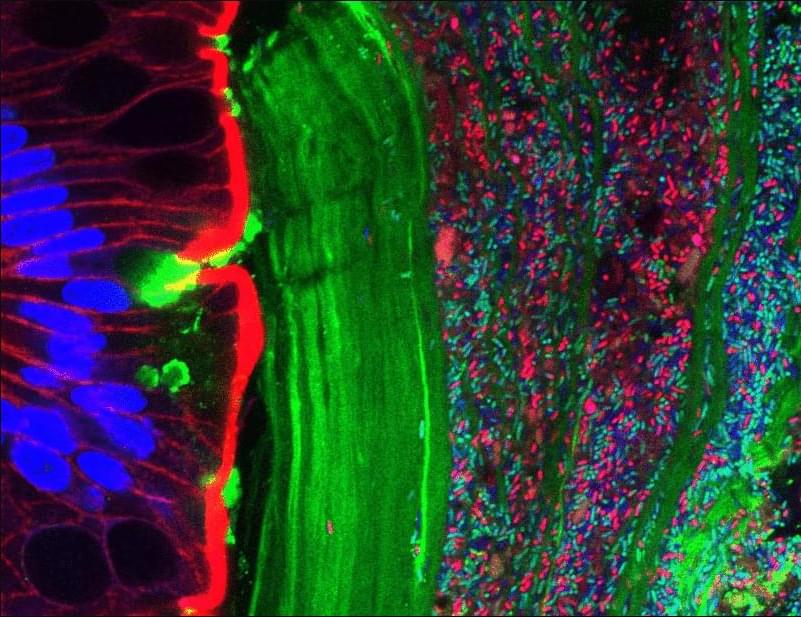
    Controlled colonization of the human gut with a genetically engineered microbial therapeutic

    Great paper highlighting key challenges for genetically engineered bacterial therapies in the human gut. It is respectable that this paper was published in Science despite some “negative” results. Although the genetically engineered bacteria were all supposed to die after removal of porphyrin from the diet, they sometimes rebounded. Even with an improved porphyrin pathway which was supposed to resist mutational rebound, the bacteria still persisted in a mouse model, apparently by mysterious non-mutational means. Maybe the microbiomes of the mice somehow supplied porphyrin to the bacteria without the knowledge of the researchers. Furthermore, therapeutic application of the genetically engineered bacteria in humans only resulted in modest (and not statistically significant) decreases in urine oxalate. This was partly due to horizontal gene transfer which replaced the engineered oxalate degradation pathway and partly due to the general fitness burden of the engineered oxalate degradation pathway. As such, this paper revealed a lot of important obstacles which will need to be worked on for bacterial therapies to move forward in the future.

    (https://www.science.org/doi/10.1126/science.adu8000)


    Precision microbiome programming for therapeutic applications is limited by challenges in achieving reproducible colonic colonization. Previously, we created an exclusive niche that we used to engraft engineered bacteria into diverse microbiota in mice by using a porphyran prebiotic. Building on this approach, we have now engineered conditional attenuation into a porphyran-utilizing strain of Phocaeicola vulgatus by replacing native essential gene regulation with a porphyran-inducible promoter to allow reversible engraftment. Engineering a five-gene oxalate degradation pathway into the reversibly engrafting strain resulted in a therapeutic candidate that reduced hyperoxaluria, a cause of kidney stones, in preclinical models.

    /* */