WatchGuard fixed CVE-2025–14733, a critical Fireware OS VPN flaw with CVSS 9.3 that is actively exploited in the wild.


Authorities in Nigeria have announced the arrest of three “high-profile internet fraud suspects” who are alleged to have been involved in phishing attacks targeting major corporations, including the main developer behind the RaccoonO365 phishing-as-a-service (PhaaS) scheme.
The Nigeria Police Force National Cybercrime Centre (NPF–NCCC) said investigations conducted in collaboration with Microsoft and the Federal Bureau of Investigation (FBI) led to the identification of Okitipi Samuel, also known as Moses Felix, as the principal suspect and developer of the phishing infrastructure.
“Investigations reveal that he operated a Telegram channel through which phishing links were sold in exchange for cryptocurrency and hosted fraudulent login portals on Cloudflare using stolen or fraudulently obtained email credentials,” the NPF said in a post shared on social media.


Multiple threat actors are compromising Microsoft 365 accounts in phishing attacks that leverage the OAuth device code authorization mechanism.
Attackers trick victims into entering a device code on Microsoft’s legitimate device login page, unknowingly authorizing an attacker-controlled application and granting them access to the target account without stealing credentials or bypassing multi-factor authentication (MFA).
Although the method isn’t new, email security firm Proofpoint says that these attacks have increased significantly in volume since September, and involve both financially motivated cybercriminals like TA2723 and state-aligned threat actors.

Internet security watchdog Shadowserver has found over 25,000 Fortinet devices exposed online with FortiCloud SSO enabled, amid ongoing attacks targeting a critical authentication bypass vulnerability.
Fortinet noted on December 9th, when it patched the security flaw tracked as CVE-2025–59718 (FortiOS, FortiProxy, FortiSwitchManager) and CVE-2025–59719 (FortiWeb), that the vulnerable FortiCloud SSO login feature is not enabled until admins register the device with the company’s FortiCare support service.
As cybersecurity company Arctic Wolf reported on Monday, the vulnerability is now actively exploited to compromise admin accounts via malicious single sign-on (SSO) logins.

Explore a shape that can’t pass through itself, a teenage prodigy, and two new kinds of infinity.
2025 Year in Review of LLM paradigm changes
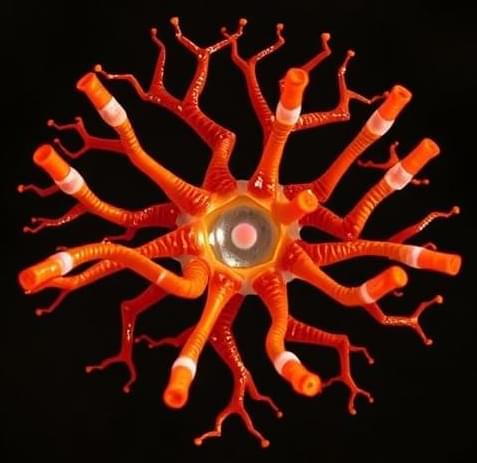
Studying the intricate molecular mechanisms that govern the assembly of the human nervous system has long been one of the most significant challenges in developmental biology and neuroscience. Researchers are continuously seeking a deeper understanding of how the human brain is built and what leads to various neurological disorders. Recent advancements in stem cell technology, particularly the ability to generate neural cells from pluripotent stem cells, coupled with the power of genome-editing tools like CRISPR-Cas9, are setting the stage for groundbreaking insights into human neurodevelopment and associated diseases. These technological innovations open new avenues for research that were previously thought to be unattainable.
The emergence of organoids and assembloids—miniature, simplified versions of brain tissue—has revolutionized the way scientists can model human development in vitro. Organoids replicate some of the complexity of human brain structures, allowing researchers to visualize developmental processes such as the specification, migration, and integration of neurons. This is particularly important for cortical interneurons, which migrate from the ventral forebrain to the dorsal forebrain during early brain development. These in vitro models provide an opportunity to study these intricate processes more closely and could lead to transformative discoveries in our understanding of brain diseases.
In a significant advancement outlined in recent research, scientists have developed a detailed protocol that marries pooled CRISPR-Cas9 screening with neural organoid and assembloid models. This innovative approach enables researchers to map hundreds of disease-related genes onto specific cellular pathways and critical aspects of human neural development. Such a strategy can significantly enhance our understanding of how various genes contribute to essential neuronal functions and the onset of neurological diseases, thereby paving the way for the development of novel therapeutic interventions.
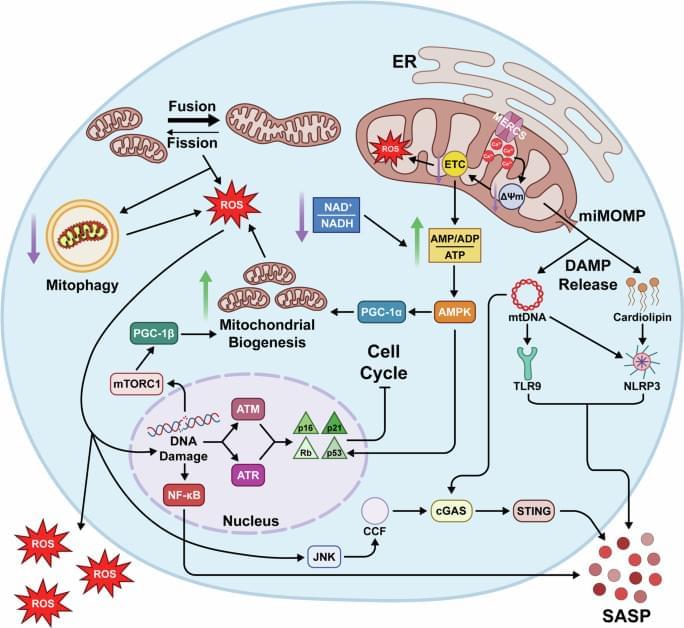
Hruby, A.J., Higuchi-Sanabria, R. Mitochondrial dysfunction in cellular senescence: a bridge to neurodegenerative disease. npj Aging 11, 99 (2025). https://doi.org/10.1038/s41514-025-00291-4