Toggle light / dark theme

Get the latest international news and world events from around the world.

Log in for authorized contributors

Researchers revive the pinhole camera for next-gen infrared imaging

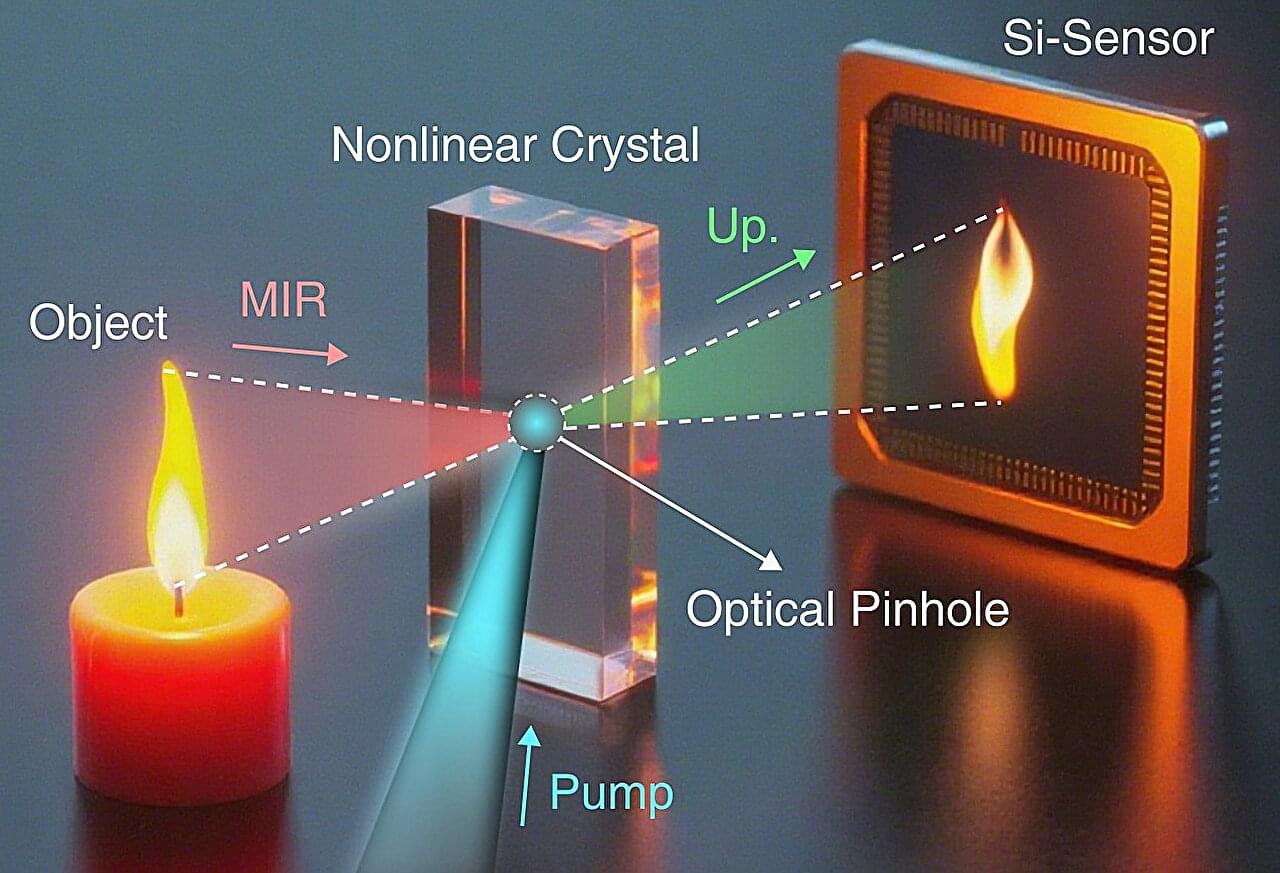
Researchers have used the centuries-old idea of pinhole imaging to create a high-performance mid-infrared imaging system without lenses. The new camera can capture extremely clear pictures over a large range of distances and in low light, making it useful for situations that are challenging for traditional cameras.

“Many useful signals are in the mid-infrared, such as heat and molecular fingerprints, but cameras working at these wavelengths are often noisy, expensive or require cooling,” said research team leader Heping Zeng from East China Normal University. “Moreover, traditional lens-based setups have a limited depth of field and need careful design to minimize optical distortions. We developed a high-sensitivity, lens-free approach that delivers a much larger depth of field and field of view than other systems.”

Writing in Optica, the researchers describe how they use light to form a tiny “optical pinhole” inside a nonlinear crystal, which also turns the into a visible one. Using this setup, they acquired clear mid-infrared images with a depth of field of over 35 cm and a field of view of more than 6 cm. They were also able to use the system to acquire 3D images.

From noise to power: A symmetric ratchet motor discovery

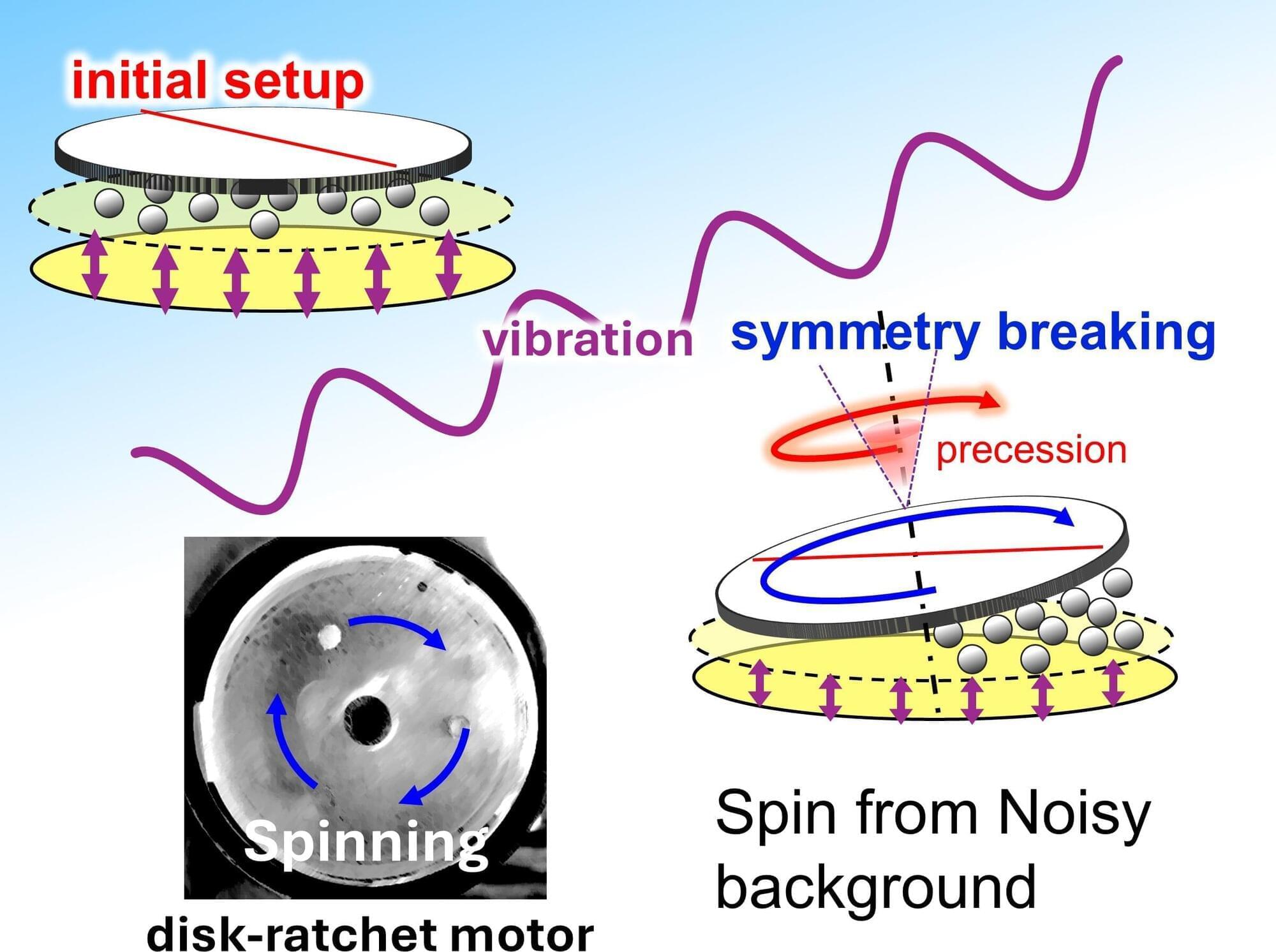
Vibrations are everywhere—from the hum of machinery to the rumble of transport systems. Usually, these random motions are wasted and dissipated without producing any usable work.

Recently, scientists have been fascinated by “ratchet systems,” which are that rectify chaotic vibrations into directional motion. In biology, molecular motors achieve this feat within living cells to drive the essential processes by converting random molecular collisions into purposeful motions. However, at a large scale, these ratchet systems have always relied on built-in asymmetry, such as gears or uneven surfaces.

Moving beyond this reliance on asymmetry, a team of researchers led by Ms. Miku Hatatani, a Ph.D. student at the Graduate School of Science and Engineering, along with Mr. Junpei Oguni, graduate school alumnus at the Graduate School of Science and Engineering, Professor Daigo Yamamoto and Professor Akihisa Shioi from the Department of Chemical Engineering and Materials Science at Doshisha University, demonstrate the world’s first symmetric ratchet motor.

Rice research team on quest to engineer computing systems from living cells

Rice University biosciences professor Matthew Bennett has received a $1.99 million grant from the National Science Foundation to lead research on engineered bacterial consortia that could form the basis of biological computing systems. The four-year project will also involve co-principal investigators Kirstin Matthews, Caroline Ajo-Franklin and Anastasios Kyrillidis from Rice along with Krešimir Josić from the University of Houston. The research team aims to develop platforms that integrate microbial sensing and communication with electronic networks, paving the way for computing systems constructed from living cells instead of traditional silicon-based hardware.

The project highlights the growing potential of synthetic biology, where microbes are examined not just as living organisms but as processors of information. If successful, Bennett’s research could accelerate medical diagnostics, environmental monitoring and the development of next-generation computing applications.

“Microbes are remarkable information processors, and we want to understand how to connect them into networks that behave intelligently,” Bennett said. “By integrating biology with electronics, we hope to create a new class of computing platforms that can adapt, learn and respond to their environments.”

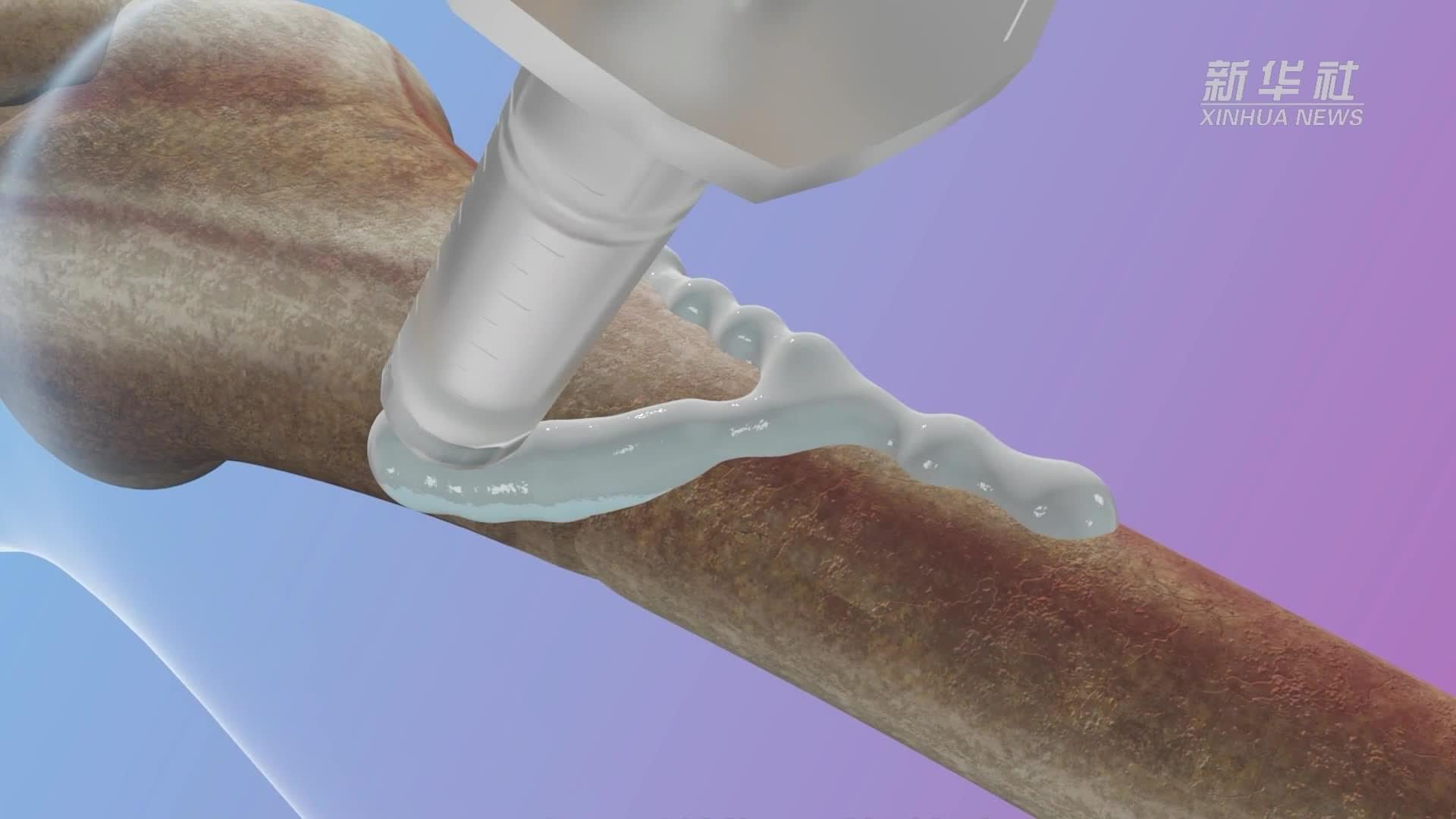
Chinese researchers on Tuesday unveiled their self-developed world’s first “bone glue”

Material capable of securely bonding fractured bone fragments within 2–3 minutes in a blood-rich environment.


ในช่วงไม่กี่ปีที่ผ่านมา จีนได้แสดงศักยภาพด้านวิทยาศาสตร์การแพทย์อย่างต่อเนื่อง หนึ่งในผลงานที่ได้รับความสนใจระดับโลกคือการพัฒนาวัสดุชีวภาพชนิดใหม่ที่เรียกว่ากาวกระดูก (Bine Glue) ที่สามารถเชื่อมกระดูกที่หักให้ติดกันได้ภายในระยะเวลาเพียง 3 นาที

/* */