Ulcerative colitis induces stem- and effector-like γδ T cell subsets influencing therapeutic response.
Dark matter is a type of matter that is predicted to make up most of the matter in the universe, yet it is very difficult to detect using conventional experimental techniques, as it does not emit, absorb, or reflect light. While some past studies gathered indirect hints of its existence, dark matter has never been directly observed; thus, its composition remains a mystery.
One hypothesis is that dark matter is made up of axionlike particles with an extremely low mass, broadly referred to as ultralight axionlike dark matter (ALDM). As these particles are exceedingly light, predictions suggest that they would behave more like waves than individual particles on a galactic scale.
The PPTA collaboration, a large team of researchers based at different institutes worldwide, applied a new approach to search for ALDM by cross-correlating polarization data of pulsars, neutron stars that spin rapidly and emit highly regular beams of radio waves. This approach, termed the “Pulsar Polarization Array (PPA),” entails measuring the polarization position angles of a series of pulsars and how they changed over time and with respect to pulsar spatial position.
Welcome Friends to another Expanse video, this is an attempt to thread together everything we know about the Ring Builders history barring events in the last few books, this is speculative and based on my own thoughts and the opinions of others that make sense to me, just wanted to be up front about that.
You disagree with something, no bother let you voice be known in the comments.
Lets get straight into it.
Miracle Mineral Solution, also known as MMS, has been marketed for years as a purported miracle cure for various conditions, including cancer, autism, and COVID-19. MMS is the marketing name for sodium chlorite (NaClO₂), a powerful disinfectant used, among other things, for water treatment. When sodium chlorite is acidified, chlorine dioxide (ClO₂) is formed. Its consumption can be hazardous to health.
A team of scientists from Wroclaw Medical University decided to investigate this.
In a study published in Scientific Reports, they analyzed the effects of acidified sodium chlorite (ASC), from which ClO₂ is produced.
The world is prepping for 2030. But the math says the break happens two years early. 📥 Download the FREE Singularity Survival Guide (Assessment+Timeline): https://technomics.gumroad.com/l/ai-s…
In this video: While governments draft \.
As a listener of TOE you can get a special 20% off discount to The Economist and all it has to offer! Visit https://www.economist.com/toe.
Join My New Substack (Personal Writings): https://curtjaimungal.substack.com.
Listen on Spotify: https://tinyurl.com/SpotifyTOE
Become a YouTube Member (Early Access Videos):
https://www.youtube.com/channel/UCdWIQh9DGG6uhJk8eyIFl1w/join.
Support TOE on Patreon: https://patreon.com/curtjaimungal.
Twitter: https://twitter.com/TOEwithCurt.
The interdict hypothesis is interesting too.
An exploration of the firstborn and reset hypothetical solutions to the Fermi Paradox.
My Patreon Page:
https://www.patreon.com/johnmichaelgodier.
My Event Horizon Channel:
Aging doesn’t rewrite your DNA, it scrambles how your cells read it.
This clip explains epigenetic drift and how Life Biosciences’ therapy, ER100, uses Yamanaka factors to restore youthful epigenetic patterns in aged cells. By resetting the chemical marks that control gene expression, cells can behave as if they’re young again without changing the underlying DNA.
It’s the same biological process that happens early in embryonic development, applied in a controlled way to adult cells.
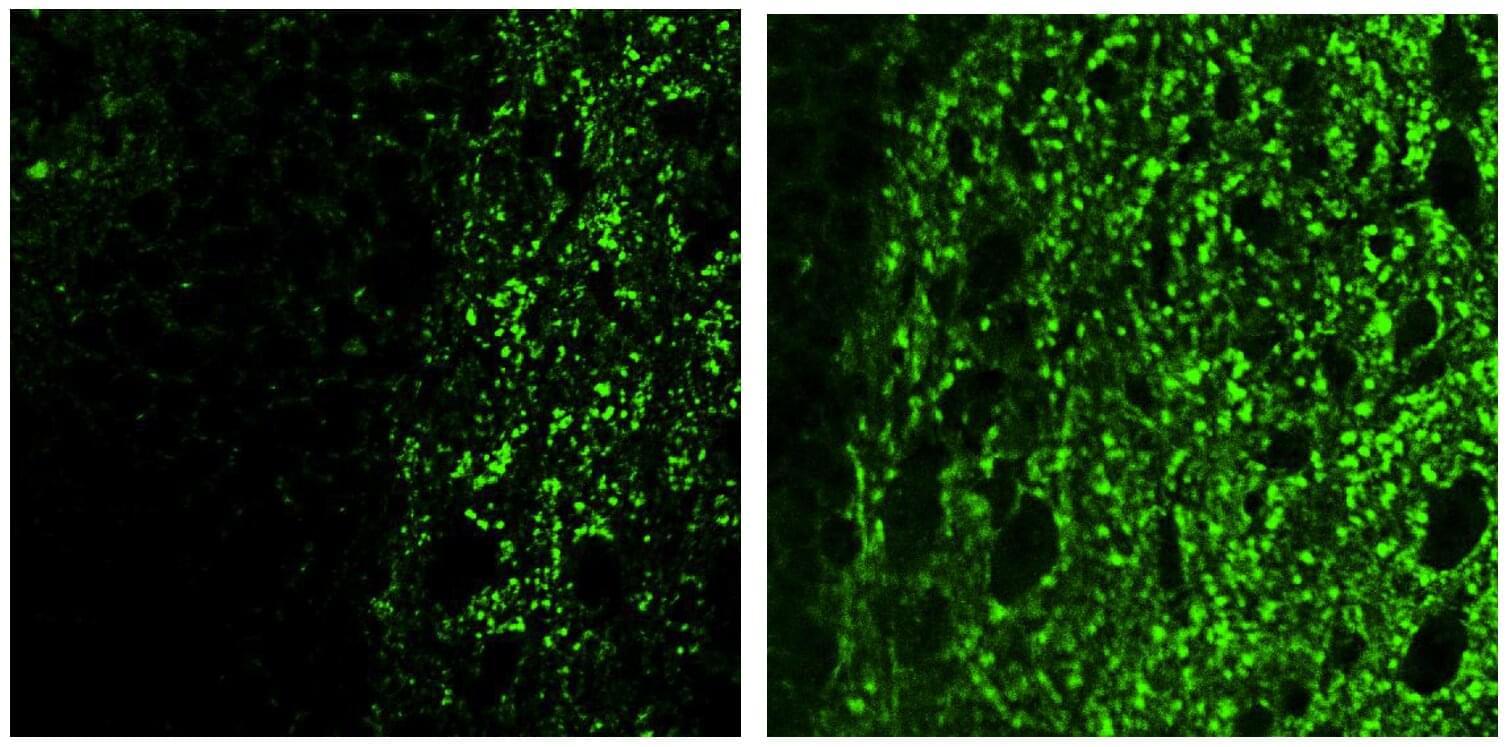
Emilio Hirsch & team identify SH3BP5L as the most highly expressed guanine nucleotide exchange factor (GEF) for RAB11A, and its inhibition lowers lung metastasis and cell spreading in triple negative breast cancer models (TNBC):
The figure shows immunohistochemical assessment of SH3BP5L expression in tissue from patients with breast cancer.
@unito.it @fondazioneumbertoveronesi
1Department of Molecular Biotechnology and Health Sciences, Molecular Biotechnology Center “G. Tarone,” University of Torino, Torino, Italy.
2IEO, European Institute of Oncology IRCCS, Milan, Italy.
3Department of Oncology and Hemato-Oncology, University of Milano, Milano, Italy.