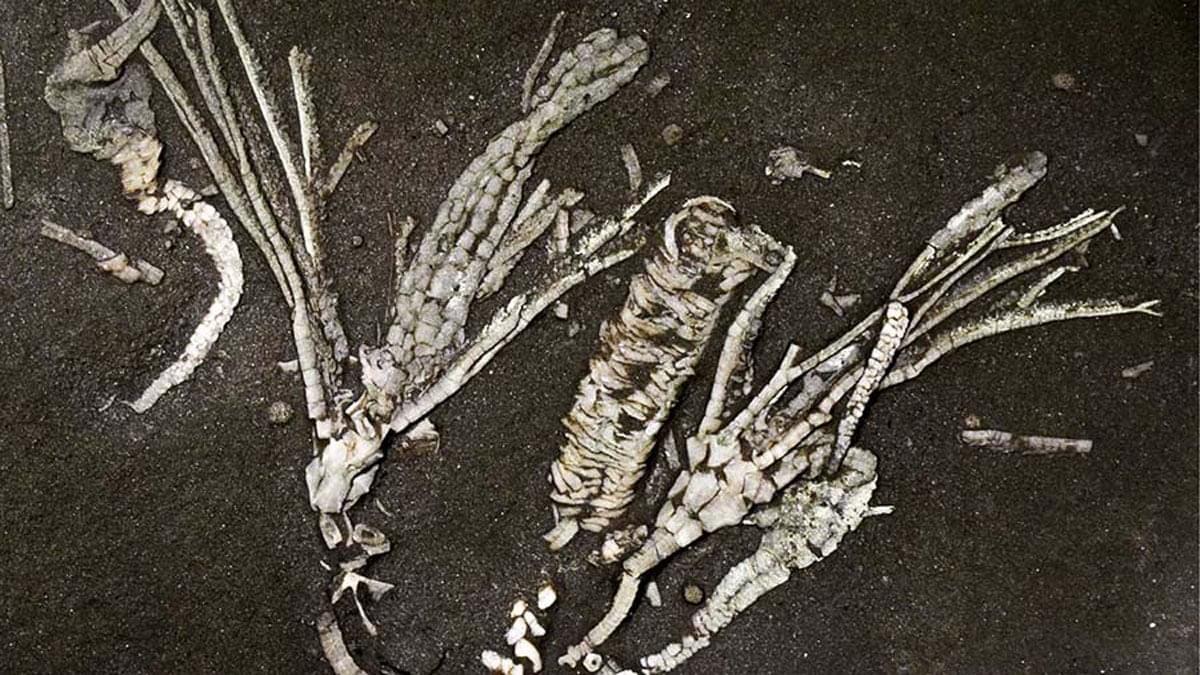
A rare 450-million-year-old fossil with preserved soft tissue is revealing how some of Earth’s earliest reef animals lived and evolved.
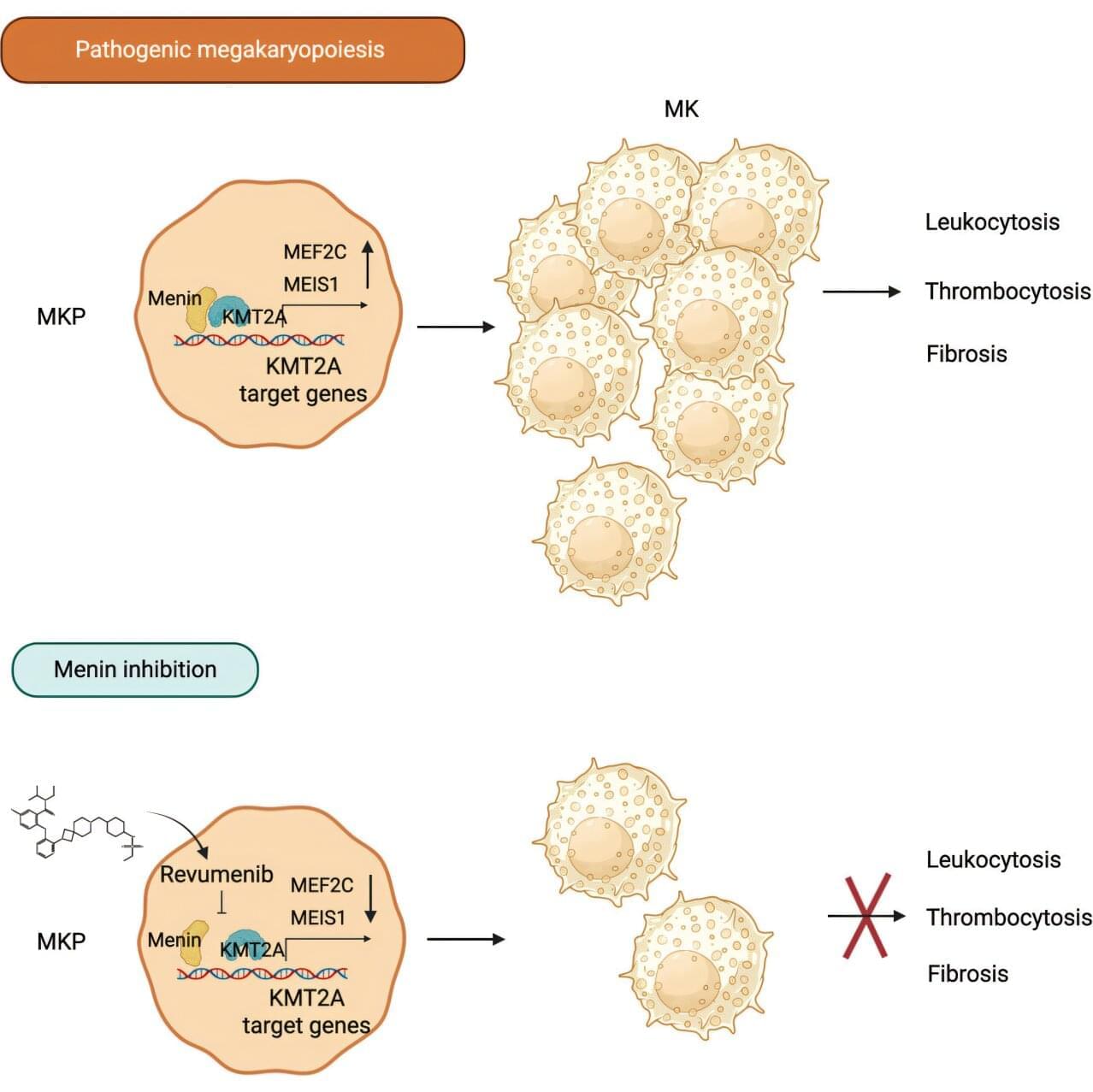
Inhibiting menin, a protein that supports leukemia growth and is already targeted to treat some forms of leukemia, also holds promise for treating myeloproliferative neoplasms. A new study from scientists at St. Jude Children’s Research Hospital showed that inhibiting menin significantly extended survival and reversed multiple disease features in preclinical models. The findings were published today in Cancer Cell.
Menin is best known as a therapeutic vulnerability in certain types of acute leukemia, including those with KMT2A gene rearrangements or NPM1 mutations. Menin inhibitors, such as revumenib, have greatly improved treatment for these cancers and are approved by the Food and Drug Administration (FDA). However, menin inhibition can reduce megakaryocytes (normal platelet-forming cells) and decrease platelet counts. Producing too many megakaryocytes is a hallmark of diseases called myeloproliferative neoplasms, which are slow-developing, rare blood cancers.
John Crispino, Ph.D., MBA, St. Jude Division of Experimental Hematology director and Department of Hematology member, tested whether inhibiting menin could be a viable therapeutic strategy for myeloproliferative neoplasms.
Lex Fridman Podcast full episode: • Michael Levin: Hidden Reality of Alien Int…
Thank you for listening ❤ Check out our sponsors: https://lexfridman.com/sponsors/cv949…
See below for guest bio, links, and to give feedback, submit questions, contact Lex, etc.
GUEST BIO:
Michael Levin is a biologist at Tufts University working on novel ways to understand and control complex pattern formation in biological systems.
CONTACT LEX:
Feedback — give feedback to Lex: https://lexfridman.com/survey.
AMA — submit questions, videos or call-in: https://lexfridman.com/ama.
Hiring — join our team: https://lexfridman.com/hiring.
Other — other ways to get in touch: https://lexfridman.com/contact.
EPISODE LINKS:
Michael Levin’s X: https://twitter.com/drmichaellevin.
Michael Levin’s Website: https://drmichaellevin.org.
Michael Levin’s Papers: https://drmichaellevin.org/publications/
Biological Robots: https://arxiv.org/abs/2207.00880
Classical Sorting Algorithms: https://arxiv.org/abs/2401.05375
Aging as a Morphostasis Defect: https://pubmed.ncbi.nlm.nih.gov/38636…
TAME: https://arxiv.org/abs/2201.10346
Synthetic Living Machines: https://www.science.org/doi/10.1126/scirobotics.abf1571
SPONSORS:
To support this podcast, check out our sponsors & get discounts:
Shopify: Sell stuff online.
Go to https://lexfridman.com/s/shopify-cv9491-sa.
CodeRabbit: AI-powered code reviews.
Go to https://lexfridman.com/s/coderabbit-cv9491-sa.
LMNT: Zero-sugar electrolyte drink mix.
Go to https://lexfridman.com/s/lmnt-cv9491-sa.
UPLIFT Desk: Standing desks and office ergonomics.
Go to https://lexfridman.com/s/uplift_desk-cv9491-sa.
Miro: Online collaborative whiteboard platform.
Go to https://lexfridman.com/s/miro-cv9491-sa.
MasterClass: Online classes from world-class experts.
Go to https://lexfridman.com/s/masterclass-cv9491-sa.
PODCAST LINKS:

In the future, iron might be used as a chemical energy storage material, making large quantities of renewable energy available in the long term. Iron powder is combusted in a cyclic process that is carbon neutral and then reconverted to its original state using energy input. Scientists at Karlsruhe Institute of Technology (KIT) were the first to conduct an extensive study to evaluate the potential of this technology for power generation. Their results show that iron, while not superseding hydrogen, may usefully complement it in a climate-neutral energy system. The findings have been published in Chem Circularity.
Be it for wind energy from coastal regions or for solar power from desert areas, iron could serve as a transportable energy carrier in the future to make these renewable energy sources usable worldwide. “This works in a cycle that emits no carbon dioxide or environmentally harmful substances,” said Julia Schuler from KIT’s Institute for Industrial Production (IIP). For power generation, iron powder is combusted, producing iron oxide, i.e. rust. Using hydrogen from renewable sources, it is reduced to iron again in a process that removes the oxygen it contains. The iron powder can then be reused.
“When burned, iron powder behaves very much like coal. We wanted to find out whether it was possible to repurpose existing coal power plants to iron-firing,” said Schuler. She believes that modifications are primarily necessary in the heat generator; other components, such as the steam cycle, turbines, generator and power grid connection, could continue to be used.
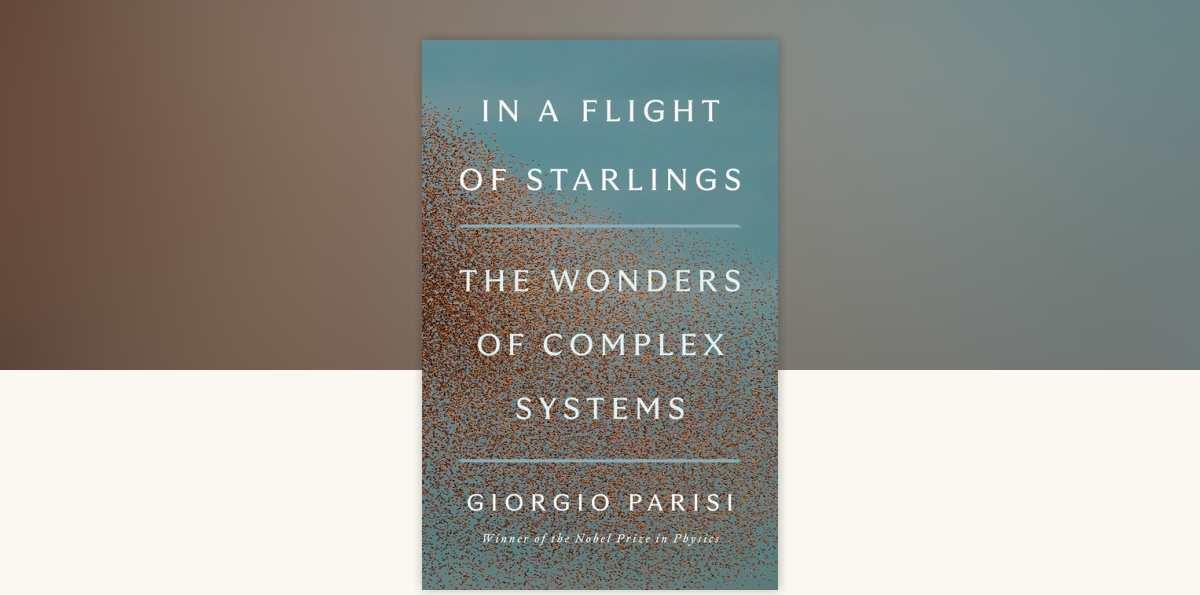
From the 2021 Nobel Prize winner in Physics, an enlightening and personal journey into the practice of groundbreaking science.
“[Giorgio Parisi is] an extraordinary scientist.” —Carlo Rovelli
With In a Flight of Starlings, celebrated physicist Giorgio Parisi guides us through his unorthodox yet exhilarating work, starting with investigating the principles of physics by observing the flight of flocks of birds. Studying the movements of these communities, he has realized, proves an illuminating way into understanding complex systems of all kinds—collections of everything from atoms and planets to other animals, such as ourselves.

Often compared to Frank Herbert’s Dune, this story follows advanced civilizations and their fates across a dark galaxy as they begin to discover the remnants of a far superior progenitor civilization, one that disappeared long before the galactic dating system even began.
This is a full version of Homeworld 1 lore series all put together into one long form video. Enjoy!
Chapters:
00:00 Progenitor Civilization & The Exiles.
05:56 Alien Super-Technology.
09:06 The Great Nebula.
17:49 The Galactic Core.
20:19 Alien Mega-Structures.
22:49 The Homeworld.
Characters and terminology mentioned in the video:
Kharak: The desert planet where Kushan have been exiled 4,000 years ago.
Bentusi: The oldest known alien civilization, and the only one to officially posses hyperspace far-jump technology. Unlike short-jump, it allows near-instantaneous travel to virtually any location in the galaxy.
Taiidan: A powerful empire controlling much of the inner galaxy, including Hiigara.
Kushan: A humanoid civilization exiled from Hiigara 4,000 years ago by the Taiidan. They settled on a desert planet called Kharak. After integrating forbidden hyperspace far-jump core into their Mothership, Kharak was destroyed by the Taiidan.
Kadeshi: The same species as the Kushan. During exile, they settled inside the Great Nebula, which they now call the Garden of Kadesh.
Karan S’jet: The living mind of the Kushan Mothership. Something like a navigator from Dune.
Turanic Raiders: Hostile alien civilization loyal to the Taiidan.
Hyperspace Inhibitors: Technology that shuts down hyperspace engines of any passing ship in a very large radius.
Hiigara: Ancient home of the Kushan, before their exile.
Captain Elson: The leader of Taiidan Rebelion.
You can get the remastered game at: https://store.steampowered.com/
Good Site for Homeworld lore: https://homeworld.fandom.com.
Footage:
Join us on Patreon! / michaellustgartenphd.
Discount Links/Affiliates:
Blood testing (where I get the majority of my labs, for those who blood test with Quest): https://www.ultalabtests.com/partners… those who blood test with LabCorp: https://www.anrdoezrs.net/click-10161… At-Home Metabolomics: https://www.iollo.com?ref=michael-lus… Use Code: CONQUERAGING At Checkout Clearly Filtered Water Filter: https://get.aspr.app/SHoPY Epigenetic, Telomere Testing: https://trudiagnostic.com/?irclickid=… Use Code: CONQUERAGING NAD+ Quantification: https://www.jinfiniti.com/intracellul… Use Code: ConquerAging At Checkout Oral Microbiome: https://www.bristlehealth.com/?ref=mi… Enter Code: ConquerAging SiphoxHealth Blood Testing (ApoB, GrimAge): https://siphoxhealth.com/mlustgarten Green Tea: https://www.ochaandco.com/?ref=fqbtflod Use Code: ML10OFF Diet Tracking: https://shareasale.com/r.cfm?b=139013… If you’d like to support the channel, you can do that with the website, Buy Me A Coffee: https://www.buymeacoffee.com/mlhnrca Conquer Aging Or Die Trying Merch! https://my-store-d4e7df.creator-sprin…
Blood Testing Essentials (Biological Age, CVD-Risk, Kidney Health and Function):
PhenoAge (Biological Age): https://www.ultalabtests.com/partners…
Measure the Bortz biological clock biomarkers: https://www.ultalabtests.com/partners…
Calculate your biological age using the Bortz clock: https://www.longevity-tools.com/human…