
From extreme cold to strong magnets and high pressures, the Synergetic Extreme Condition User Facility (SECUF) provides conditions for researching these potential wonder materials.
Get the latest international news and world events from around the world.
Researchers develop a new way to instruct dance in virtual reality
Researchers at Aalto University were looking for better ways to instruct dance choreography in virtual reality. The new WAVE technique they developed will be presented in May at the CHI conference for human-computer interaction research.
Previous techniques have largely relied on pre-rehearsal and simplification.
“In virtual reality, it is difficult to visualize and communicate how a dancer should move. The human body is so multi-dimensional, and it is difficult to take in rich data in real-time,” says Professor Perttu Hämäläinen.
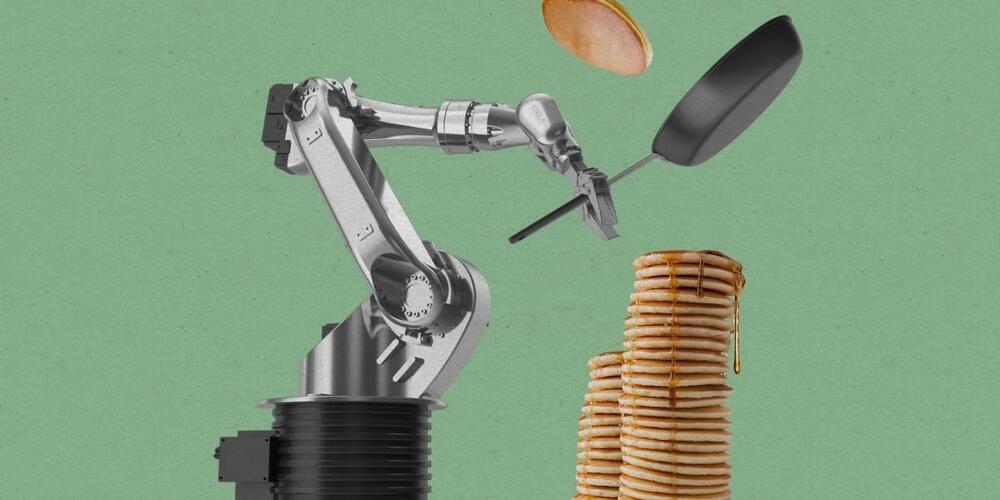
The robot race is fueling a fight for training data
AI is upending the way robots learn, leaving companies and researchers with a need for more data. Getting it means wrestling with a host of ethical and legal questions.

Advances in Cancer Therapy: Posttranslational Modifications of PD-1/PD-L1 and Regulatory Pathways
The following is a summary of “Emerging therapeutic frontiers in cancer: insights into posttranslational modifications of PD-1/PD-L1 and regulatory pathways,” published in the April 2024 issue of Hematology by Wang et al.
The intricate interplay between programmed cell death ligand 1 (PD-L1), expressed on the surface of tumor cells, and programmed cell death 1 (PD-1), expressed on T cells, constitutes a pivotal mechanism fostering immune evasion by tumor cells through the thwarting of effective tumor antigen-specific T cell activation. The advent of PD-1/PD-L1 blockade has emerged as a transformative strategy in combating tumor immune evasion, garnering substantial interest within the oncology landscape. Clinical investigations have underscored the remarkable efficacy and safety profile of PD-1/PD-L1 blocking antibodies across a spectrum of malignancies, offering a beacon of hope for patients.
Nonetheless, the therapeutic landscape of anti-PD-1/PD-L1 interventions is fraught with challenges, including limited indications and the emergence of drug resistance, necessitating a nuanced approach to therapeutic intervention. Accordingly, unraveling additional regulatory pathways and molecular players associated with PD-1/PD-L1 signaling assumes paramount importance, alongside the strategic implementation of combinational therapeutic modalities, to address the multifaceted dynamics of tumor immune evasion.
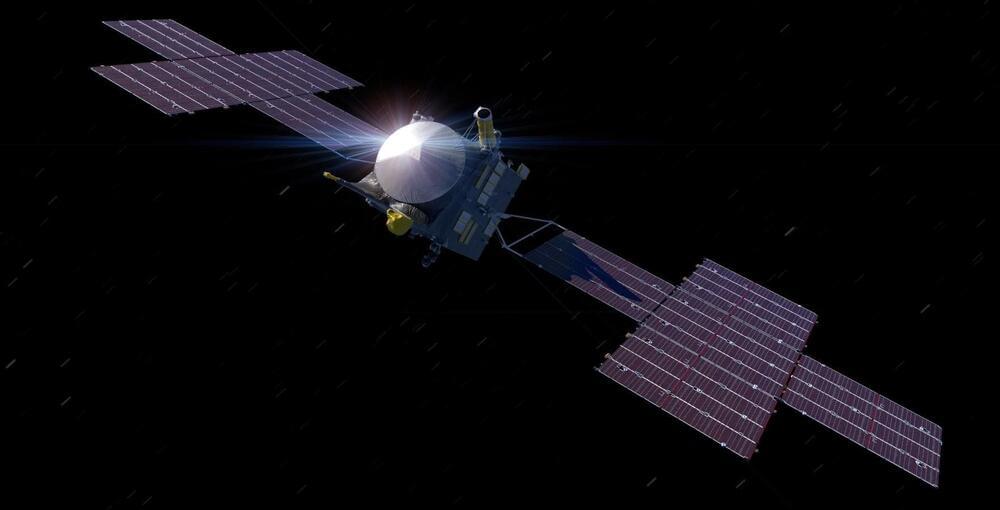
NASA’s Psyche sends back engineering data via laser beam
So we can now entertain idea of overseeing our solar system by placing a network of comm satelites…live orbital feeds from at least our neerest solar objects.
Laser beam comms are fast, so long as the weather cooperates.

Scientists rework Schrödinger’s cat equation to unite Einstein’s relativity and quantum mechanics
A new study proposes modifications to the fundamental equation of quantum mechanics, potentially bridging the gap between these two seemingly contradictory frameworks.

Cancer breakthrough as new drug shrinks up to 70% of pancreatic tumors in study
Span id= docs-internal-guid-22e50605-7fff-85cc-2e77-221436f3b938

Turning up the heat on data storage
Researchers from Penn have developed a heat-resistant memory device that can withstand temperatures over 1,000° F. Their findings pave the way for AI computing in extreme environments.
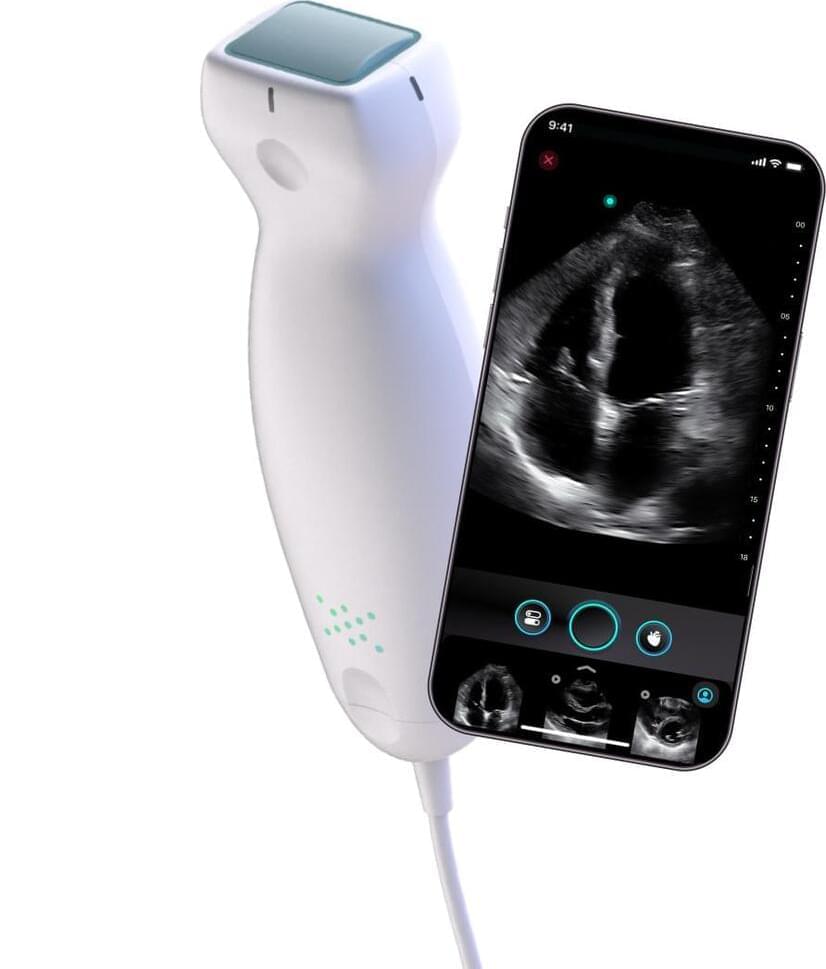
Exo Iris has Arrived
Exo Iris delivers high-performance imaging that fits in your pocket. Powered by advanced silicon technology and artificial intelligence that wraps into a wider ecosystem, Exo Iris represents a new age for ultrasound.
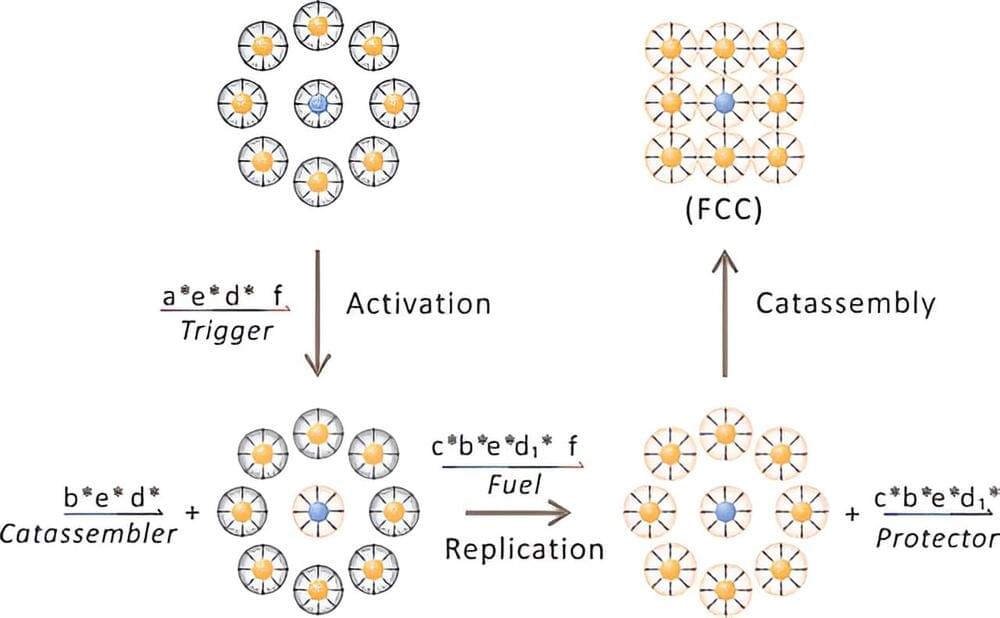
Scientists construct sophisticated synthetic system using self-replicating nanostructures
A research team led by the late Professor Liang Haojun from the Hefei National Laboratory for Physical Sciences at the Microscale of University of Science and Technology of China (USTC) has developed a facile enthalpy-mediated strategy to precisely control the replication and catalytic assembly of DNA-functionalized colloids in a time-dependent manner, facilitating the creation of large-scale ordered nanomaterials. The study was published in Angewandte Chemie International Edition.
The replication of information is a fundamental characteristic of nature, with nucleic acids playing a crucial role in biological systems. However, creating synthetic systems that can produce large-scale, three-dimensionally ordered nanomaterials using self-replicating nanostructures has remained a formidable challenge.
Existing artificial self-replicating systems often fall short in programmable assembly into sophisticated nanostructures, limiting their potential functions and applications.