Toggle light / dark theme

Get the latest international news and world events from around the world.

Log in for authorized contributors

Quantum computer accurately simulates real magnetic materials, reproducing national laboratory data

Studying and designing novel materials is a central application of quantum mechanics. Chemists, materials scientists, and physicists focus on subtle interactions in quantum materials and to uncover them they rely on sophisticated computational and experimental techniques. Computer simulations that connect microscopic quantum interactions to measurable material properties complement experimental data to connect structure to function—but classical computers can struggle to simulate those properties. Fortunately, scientists today have a new tool in their toolbox: quantum computers.

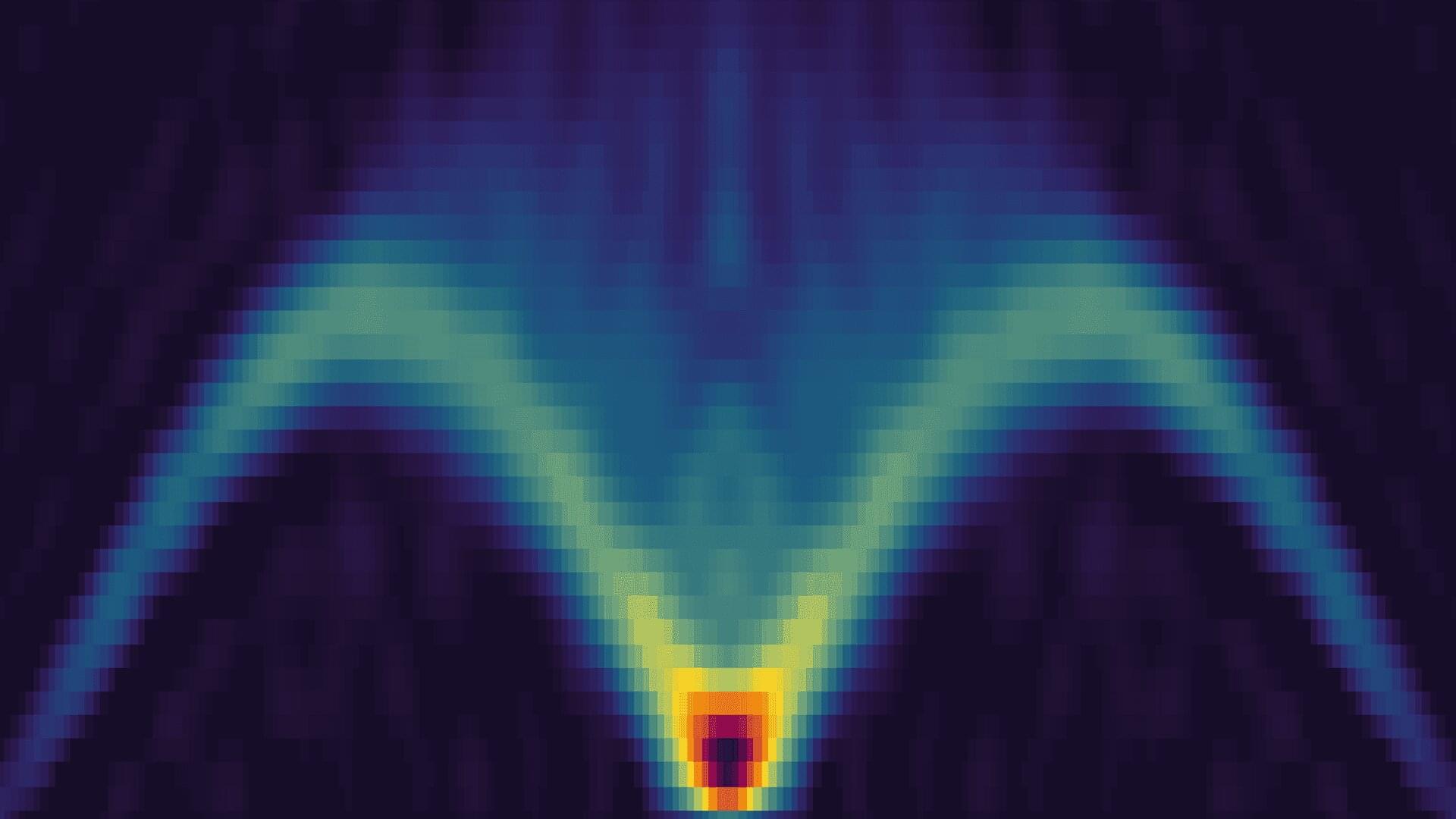
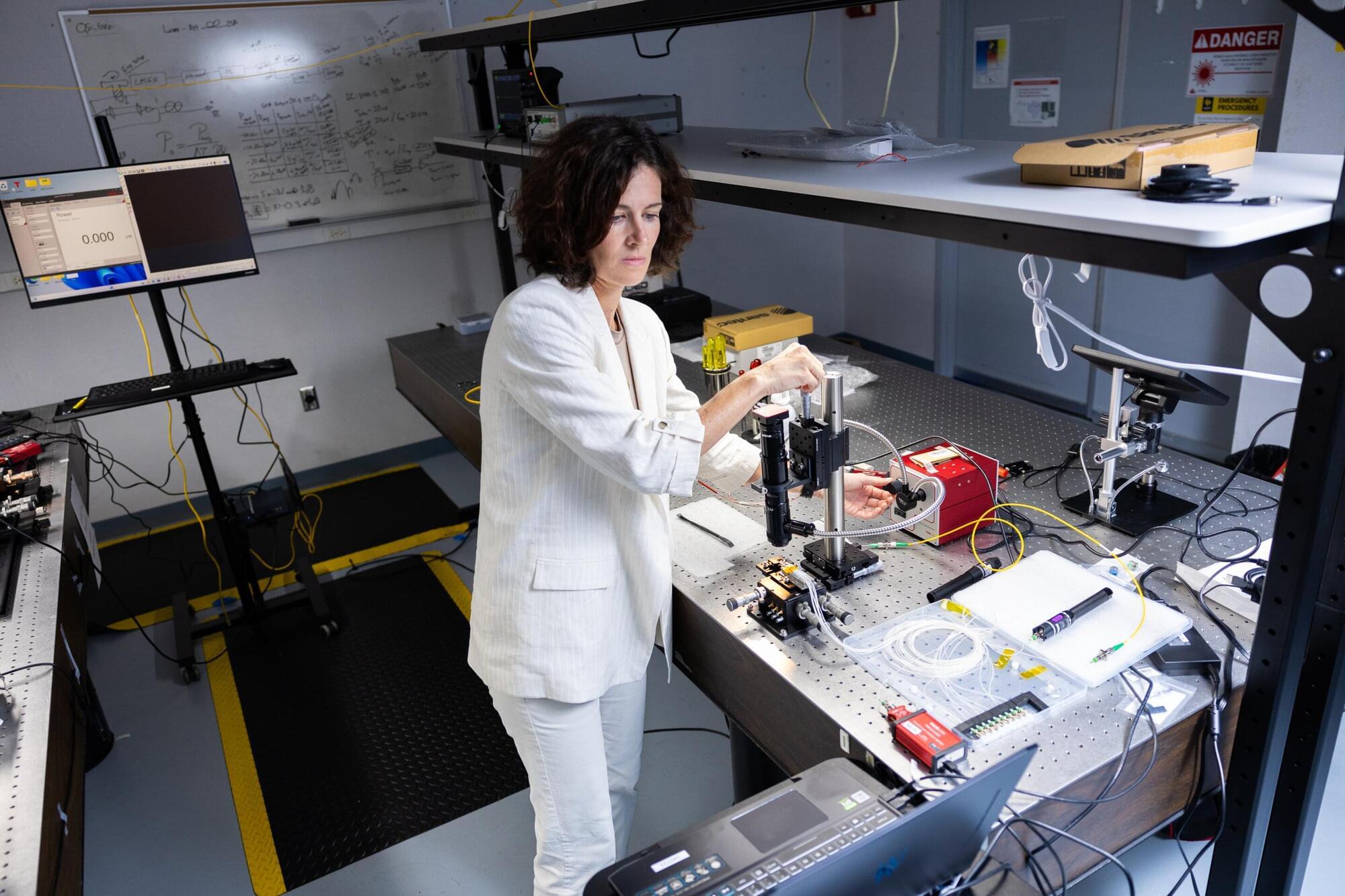
In new preprint, a team of researchers from Oak Ridge National Lab’s (ORNL’s) Quantum Science Center (QSC), Purdue University, Los Alamos Laboratory, the University of Illinois at Urbana-Champaign, the University of Tennessee, and IBM used quantum simulation to compute the energy-momentum spectrum of a well-studied magnetic material, KCuF3, showing strong agreement with the spectra measured via neutron scattering. The research is published on the arXiv preprint server.

The quantum simulations employed the IBM Quantum Heron processor, while the experimental data was acquired from neutron sources at the Spallation Neutron Source (SNS) at ORNL and at the Rutherford Appleton Laboratory in the United Kingdom. This work serves as another realization of Richard Feynman’s vision: the use of a well-controlled, programmable quantum system to simulate the properties of a quantum system of interest.
Unlocking scalable entanglement will enable next-generation quantum computing

Quantum computing promises to transform our world in rapid, radical and revolutionary ways: solving in seconds problems that would take classical computers years, accelerating the discovery of new medicines, creating sustainable materials, optimizing complex systems, and strengthening cybersecurity. It does so using qubits, the quantum counterparts of classical bits, which can occupy multiple states simultaneously and enable a fundamentally new kind of computation.

For example, imagine 1,000 trucks need to arrive at 10,000 different locations, each, in different parts of the country. A traditional computation model would examine each of the 10 million possible routes one by one to evaluate their efficacy, but a quantum model would be able to evaluate all those millions of different routes instantaneously.

At the same time, quantum sensing is opening new frontiers in precision measurement, enabling technologies such as ultra-sensitive medical imaging and navigation systems that can detect minute changes in gravity or magnetic fields, capabilities that could allow doctors to identify diseases earlier or help vehicles navigate without GPS. UCF researchers believe the science of light, photonics, may hold the key to unlocking quantum computing’s true potential.

‘Near-misses’ in particle accelerators can illuminate new physics, study finds

Particle accelerators reveal the heart of nuclear matter by smashing together atoms at close to the speed of light. The high-energy collisions produce a shower of subatomic fragments that scientists can then study to reconstruct the core building blocks of matter.

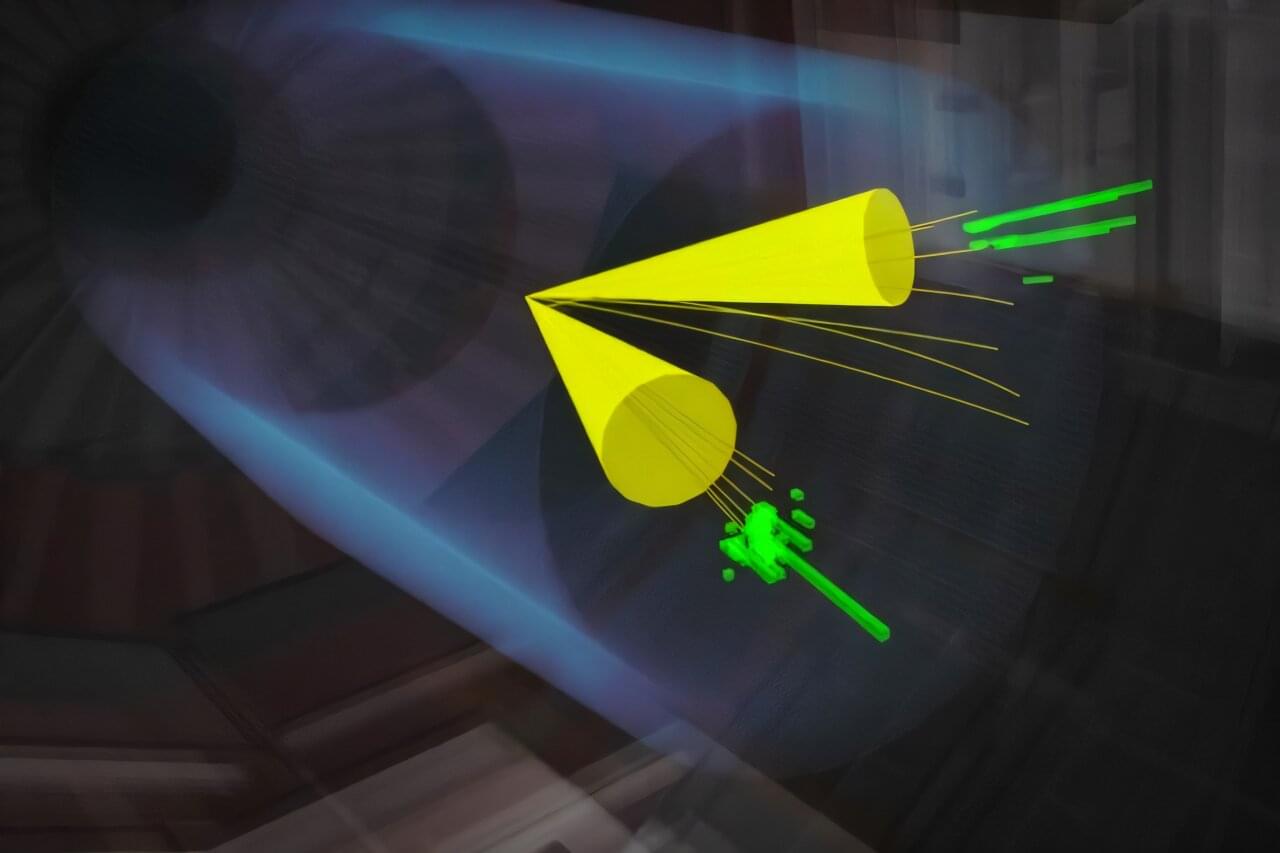
An MIT-led team has now used the world’s most powerful particle accelerator to discover new properties of matter, through particles’ “near-misses.” The approach has turned the particle accelerator into a new kind of microscope—and led to the discovery of new behavior in the forces that hold matter together.

In a study appearing this week in the journal Physical Review Letters, the team reports results from the Large Hadron Collider (LHC)—a massive underground, ring-shaped accelerator in Geneva, Switzerland. Rather than focus on the accelerator’s particle collisions, the MIT team searched for instances when particles barely glanced by each other.

DNA shape explains crucial gene-therapy challenges

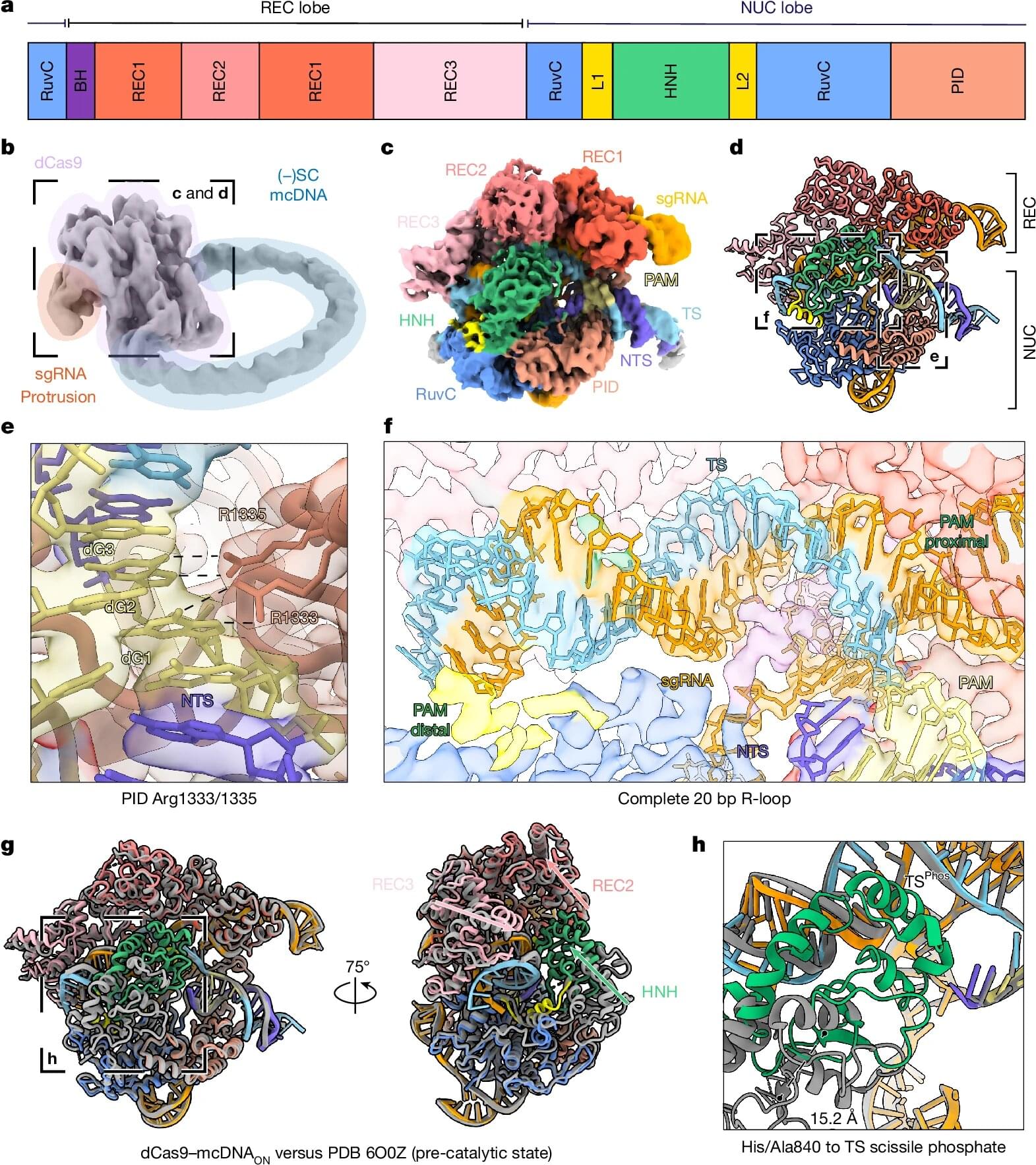
CRISPR is a powerful DNA-editing tool that has underpinned huge advancements in human health care in the last decade. It is a precision tool, but is not perfect, and misplaced DNA edits can compromise safety and efficacy, costing billions each year. Researchers at the MRC Laboratory of Medical Sciences (LMS), Imperial College London and the University of Sheffield have published research in Nature showing that the physical twisting of DNA plays an important role in these mistakes. Using a newly developed platform of tiny (nanometer-sized) DNA circles, called DNA minicircles, the team captured never-before-seen interactions between CRISPR and DNA, providing insights that could help eradicate errors altogether.

CRISPR-Cas9 has transformed biology by giving scientists a programmable way to cut and edit DNA. Its ever-growing impact includes groundbreaking therapies for genetic diseases such as sickle cell anemia and an increasing role in personalized cancer treatment and rapid diagnostics. But even carefully designed CRISPR systems can sometimes cut DNA sequences that were not the intended targets.

“It’s a tool that is not perfect and can introduce errors and make edits where it shouldn’t make them,” says Professor David Rueda, head of the Single Molecule Imaging group at the LMS and Chair in Molecular and Cellular Biophysics at Imperial College London. “And it’s an important problem for the industry. It’s been estimated to be $0.3 to $0.9 billions per year in industry costs, in profiling off-targets, redesigning guides and delays.”

[Webinar] Stop Guessing. Learn to Validate Your Defenses Against Real Attacks

That’s where things get shaky. A control exists, so it’s assumed to work. A detection rule is active, so it’s expected to catch something. But very few teams are consistently testing how all of this holds up when someone is actively trying to break through, step by step.

This is exactly the gap this webinar focuses on.

Exposure-Driven Resilience: Automate Testing to Validate & Improve Your Security Posture is a practical session built around one idea: stop guessing, start proving. Instead of relying on occasional testing or assumptions, it shows how to validate your security posture continuously using real attacker behavior.

Claude Extension Flaw Enabled Zero-Click XSS Prompt Injection via Any Website

Specifically, the XSS vulnerability enables the execution of arbitrary JavaScript code in the context of “a-cdn.claude[.]ai.” A threat actor could leverage this behavior to inject JavaScript that issues a prompt to the Claude extension.

The extension, for its part, allows the prompt to land in Claude’s sidebar as if it’s a legitimate user request simply because it comes from an allow-listed domain.

“The attacker’s page embeds the vulnerable Arkose component in a hidden, sends the XSS payload via postMessage, and the injected script fires the prompt to the extension,” Yomtov explained. “The victim sees nothing.”

TikTok for Business accounts targeted in new phishing campaign

Threat actors are targeting TikTok for Business accounts in a phishing campaign that prevents security bots from analyzing malicious pages.

TikTok Business accounts may be targeted due to their high potential for abuse in malvertising campaigns, ad fraud, and the distribution of malicious content.

Browser threat detection and response company Push Security links the campaign to one documented last year, which targeted Google Ad Manager accounts.

/* */