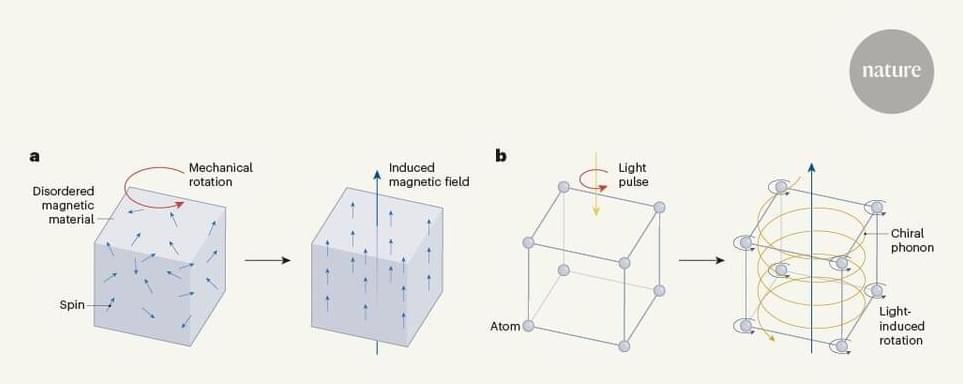
Microscopic magnetic fields induced by rotating atoms.
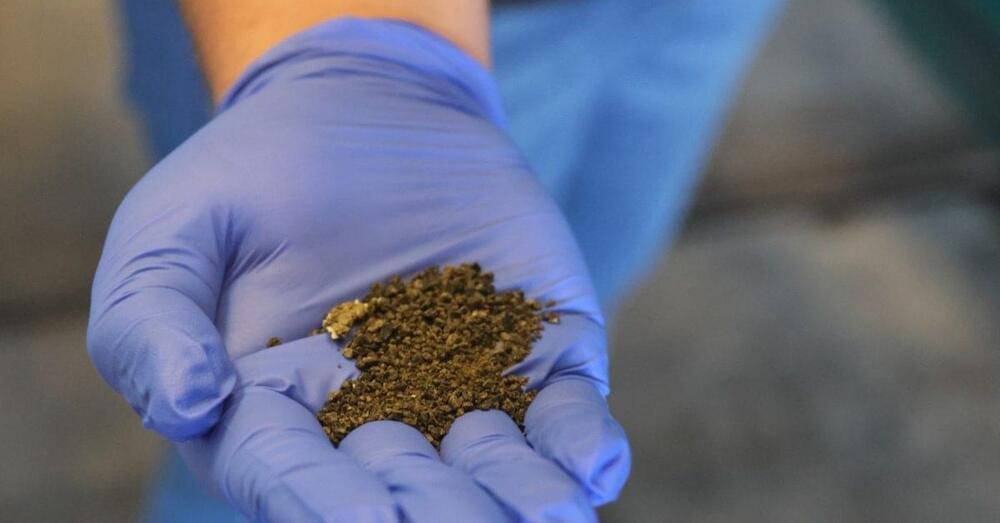
Green Li-ion has launched a commercial-scale plant to process unsorted battery waste, or “black mass,” from used lithium-ion batteries.
Within an existing recycling facility in Atoka, Oklahoma, the plant will produce sustainable, battery-grade cathode precursor, lithium, and anode materials – closing the EV recycling loop with the production done all in one plant.
The current recycling process for spent lithium-ion batteries in North America includes sorting batteries before shredding, which are then processed into black mass and further into sulfates. The material is then exported overseas, most often to China and South Korea, for further processing.
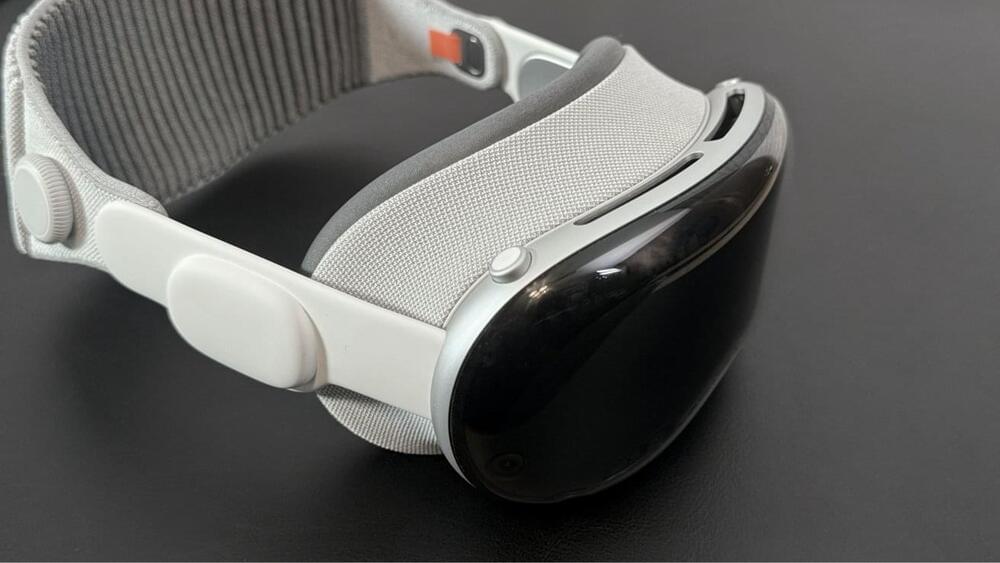
Working to promote the Apple Vision Pro as a business tool instead of solely an entertainment one, Apple has highlighted half a dozen firms from Porsche to Microsoft, who have incorporated the headset into their work.
While perhaps most attention that the Apple Vision Pro has received concerns its immersive video for entertainment, Apple has always aimed it equally at businesses. Now Apple wants to press hard on the idea of Apple Vision Pro being a tool that companies need.
“There’s tremendous opportunity for businesses to reimagine what’s possible using Apple Vision Pro at work,” Susan Prescott, Apple’s vice president of Worldwide Developer Relations and Enterprise Marketing, said in a statement. “We’re thrilled to see the innovative ways organizations are already using Apple Vision Pro, from planning fire response operations to iterating on the most intricate details of an engine design — and this is just the beginning.”
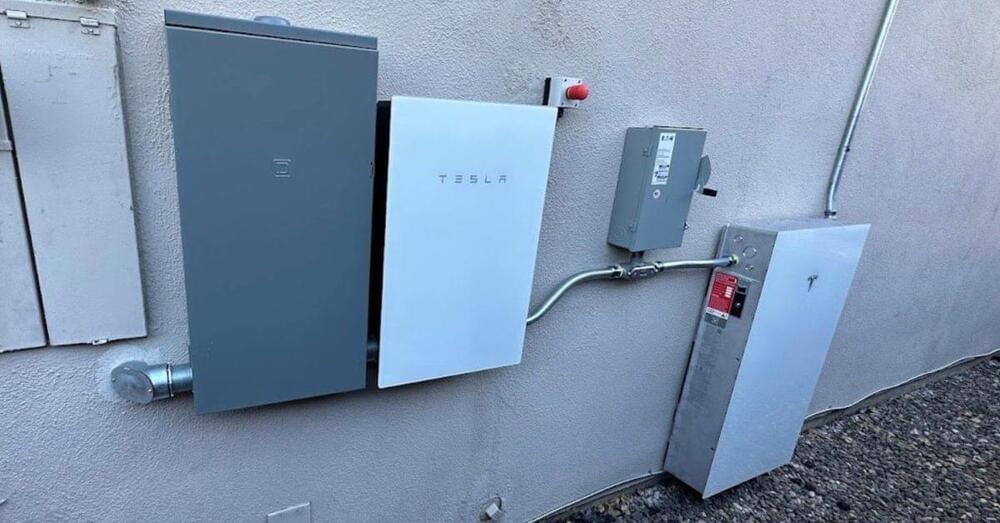
Tesla has released more details about Powerwall 3, its new generation home energy storage system, and there’s some more good news.
Electrek first reported that Tesla started Powerwall 3 installations in the US despite having yet to launch the product on its website officially back in September.
As we previously reported, the biggest difference with the Powerwall 3 is a higher power output of 11.5 KW continuous and an integrated solar inverter.

A new study suggests that advanced AI models are pretty good at acting dumber than they are — which might have massive implications as they continue to get smarter.
Published in the journal PLOS One, researchers from Berlin’s Humboldt University found that when testing out a large language model (LLM) on so-called “theory of mind” criteria, they found that not only can AI mimic the language learning stages exhibited in children, but seem to express something akin to the mental capabilities related to those stages as well.
In an interview with PsyPost, Humboldt University research assistant and main study author Anna Maklová, who also happens to be a psycholinguistics expert, explained how her field of study relates to the fascinating finding.

Scientists have created a method to produce 3D full-color holographic images using smartphone screens instead of lasers. This innovative technique, with additional advancements, holds the potential for augmented or virtual reality displays.
Whether augmented and virtual reality displays are being used for gaming, education, or other applications, incorporating 3D displays can create a more realistic and interactive user experience.
“Although holography techniques can create a very real-looking 3D representation of objects, traditional approaches aren’t practical because they rely on laser sources,” said research team leader Ryoichi Horisaki, from The University of Tokyo in Japan. “Lasers emit coherent light that is easy to control, but they make the system complex, expensive, and potentially harmful to the eyes.”
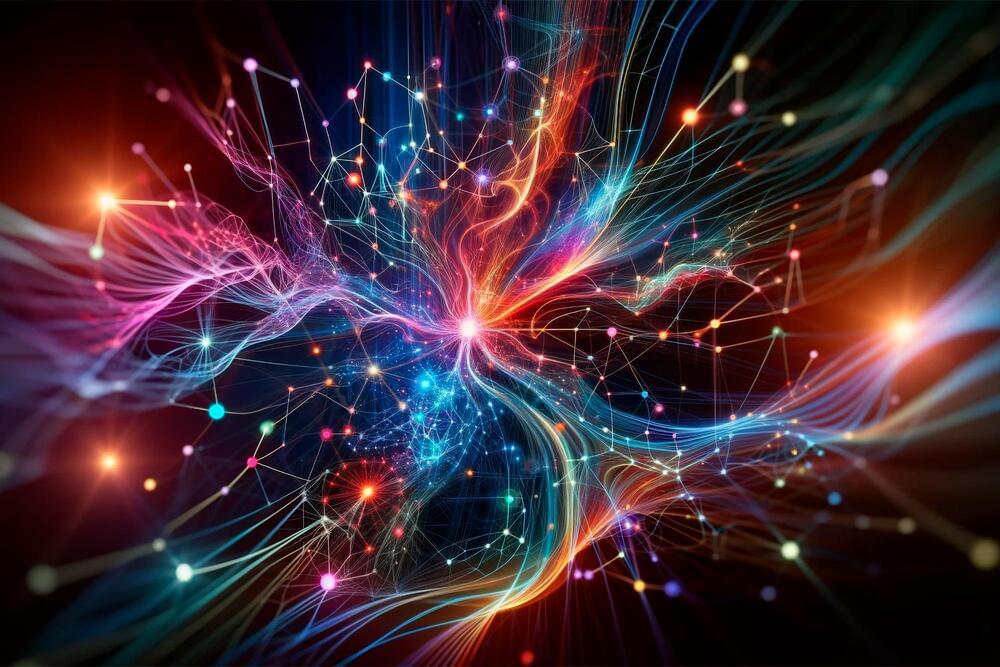
A UC San Diego team has uncovered a method to decipher neural networks’ learning process, using a statistical formula to clarify how features are learned, a breakthrough that promises more understandable and efficient AI systems. Credit: SciTechDaily.com.
Neural networks have been powering breakthroughs in artificial intelligence, including the large language models that are now being used in a wide range of applications, from finance, to human resources to healthcare. But these networks remain a black box whose inner workings engineers and scientists struggle to understand. Now, a team led by data and computer scientists at the University of California San Diego has given neural networks the equivalent of an X-ray to uncover how they actually learn.
The researchers found that a formula used in statistical analysis provides a streamlined mathematical description of how neural networks, such as GPT-2, a precursor to ChatGPT, learn relevant patterns in data, known as features. This formula also explains how neural networks use these relevant patterns to make predictions.

JAMA Network Open commentary focuses on the relationship of pain, depression, and anxiety.
Chronic pain is often accompanied by depression and anxiety. In an invited commentary published in JAMA Network Open, Kurt Kroenke, M.D., of Regenstrief Institute and Indiana University School of Medicine, discusses the relationship between pain, the most common symptom for which individuals visit a physician, and depression and anxiety, the two most prevalent mental health conditions worldwide. He highlights the importance of not neglecting psychological symptoms in patients experiencing pain.
Understanding the Connection.
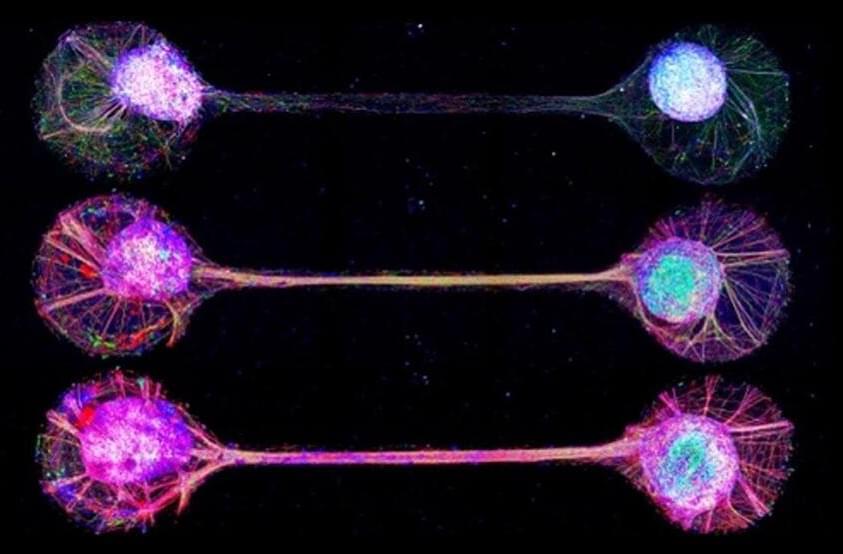
A collaborative research team has developed a method to connect lab-grown brain tissues, enhancing the understanding of brain development and functions, and paving the way for potential advancements in treating neurological conditions.
The idea of growing a functioning human brain-like tissues in a dish has always sounded pretty far-fetched, even to researchers in the field. Towards the future goal, a Japanese and French research team has developed a technique for connecting lab-grown brain-mimicking tissue in a way that resembles circuits in our brain.
Advancements in Neural Studies.
Astronomers detect long-sought compact object within the remnant of Supernova 1987A In February 1987, the closest supernova to Earth in almost 400 years exploded onto the scene. Designated Supernova 1987A (SN 1987A), it resulted from the death of a massive star in the Large Magellanic Cloud, a dwarf galaxy 160,000 light-years away. In the decades since, its remnant has been studied by telescopes at all wavelengths of light from X-rays to radio. Yet despite all the scrutiny, one mystery has remained.