Toggle light / dark theme

Get the latest international news and world events from around the world.

Log in for authorized contributors

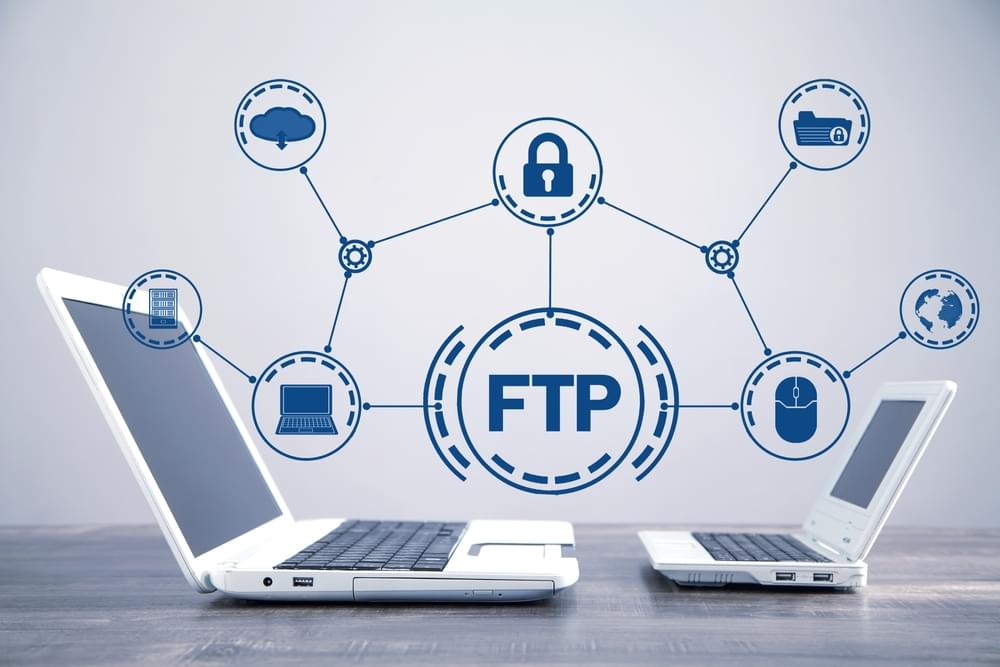
Attacks on Maximum Severity WS_FTP Bug Have Been Limited — So Far

After an early flurry of exploit activity, attacks targeting a maximum-severity flaw that Progress Software disclosed in its WS_FTP Server file transfer product last week appear to have been somewhat limited so far.

However, that’s no reason for organizations to delay patching the vulnerability as soon as possible, given how widely attackers exploited a similarly critical zero-day flaw that Progress reported in its MOVEit file transfer software in May.

CVE-2023–40044 is a. NET deserialization vulnerability in WS_FTP that researchers have shown can be exploited with a single HTTPS POST and some specific multi-part data. Progress disclosed the bug on Sept. 27, with a recommendation for organizations to apply the company’s update for it as soon as possible.
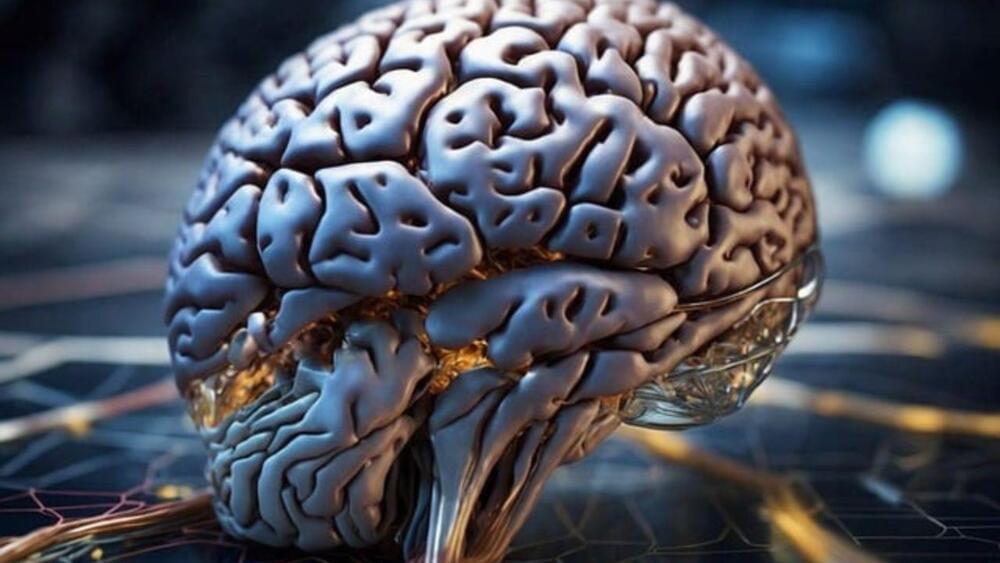
3D-printed stem cells could help treat brain injuries

Notably, when implanted into mouse brains, the printed cells showed both structural and functional integration with the host tissue.

“Our droplet printing technique provides a means to engineer living 3D tissues with desired architectures, which brings us closer to the creation of personalised implantation treatments for brain injury,” said Dr Linna Zhou, senior author of the study.

The researchers now aim to further evolve their technique and create complex multi-layered cerebral cortex tissues that can mimic the human brain’s architecture in a more realistic way. Beyond brain injuries, these 3D-printed cells could benefit drug evaluation and our knowledge on brain development and cognition.

Alfvén waves: unlocking unlimited clean energy for the Earth

Researchers of the Princeton Plasma Physics Laboratory (PPPL) announced the discovery of a promising approach to mitigate the damaging effects of runaway electrons in tokamak fusion devices in a statement.

The key to this discovery lies in harnessing a unique type of plasma wave known as Alfvén waves, named after the renowned astrophysicist Hannes Alfvén, a Nobel laureate in 1970.

Alfvén waves have long been recognized for their ability to loosen the confinement of high-energy particles within tokamak reactors— a type of fusion reactor that confines plasma in the shape of a donut using a magnetic field.

23andMe Cyberbreach Exposes DNA Data, Potential Family Ties

23andMe, the popular DNA testing company, has launched an investigation after client information was listed for sale on a cybercrime forum this week.

On Oct. 1, a post was published on the forum with a link to a sample of allegedly “20 million pieces of data” from the genetic testing company, claiming that it was “the most valuable data you’ll ever see.” The first leak included 1 million lines of data, but on Oct. 4, the threat actor began offering bulk data profiles ranging from $1 to $10 per account in batches of 100, 1,000, 10,000, and 100,000 profiles.

The information leaked in the breach includes names, usernames, profile photos, gender, birthdays, geographical location, and genetic ancestry results.

Yasa-1 is a multimodal AI assistant that aims to compete with ChatGPT

AI startup Reka unveils Yasa-1, a multimodal AI assistant that could rival OpenAI’s ChatGPT.

AI startup Reka, founded by researchers from DeepMind, Google, Baidu, and Meta, has announced Yasa-1, a multimodal AI assistant that can understand and interact with text, images, video, and audio.

The assistant is available in private beta and competes with, among others, OpenAI’s ChatGPT, which has received its own multimodal upgrades with GPT-4V and DALL-E 3. Reka’s team says it has been involved in the development of Google Bard, PaLM, and Deepmind Alphacode, to name a few.

Researchers train AI with reinforcement learning to defeat champion Street Fighter players

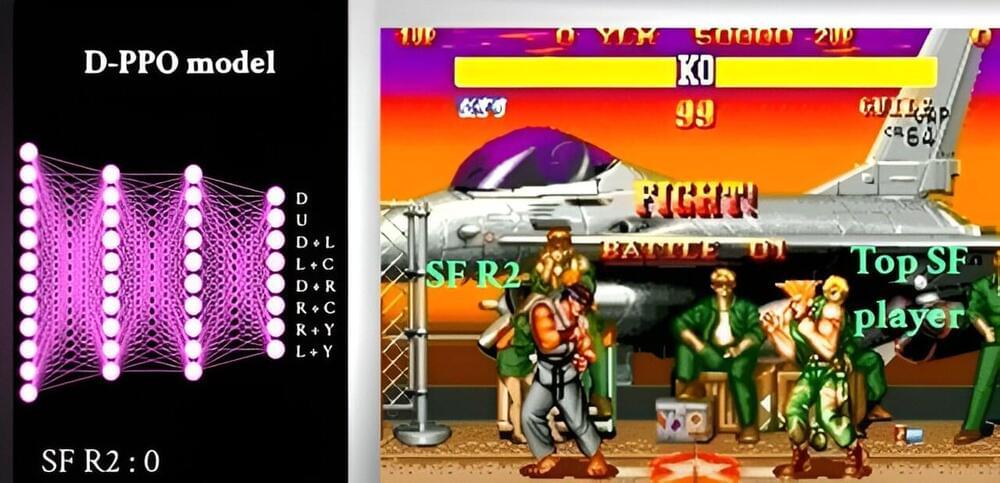
Researchers from the Singapore University of Technology and Design (SUTD) have successfully applied reinforcement learning to a video game problem. The research team created a new complicated movement design software based on an approach that has proven effective in board games like Chess and Go. In a single testing, the movements from the new approach appeared to be superior to those of top human players.

These findings could possibly impact robotics and automation, ushering in a new era of movement design. The team’s article in Advanced Intelligence Systems is titled “A Phase-Change Memristive Reinforcement Learning for Rapidly Outperforming Champion Street Fighter Players.”

“Our findings demonstrate that reinforcement learning can do more than just master simple . The program excelled in creating more complex movements when trained to address long-standing challenges in movement science,” said principal investigator Desmond Loke, Associate Professor, SUTD.

Not Sci-Fi Anymore: Brain Waves to Speech using AI

Non-invasive — just reading brainwaves.


🔗🔗 Links 🔗🔗

Decoding speech perception from non-invasive brain recordings.
on Nature — https://www.nature.com/articles/s42256-023-00714-5

Facebook research Brainmagick Code — https://github.com/facebookresearch/brainmagick.

Decoding speech perception from non-invasive brain.

New energy-storing material could also be used to build electronic gadgets

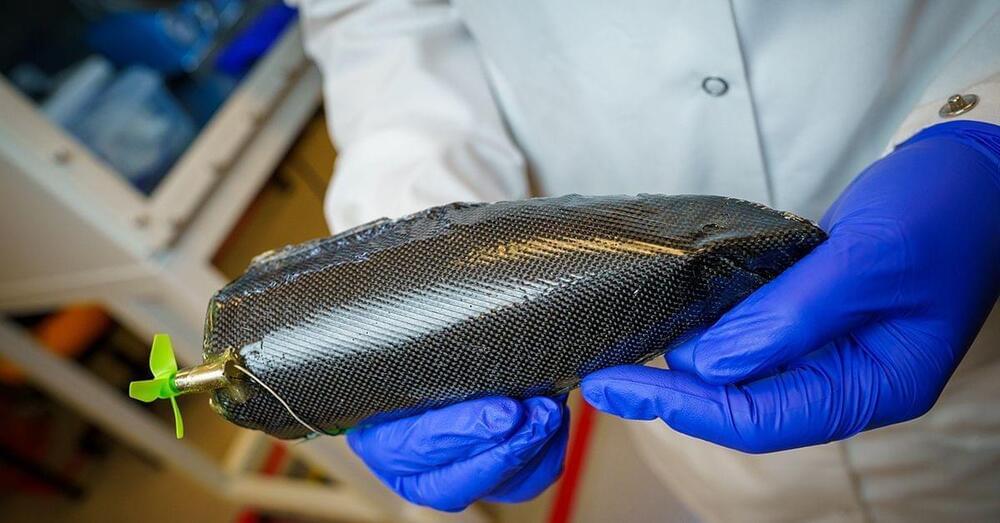
Picture a smartphone clad in a casing that’s not just for protection but also doubles as a reservoir of electricity, or an electric car where the doors and floorboard store energy to propel it forward. Such technologies may one day be a reality, thanks to recent work by engineers at the University of California San Diego.

The researchers have developed what’s called a structural supercapacitor—a device that provides both structural support and storage capabilities. Such a device could add more power to electronic gadgets and vehicles without adding extra weight, allowing them to last longer on a single charge.

While the concept of structural supercapacitors is not entirely new, it has been a longstanding challenge to create a single device that excels at both bearing mechanical loads and storing efficiently. Traditional supercapacitors are great at energy storage but lack the mechanical strength to serve as structural components. On the flip side, structural materials can provide support but fall short when it comes to energy storage.

/* */