Toggle light / dark theme

Get the latest international news and world events from around the world.

Log in for authorized contributors

Shortest light pulse ever created captures ultrafast electron dynamics

Electrons determine everything: how chemical reactions unfold, how materials conduct electricity, how biological molecules transfer energy, and how quantum technologies operate. But electron dynamics happens on attosecond timescales—far too fast for conventional measurement tools.

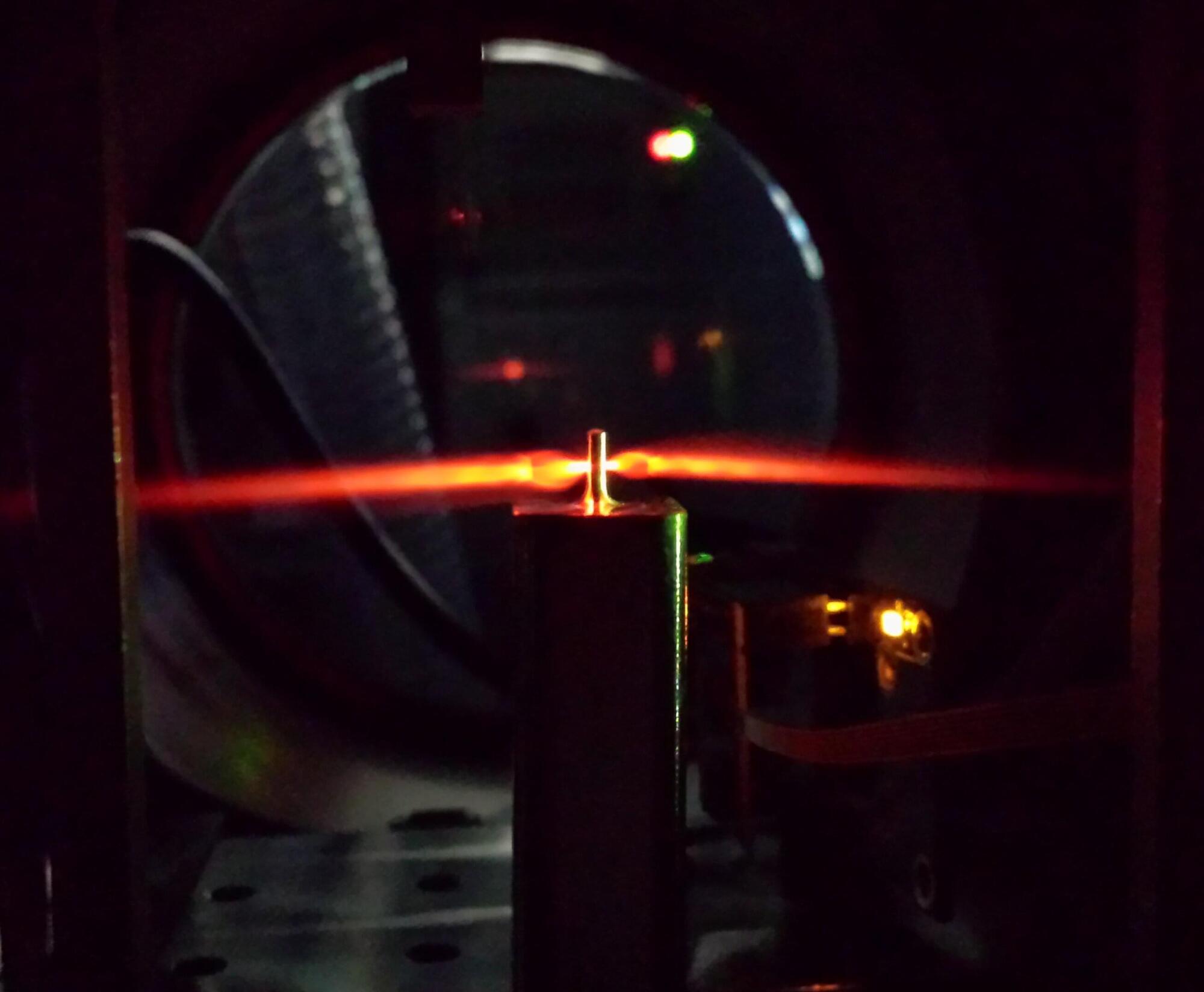
Researchers have now generated a 19.2-attosecond soft X-ray pulse, which effectively creates a camera capable of capturing these elusive dynamics in real time with unprecedented detail, enabling the observation of processes never observed before. Dr. Fernando Ardana-Lamas, Dr. Seth L. Cousin, Juliette Lignieres, and ICREA Prof. Jens Biegert, at ICFO, has published this new record in Ultrafast Science. At just 19.2 attoseconds long, it is the shortest and brightest soft X-ray pulse ever produced, giving rise to the fastest “camera” in existence.

Flashes of light in the soft X-ray spectral range provide fingerprinting identification, allowing scientists to track how electrons reorganize around specific atoms during reactions or phase transitions. Generating an isolated pulse this short, required innovations in high-harmonic generation, advanced laser engineering, and attosecond metrology. Together, these developments allow researchers to observe electron dynamics, which define material properties, at their natural timescales.
Conventional entanglement can have thousands of hidden topologies in high dimensions

Researchers from the University of the Witwatersrand in South Africa, in collaboration with Huzhou University, discovered that the entanglement workhorse of most quantum optics laboratories can have hidden topologies, reporting the highest ever observed in any system: 48 dimensions with over 17,000 topological signatures, an enormous alphabet for encoding robust quantum information.

Most quantum optics laboratories produce entangled photons by a process of spontaneous parametric downconversion (SPDC), which naturally produces entanglement in “space,” the spatial degrees of freedom of light. Now the team have found that hidden in this space is a world of high-dimensional topologies, offering new paradigms for encoding information and making quantum information immune to noise. The topology was shown using the orbital angular momentum (OAM) of light, from two dimensional to very high dimensions.

Reporting in Nature Communications, the team showed that if one measures the OAM of two entangled photons it can be shown to have a topology: an underlying feature of the entanglement itself. Since OAM can take on an infinite number of possibilities, so too can the topology.

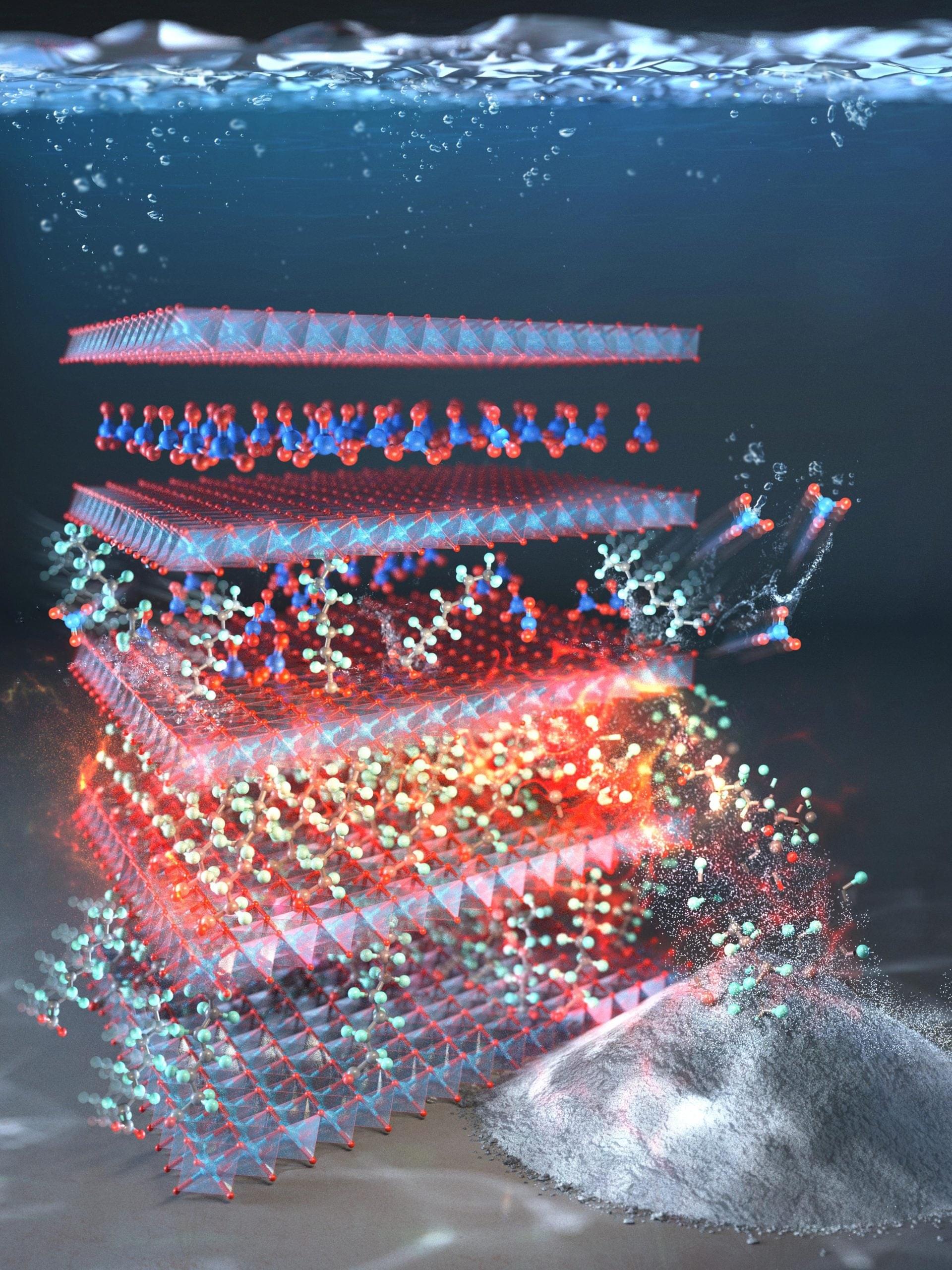
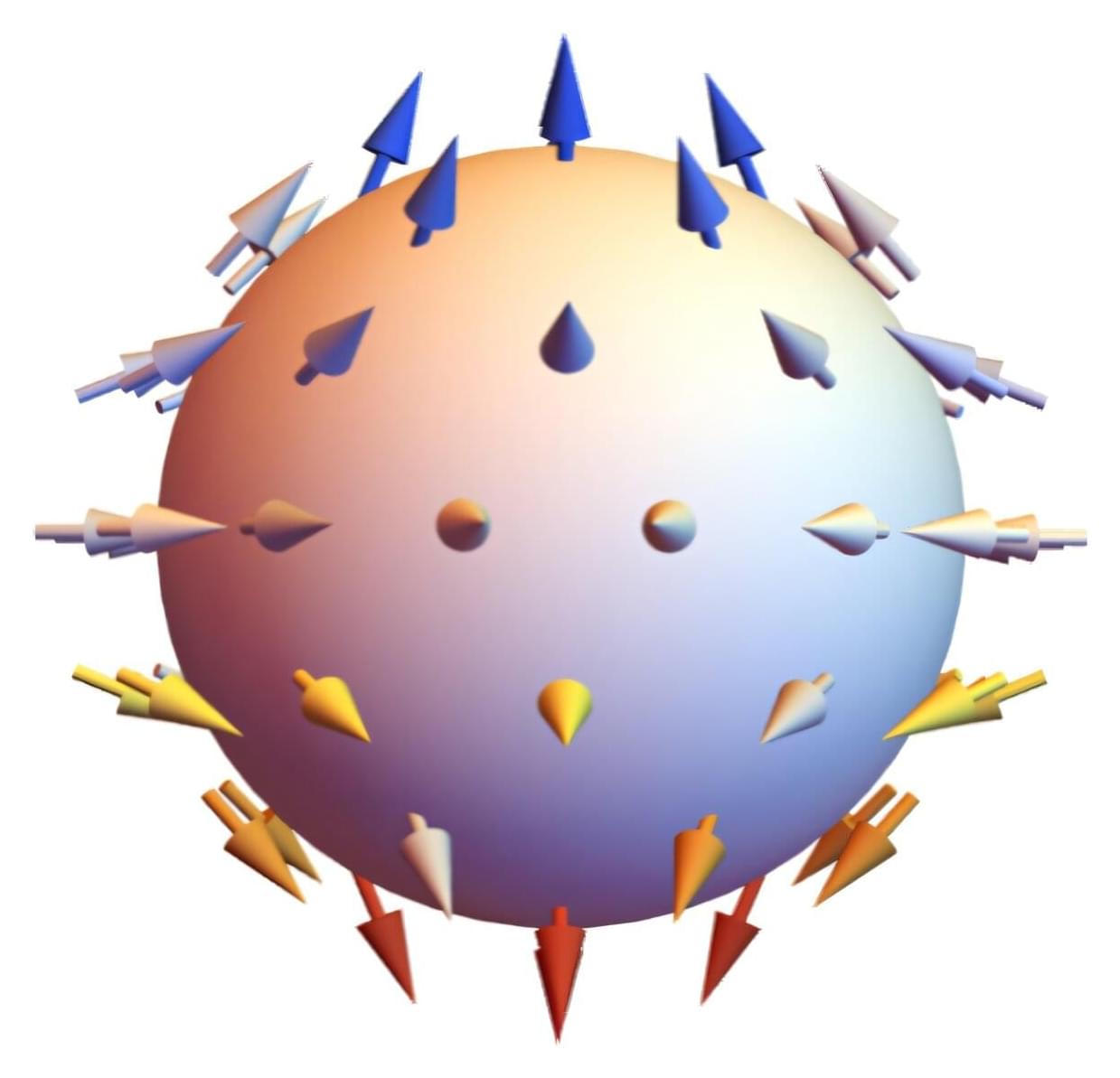
Color-superconducting quark matter may explain stability of massive neutron stars

Describing matter under extreme conditions, such as those found inside neutron stars, remains an unsolved problem. The density of such matter is equivalent to compressing around 100,000 Eiffel Towers into a single cubic centimeter. In particular, the properties of so-called quark matter—which consists of the universe’s fundamental building blocks, the quarks, and may exist in extremely dense regions—play a central role.

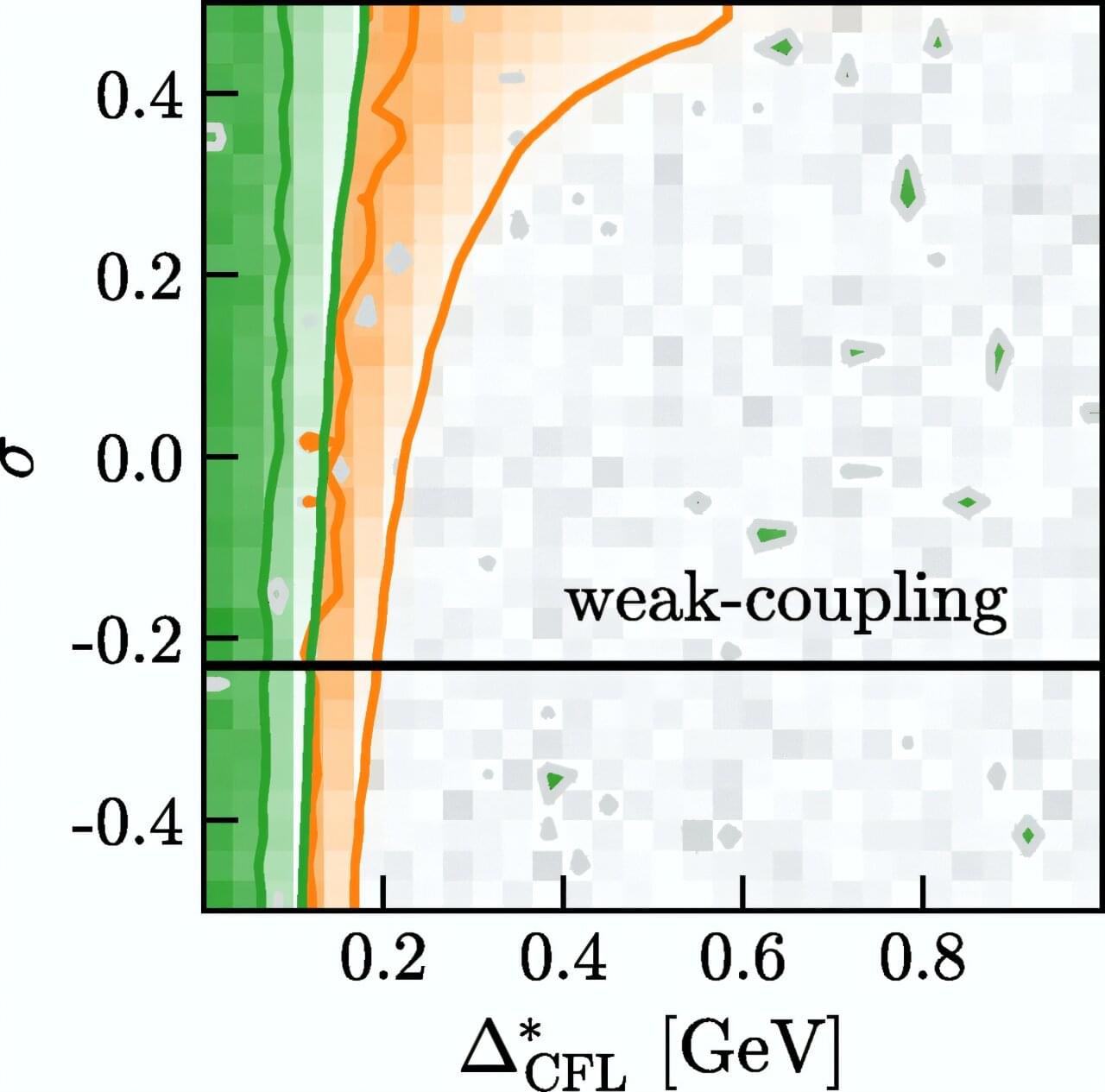
Researchers from TU Darmstadt and Goethe University Frankfurt have studied this matter and its thermodynamic properties. Their findings are published in the journal Physical Review Letters.

Theoretical studies suggest that quarks at very low temperatures enter a so-called color-superconducting state, which fundamentally alters the nature of matter. This state is analogous to the transition of an electron gas into an electrical superconductor—except that, instead of electrons, quarks pair up and create an energy gap in their excitation spectrum.

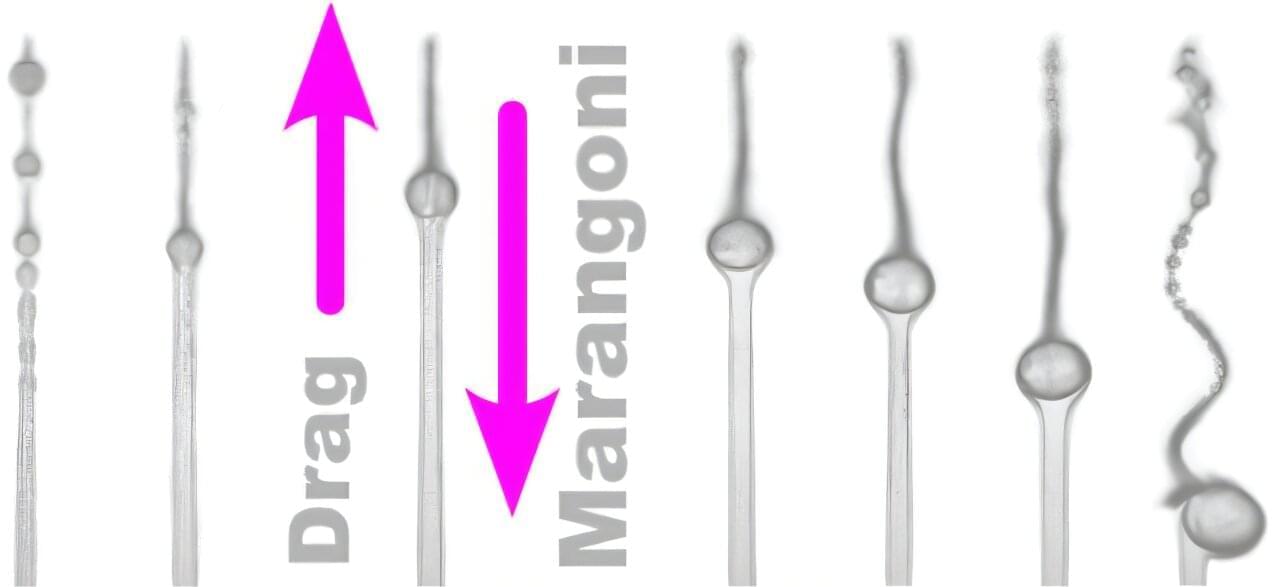
‘Ouzo effect’ reveals how oil droplets can resist flow and form stable patterns in liquids

Whether it’s Greek ouzo, French pastis or Turkish raki, when these spirits are diluted with water, the mixture becomes cloudy. The reason for this is that the aniseed oils contained in the spirit dissolve well in alcohol but not in water. The clear ouzo from the bottle has a high alcohol content at which the oil is fully soluble.

However, when water is added, the aniseed oils can no longer dissolve completely in the significantly reduced alcohol content. As a result, small droplets disperse finely in the drink, creating a milky appearance. Researchers at TU Darmstadt have now used this so-called ouzo effect to create oil droplets for a laboratory experiment. This led to a new discovery: such a droplet can resist a fluid flow and remain in place or even move upstream.

A 3D-printed Christmas tree made entirely of ice

A team of physicists from the University of Amsterdam’s Institute of Physics has 3D-printed a Christmas tree made entirely of ice. Researchers Menno Demmenie, Stefan Kooij and Daniel Bonn used no freezing technology or refrigeration equipment—just water and a vacuum. In time-lapse videos, you can see how the Christmas tree is printed and how it melts again when the vacuum pump is turned off. The work is published on the arXiv preprint server.

The secret of the tree lies in so-called evaporative cooling. This is the same principle mammals use to regulate their body temperature.

In a low-pressure vacuum chamber, water evaporates rapidly at room temperature. As each water molecule evaporates, it takes with it a small amount of heat, causing the remaining water to become increasingly colder, eventually cooling to below 0°C. At that point, the water is still liquid, but supercooled. As soon as the ultra-thin stream (about as thin as a human hair: 16 micrometers) hits the already formed layer of ice, it freezes instantly.

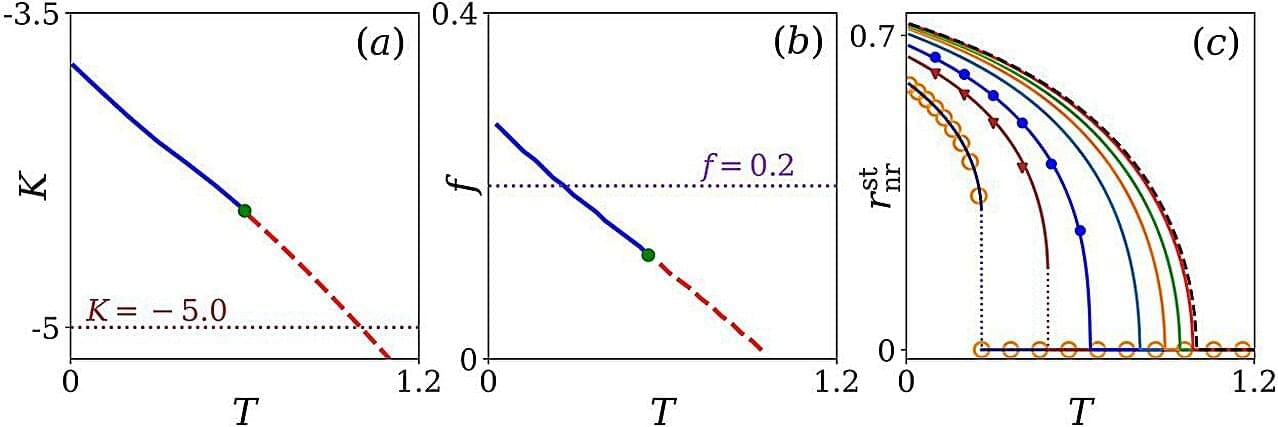
Subsystem resetting: Researchers discover a new route to control phase transitions in complex systems

Researchers in the Department of Theoretical Physics at Tata Institute of Fundamental Research (TIFR), Mumbai, have discovered that instead of manipulating every component or modifying interactions in a many-body system, occasionally resetting just a small fraction can reshape how the entire system behaves, including how it transitions from one phase to another.

This counterintuitive approach, called subsystem resetting, offers a powerful, universal control strategy to tune collective behavior in complex systems ranging from magnets to neural networks.

This work by Anish Acharya, Rupak Majumder, and Prof. Shamik Gupta has been published in Physical Review Letters.

/* */