Toggle light / dark theme

Get the latest international news and world events from around the world.

Log in for authorized contributors

Heavy fermions entangled: Quantum computing’s new frontier?

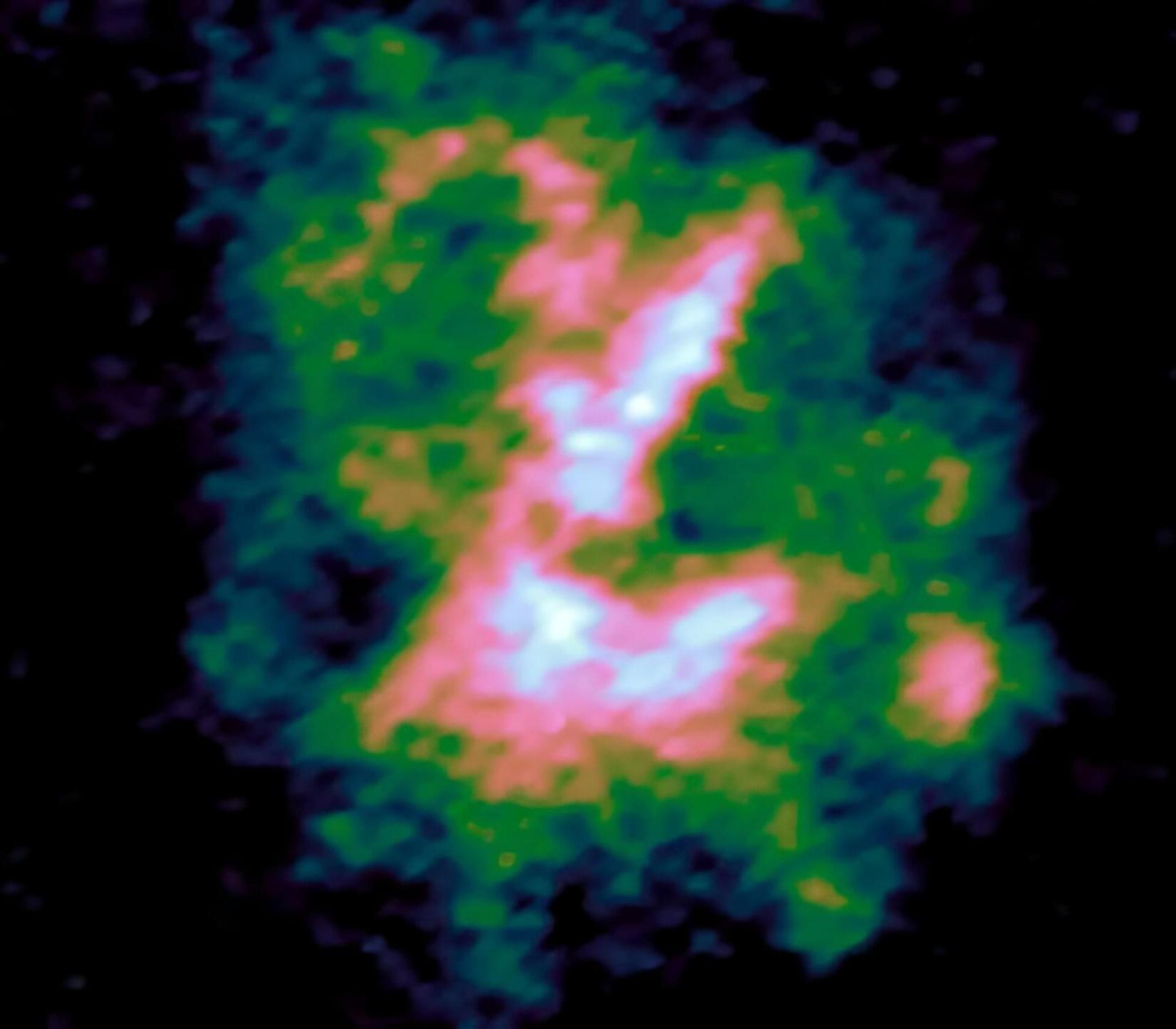
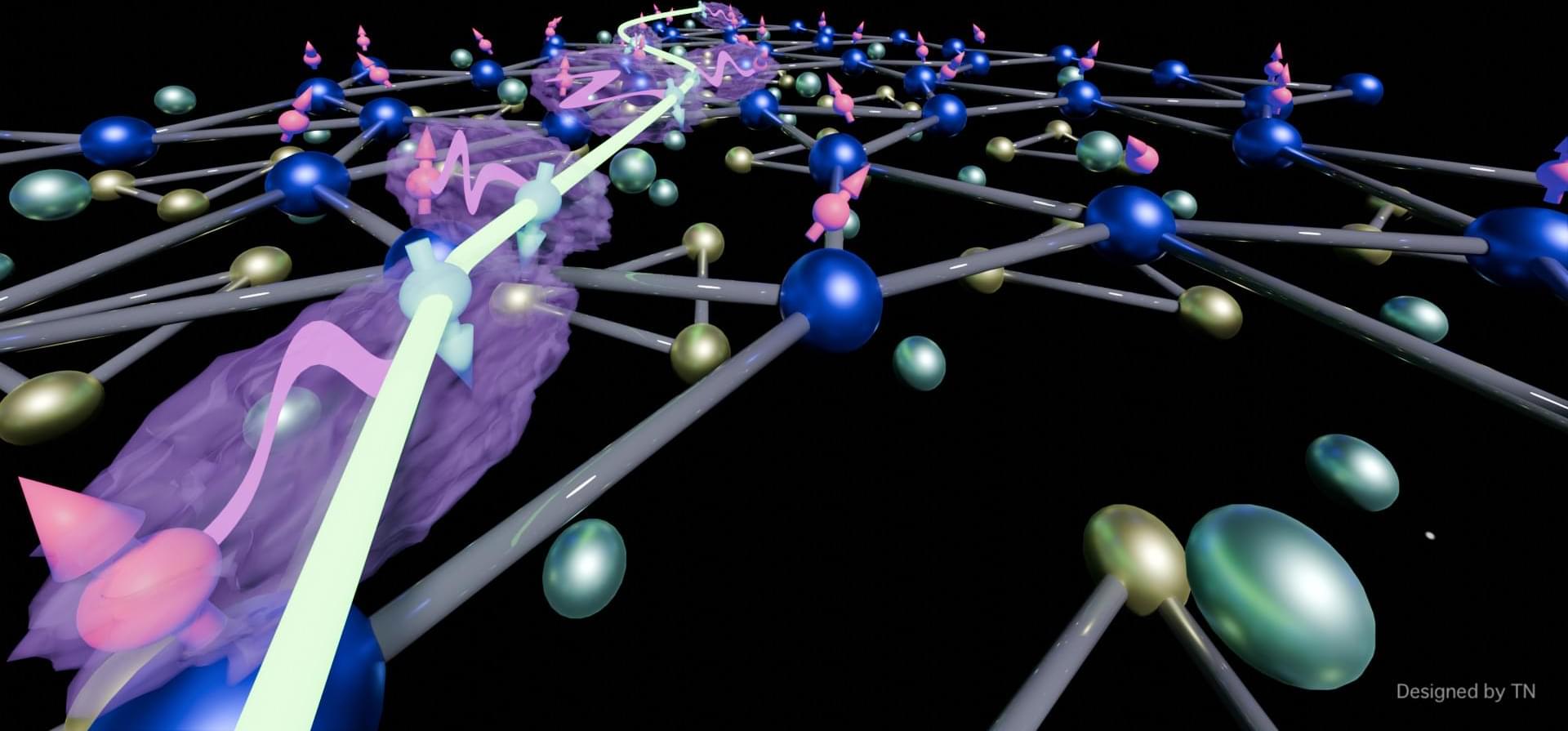
A joint research team from Japan has observed “heavy fermions,” electrons with dramatically enhanced mass, exhibiting quantum entanglement governed by the Planckian time – the fundamental unit of time in quantum mechanics. This discovery opens up exciting possibilities for harnessing this phenomenon in solid-state materials to develop a new type of quantum computer.

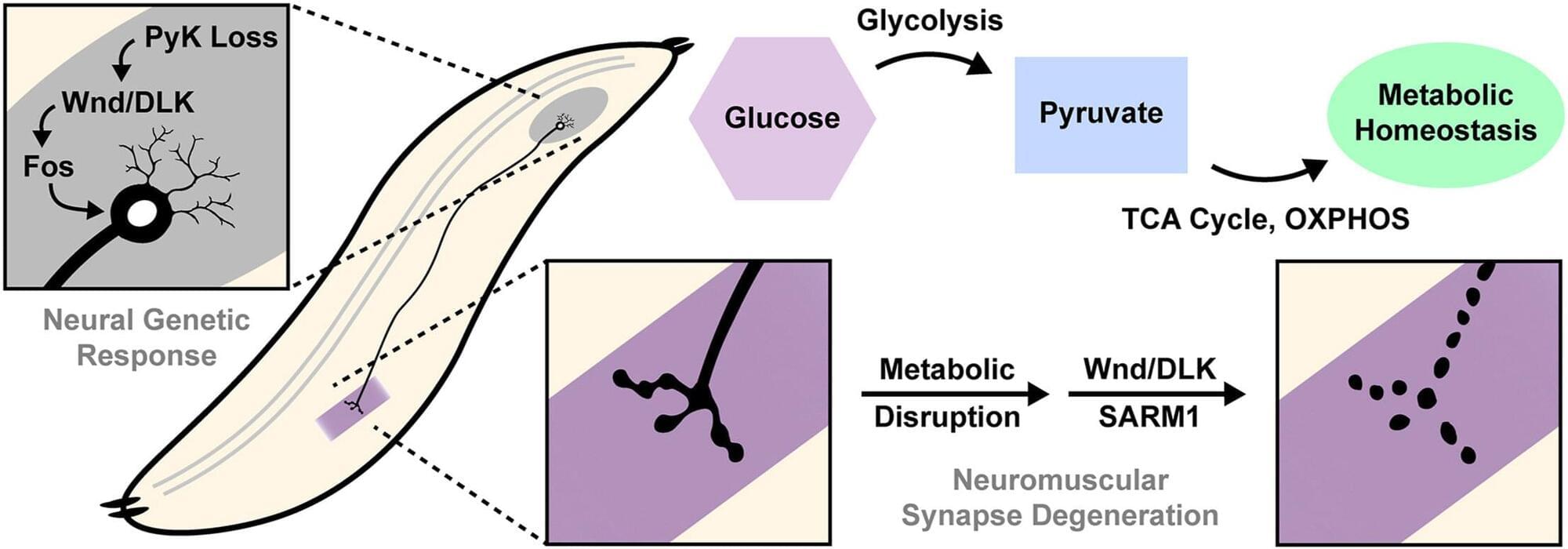
Metabolic signals in neurons determine whether axons degrade or resist neurodegeneration, study finds

Unlike most cells in the human body, neurons—the functional cells of our nervous system—cannot typically replace themselves with healthy copies after being damaged.

Rather, after an injury from something like a stroke, concussion or neurodegenerative disease, neurons and their axons, fiber-like projections that relay , are far more likely to degrade than regenerate.

But new research from the University of Michigan opens new ways to think about neurodegeneration that could help protect patients against that degradation and neurological decline in the future.

Stem cells created from ALS patients point to potential new target for treatment

Amyotrophic lateral sclerosis (ALS), known as Lou Gehrig’s disease, is an incurable neurological disorder affecting motor neurons—nerve cells in the brain and spinal cord that control voluntary muscle movement and breathing.

Many ALS , including those testing promising drugs, have fallen short of expectations—often because the extent of the disease can vary, and patients don’t respond the same way to medications.

But a new study led by scientists at Case Western Reserve University used created from ALS patients to target a specific gene as a kind of shut-off valve for what stresses —and it worked.

Chinese researchers unveil world’s largest-scale brain-like computer Darwin Monkey

Chinese researchers unveiled on Saturday a new generation of super large-scale brain-like computer, Darwin Monkey, the world’s first neuromorphic brain-like computer based on dedicated neuromorphic chips with over 2 billion neurons, which can mimic the workings of a macaque monkey’s brain.

Developed by the State Key Laboratory of Brain-Machine Intelligence at Zhejiang University in East China’s Zhejiang Province, Darwin Monkey, also known as Wukong supports over 2 billion spiking neurons and more than 100 billion synapses, with a neuron count approaching that of a macaque brain. It consumes approximately 2,000 watts of power under typical operating conditions, the Science and Technology Daily reported.

The human brain is like an extremely efficient “computer.” Brain-inspired computing applies the working principles of biological neural networks to computer system design, aiming to build computing systems that, like the brain, feature low power consumption, high parallelism, high efficiency, and intelligence.
Theories on dark matter’s origins point to ‘mirror world’ and universe’s edge

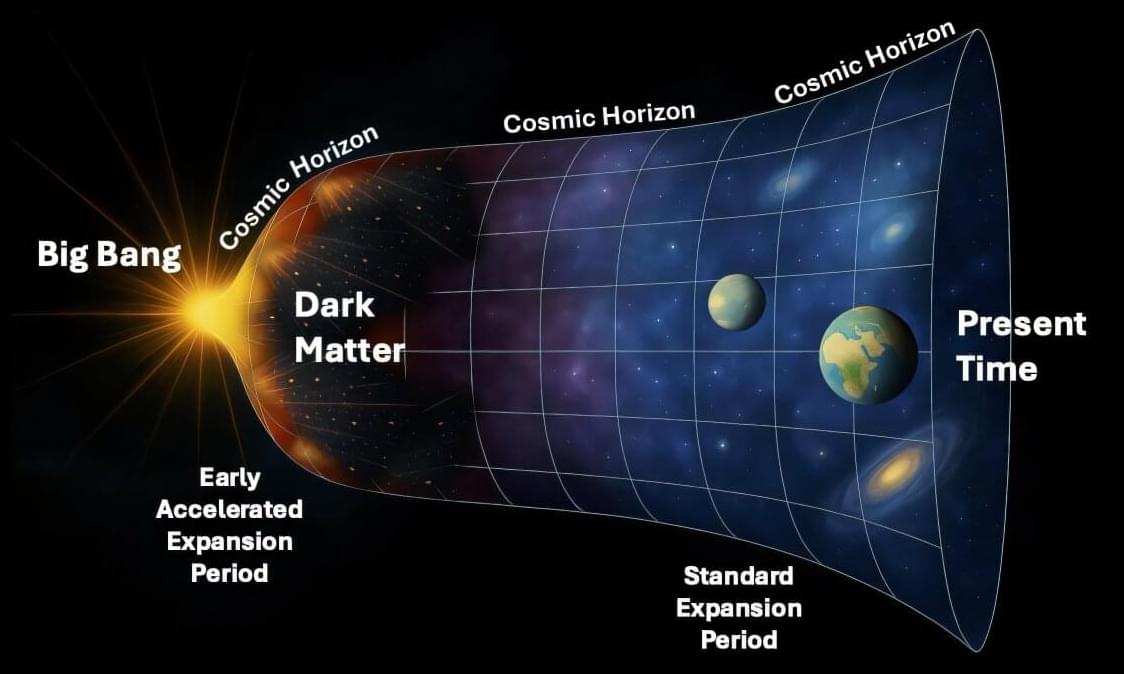
Two recent studies by Professor Stefano Profumo at the University of California, Santa Cruz, propose theories that attempt to answer one of the most fundamental open questions in modern physics: What is the particle nature of dark matter?

Science has produced overwhelming evidence that the mysterious substance, which accounts for 80% of all matter in the universe, exists. Dark matter’s presence explains what binds galaxies together and makes them rotate. Findings such as the large-scale structure of the universe and measurements of the cosmic microwave background also prove that something as-yet undetermined permeates all that darkness.

What remains unknown are the origins of dark matter, and hence, what are its particle properties? Those weighty questions primarily fall to theoretical physicists like Profumo. And in two recent papers, he approaches those questions from different directions, but both centered on the idea that dark matter might have emerged naturally from conditions in the very early universe—rather than dark matter being an exotic new particle that interacts with ordinary matter in some detectable way.

Scientists produce quantum entanglement-like results without entangled particles in new experiment

In the everyday world that humans experience, objects behave in a predictable way, explained by classical physics. One of the important aspects of classical physics is that nothing travels faster than the speed of light. Even information is subject to this rule. However, in the 1930s, scientists discovered that very small particles abide by some very different rules. One of the more mind-boggling behaviors exhibited by these particles was quantum entanglement—which Albert Einstein termed “spooky action at a distance.”

In , two particles can become entangled—meaning their properties are correlated with each other and measuring these properties will always give you opposite results (i.e., if one is oriented up, the other must be down). The strange part is that you still get correlated measurements instantaneously, even if these particles are very far away from each other.

If information cannot travel faster than the speed of light, then there should not be a way for one particle to immediately know the state of the other. This “spooky” quantum property is referred to as “nonlocality”—exhibiting effects that should not be possible at large distances in classical mechanics.

/* */