Toggle light / dark theme

Get the latest international news and world events from around the world.

Log in for authorized contributors

Molecular architecture of synaptic vesicles

Synaptic vesicles (SVs) store and transport neurotransmitters to the presynaptic active zone for release by exocytosis. After release, SV proteins and excess membrane are recycled via endocytosis, and new SVs can be formed in a clathrin-dependent manner. This process maintains complex molecular composition of SVs through multiple recycling rounds. Previous studies explored the molecular composition of SVs through proteomic analysis and fluorescent microscopy, proposing a model for an average SV. However, the structural heterogeneity and molecular architecture of individual SVs are not well described. Here, we used cryoelectron tomography to visualize molecular details of SVs isolated from mouse brains and inside cultured neurons. We describe several classes of small proteins on the SV surface and long proteinaceous densities inside SVs.

Sleep Strengthens Emotionally Charged Memories During Non-REM Phase

Summary: Researchers have discovered that positive emotions enhance perceptual memories during sleep, particularly in the non-REM stage. Using mice, they found that memories linked to rewarding experiences lasted longer than neutral ones. The amygdala plays a key role in strengthening these memories by activating a tri-regional circuit with the motor and sensory cortices.

Brain recordings confirmed that this circuit reactivates during non-REM sleep, solidifying perceptual memories. Blocking amygdala signals during non-REM sleep disrupted memory retention, while blocking them during REM sleep had no effect. These findings suggest new ways to treat conditions like addiction and PTSD by targeting non-REM sleep processes.

A New Approach Solves Hundreds of Patient Mysteries

Scientists have provided a diagnosis for more than 500 European patients who did not know their condition. This work, which was performed by the Solving the Unsolved Rare Diseases (Solve-RD) consortium and was highly collaborative, has been reported in Nature Medicine.

In the European Union, a rare disorder is defined as one that occurs in fewer than five of 10,000 people. Genetic mutations are the cause of most of these rare disorders, but genetic sequencing cannot always provide an easy answer.

New Blood Test Can Diagnose Multiple Cancers, Even at Early Stages

When cancer is detected earlier, it can improve outcomes for patients. Liquid biopsies are one way to improve cancer detection; these tests can analyze DNA in blood samples, which can reveal the presence of tumors because of circulating tumor DNA (ctDNA). Usually, genetic sequencing is used to assess this DNA, but that usually only identifies some types of cancers. Scientists have now created a new blood test called TriOx, which can analyze ctDNA in multiple ways and detect six types of cancer. The work has been reported in Nature Communications.

Usually, the analysis of ctDNA only focuses on one feature of the genome such as small variations in the DNA sequence that can reveal cancer, but TriOx uses an advanced tool called whole-genome TAPS (TET-Assisted Pyridine Borane Sequencing), which was combined with machine learning. This technique can analyze genetic as well as epigenetic features of DNA, like methylation.

World’s first quantum large language model can shape future of AI

Risk assessment and fraud detection can be enhanced with its usage in the financial sector.


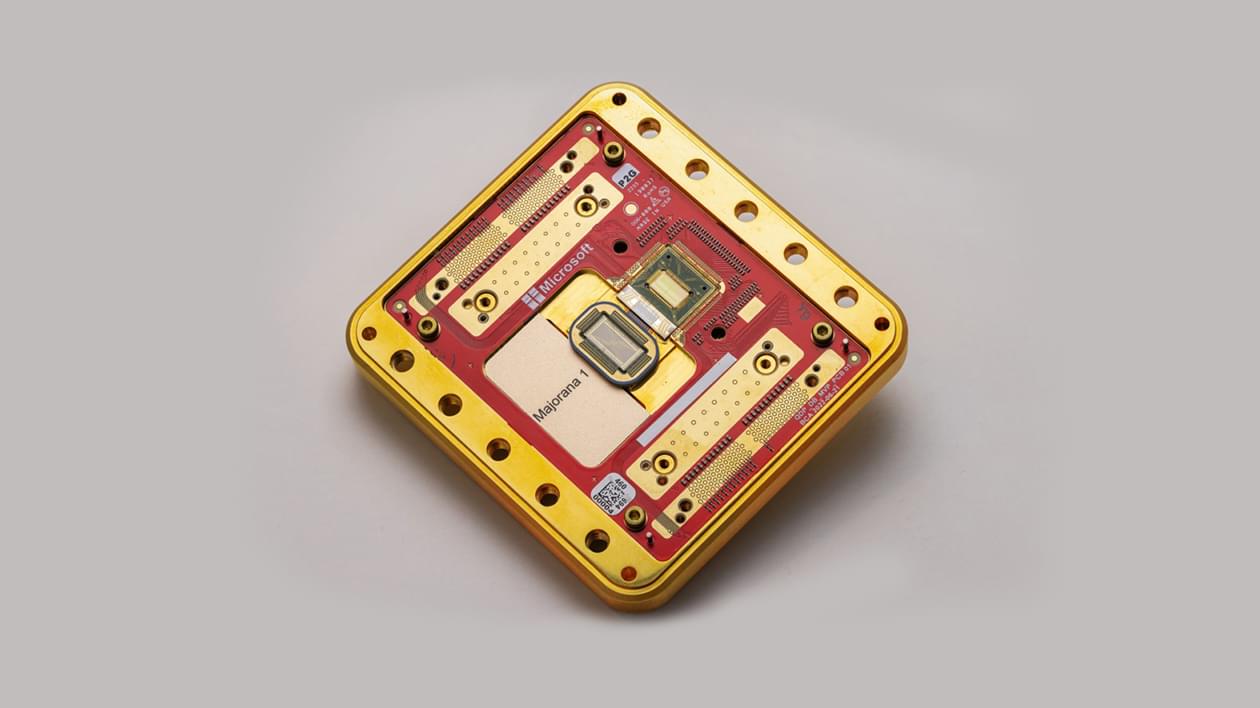
A UK-based firm has launched the world’s first quantum large language model (QLLM). Developed by SECQAI, the QLLM is claimed to be capable of shaping the future of AI.

The company integrated quantum computing into traditional AI models to improve efficiency and problem-solving.

According to a report, the development involved creating an in-house quantum simulator with gradient-based learning and a quantum attention mechanism.

Researchers Discover Simple Solution To Break Down “Forever” Chemicals

Per-and polyfluoroalkyl substances (PFAS) are industrial chemicals used in the manufacturing of thousands of products, including cosmetics, carpeting, non-stick cookware, stain-resistant fabrics, firefighting foams, food packaging, and waterproof clothing.

They’re everywhere — the environment, our food, and even in our bodies. Peer-reviewed studies have shown that exposure to PFAS may lead to decreased fertility, developmental delays in children, and increased risk of some cancers. And they take hundreds or even thousands of years to break down.

For roughly the past 10 years, researchers have been looking for ways to remove PFAS from the environment or at least degrade them into harmless, inorganic compounds.

Scientists Unveil Breakthrough Biosensor for Rare Earth Metal Detection

QUT researchers created a biosensor using engineered proteins to detect and extract rare earth elements, offering a potential solution to growing demand and environmental challenges.

QUT synthetic biologists have developed a prototype for an innovative biosensor capable of detecting rare earth elements, with the potential for modification to suit various other applications.

Lanthanides (Lns) are essential elements used in electronics, electric motors, and batteries. However, current extraction methods are costly, environmentally damaging, and unable to meet the growing demand.

Unveiling Cosmic Secrets: Hubble’s Astonishing Glimpse at Supernova SN 2022AAJN

The Hubble Space Telescope’s ability to capture such detailed images of SN 2022AAJN represents a milestone in astronomical exploration. With its unprecedented image quality, Hubble provides astronomers with the means to explore cosmic events in greater depth and detail. This capability marks the start of a new era in astronomical science, where advanced imaging combines with cutting-edge data analysis tools, like machine learning, to accelerate discoveries and deepening our understanding of cosmic events such as supernovae and dark energy.

For further exploration and updates in astronomical research, visit the following resource: NASA. Here, you can find more in-depth insights, latest news, and upcoming events related to astronomical advancements.

Breakthrough in Physics : Top Quarks Created for the First Time at CERN

In a major milestone for particle physics, scientists at CERN’s Large Hadron Collider (LHC) have successfully observed top quarks—one of the most elusive and short-lived fundamental particles—being produced in a laboratory setting. This historic discovery sheds light on the nature of matter and offers new insights into the early Universe, marking a turning point in our understanding of subatomic particles.

Quarks are the fundamental building blocks of protons and neutrons, which in turn make up the atoms forming all matter in the Universe. There are six known types of quarks: up, down, charm, strange, top, and bottom. Among these, the top quark stands out due to its heavy mass and extreme instability.

Unlike protons or neutrons, which persist indefinitely under normal conditions, the top quark decays almost instantly, with a lifetime of just 5×10^−25 seconds. This fleeting existence has made direct observation challenging, making the latest results from the LHC a remarkable breakthrough in experimental physics.

/* */