Greenland’s ice sheet, the planet’s second largest after Antarctica, is melting at an alarming rate, losing an estimated 90 cubic miles of ice a year. The melt water that ends up in the ocean is raising sea levels. And then there are the countless glaciers in the Alps, Andes, Himalayas, Rockies and Tibetan Plateau, all melting as our unceasing carbon dioxide emissions — a staggering 35 to 40 billion tons a year — trap more and more heat.
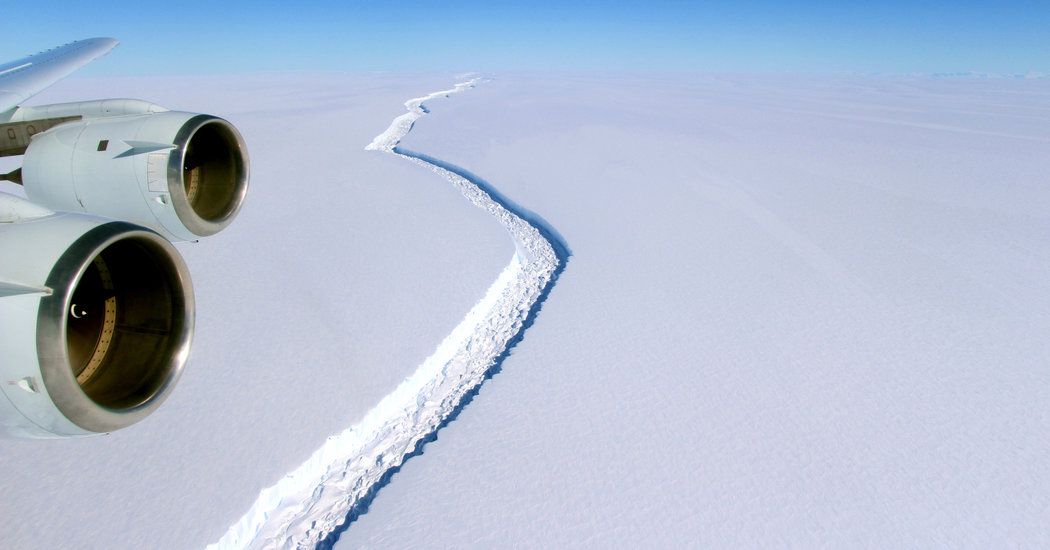
As the Trump administration dismantles the federal government’s efforts to respond to global warming, the natural world has come calling with a reminder: An iceberg the size of Delaware broke off Antarctica’s Larsen C ice shelf in recent days, yet another indication of the rapid change now occurring on the world’s iciest continent.
This is the third floating ice shelf in recent years in Antarctica’s Weddell Sea to fully or partly break up, the first two subverted by warming ocean waters and air temperatures. The Larsen A broke up in 1995. Seven years later, after months of unusually warm temperatures, the Rhode Island-size Larsen B shelf became riddled with meltwater ponds, then fell apart virtually overnight, shattering into millions of pieces. Now a 120-mile-long chunk of the Larsen C has calved, forming one of the largest icebergs ever observed.
The ice shelf has been floating in the frigid waters on the eastern side of the Antarctic Peninsula for at least 10,000 years. It was in the Weddell Sea that Ernest Shackleton’s ship, Endurance, became trapped in ice in 1915, forcing him and his crew to abandon ship in an epic battle for survival. Now a region that not long ago saw only snow and ice is experiencing — at least in its northern reaches — rain in summer.