Toggle light / dark theme

Get the latest international news and world events from around the world.

Log in for authorized contributors

Bacteria in frog skin may help fight fungal infections in humans

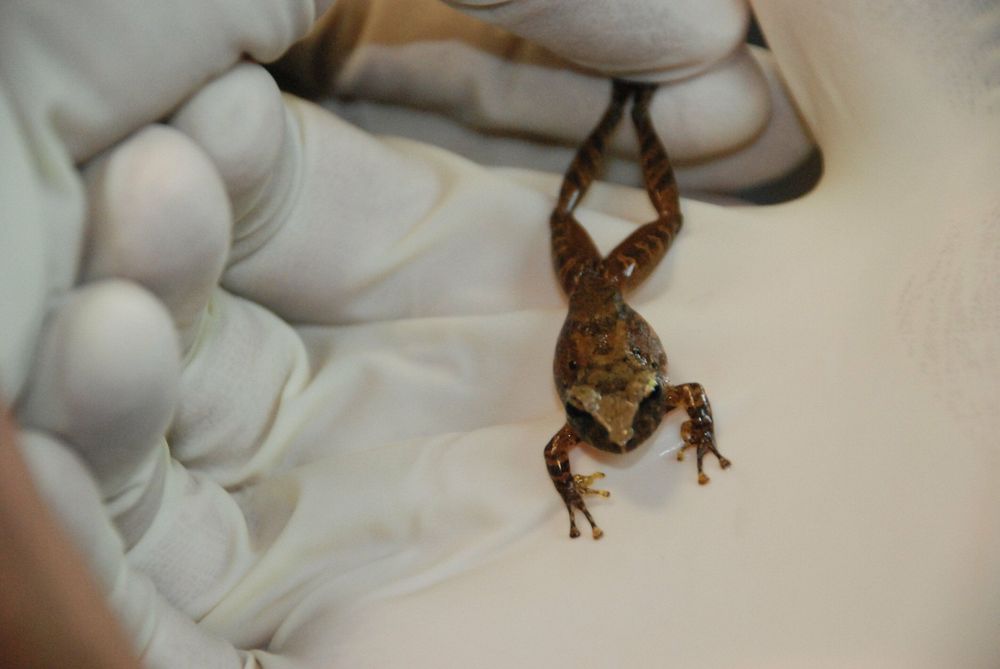
In the past few decades, a lethal disease has decimated populations of frogs and other amphibians worldwide, even driving some species to extinction. Yet other amphibians resisted the epidemic. Based on previous research, scientists at the INDICASAT AIP, Smithsonian and collaborating institutions knew that skin bacteria could be protecting the animals by producing fungi-fighting compounds. However, this time they decided to explore these as potential novel antifungal sources for the benefit of humans and amphibians.

“Amphibians inhabit humid places favoring the growth of , coexisting with these and other microorganisms in their environment, some of which can be pathogenic,” said Smithsonian scientist Roberto Ibáñez, one of the authors of the study published in Scientific Reports. “As a result of evolution, amphibians are expected to possess that can inhibit the growth of pathogenic and fungi.”

The team first travelled to the Chiriquí highlands in Panama, where the , responsible for the disease chytridiomycosis, has severely affected populations. They collected samples from seven to find out what kind of skin bacteria they harbored.

Doomsday Clock Is Staying at Two Minutes to Midnight This Year

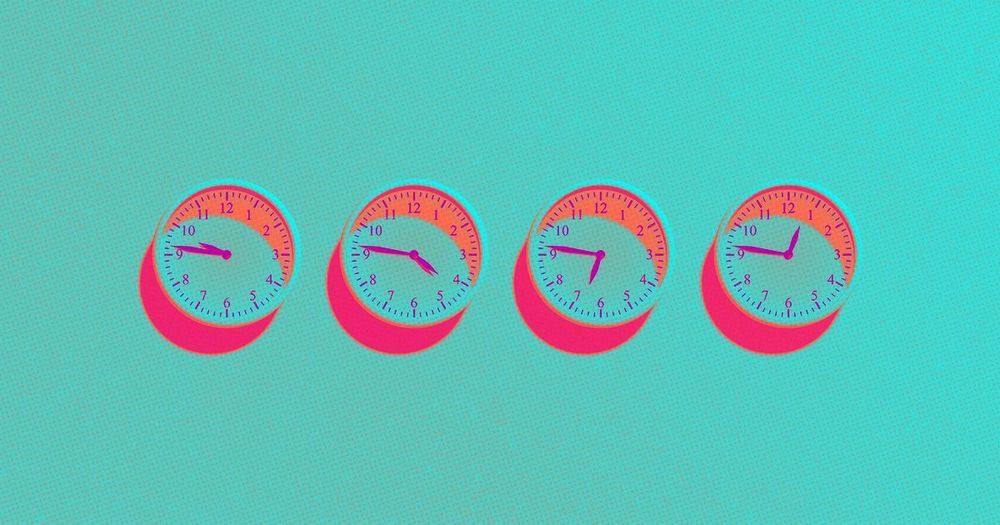
According to the Bulletin, we’ve done nothing in the past year to make the situation any less precarious — humanity still faces not one, but two “existential threats” in the form of nuclear weapons and climate change.

While the clock remains set at 11:58, the potential of either threat to destroy humanity has increased over the past 12 months, according to the Bulletin’s 2019 statement. We must do something to alter our path.

“Though unchanged from 2018, this setting should be taken not as a sign of stability but as a stark warning to leaders and citizens around the world,” the scientists wrote. “The current international security situation — what we call the ‘new abnormal’ — has extended over two years now… Th e longer world leaders and citizens carelessly inhabit this new and abnormal reality, the more likely the world is to experience catastrophe of historic proportions.”

School hosts students from across West Mids for physics day

A DAY of science challenges and investigations run by the Institute of Physics was hosted by Rugby High School.

Teams from 12 schools from across the West Midlands came to take part in Super Physics Day.

The teams of four used their knowledge of science to conduct three timed investigations including ‘Air Drop’, an RAF challenge to drop relief packages from a plane to the desired location.

Artificial muscles for robots could be made by spider silk, finds study

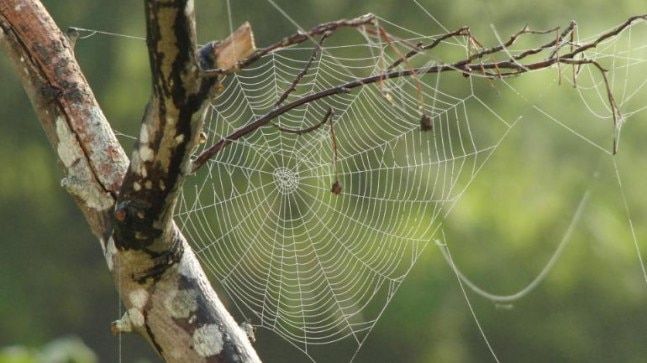
Spider silk, which is tougher than steel, could be used as artificial muscles for robots, research finds.

Spider silk, already known as one of the strongest materials for its weight, can be used to create artificial muscles or robotic actuators, scientists say.

According to researchers from the Massachusetts Institute of Technology (MIT) in the US, the resilient fibres respond very strongly to changes in humidity.


Watch SpaceX’s Crew Dragon Dock Autonomously With the ISS

It’s yet another historic moment for the Crew Dragon mission as the docking procedure is quite different this time when compared to previous Dragon missions: “Dragon was basically hovering under the ISS,” said Hans Koenigsmann, vice president of mission assurance at SpaceX during a pre-launch briefing on Thursday. “You can see how it moves back and forth and then the [Canadarm] takes it to a berthing bay.”

In contrast, the Crew Dragon’s docking system is active, he said: “it will plant itself in front of the station and use a docking port on its own, no docking arm required.”

Five days from now, Crew Dragon will undock and makes its long way back to Earth. This time around, it will splash down in the Atlantic Ocean — previous (cargo) Dragon missions have touched down in the Pacific.

Nitrogen-fixing trees ‘eat’ rocks, play pivotal role in forest health

By tapping nutrients from bedrock, red alder trees play a key role in healthy forest ecosystems, according to a new study.

The study published today in the journal Proceedings of the National Academy of Sciences.

Researchers from Oregon State University and the U.S. Geological Survey determined red alder, through its with -fixing bacteria, taps nutrients that are locked in bedrock, such as calcium and phosphorus. This process accelerates rock dissolution, releasing more mineral nutrients that allow plants and to grow.

Two instruments as concrete alternatives to social networks taking advantage of our privacy

Keeping up with Meta’s scandals could easily be a part-time job. All joking aside, the development of its worldwide network ramifications helped decrease communication distances between individuals with an average of three and a half degrees of separation between its members in 2016.

As a reminder, this network and its numerous variations, which certainly don’t need to be named anymor, have enabled us to:
· reach our friends, family members, business collaborators, or partners;
· create and join discussion groups;
· organize events;promote icons and content in very different formats.

The downside is that all of this became possible the moment we agreed to join the online club for free. The benefit of accessing brand new and efficient communication tools has left us with no choice but to keep returning to a highly segmented network (comprising both acquaintances and close friends). Such a network, which includes more and more of our “friends,” convinces us to never really read the terms and conditions (boring, right?).
Yet, they clearly involve the real-time sale of our personal profiles and predictable behaviors the moment we tick the boxes just to get in.

Using a free service is very different from being the unwitting provider of a value stream (via analytics data and advertising marketplaces). We act in good faith, as we would in real life, but often accept advertising as the only way to endorse our cultural preferences regarding this or that innovative trend (even when there is little innovation and mostly an unsustainable waste of our limited resources, namely time and attention).

Today, privacy advocates are also thrilled by the broad variety of initiatives enabling us to stop dissipating our shared moments between our interlocutors AND third parties interfering with our conversations. How do we progressively upgrade the software without requiring everybody (who feels like it could be a good idea, of course) to get on board? We’re facing quite a pickle here, perhaps not as hard as gluing back together large blocks of melting ice, but still not trivial when considered at scale.

Here are two technological ways to connect with your peers outside of the “normative ways”,
plus one relying on one of the oldest networks, email. Here are their respective slogans:
· Delta Chat — Chat over email with encryption,
like Telegram or messaging apps owned by Meta but without the tracking or central control — https://delta.chat/en/
· Element — Own your conversations — https://element.io
(Its underlying protocols are now used by the French state for some of its administration services)
· Signal — Privacy is the default — https://signal.org

I invite you to try them out, share your insights, and support their contributors. Social challenges won’t be solved solely by switching communication tools.
However, conversations remain conversations; the better the host, the more comfortable and safe we feel in preserving a discussion that is as open, honest, and respectful as possible.
Intel Unveils the Intel Neural Compute Stick 2 at Intel AI Devcon Beijing for Building Smarter AI Edge Devices

» Download all images (ZIP, 59 MB)

What’s New: Intel is hosting its first artificial intelligence (AI) developer conference in Beijing on Nov. 14 and 15. The company kicked off the event with the introduction of the Intel® Neural Compute Stick 2 (Intel NCS 2) designed to build smarter AI algorithms and for prototyping computer vision at the network edge. Based on the Intel® Movidius™ Myriad™ X vision processing unit (VPU) and supported by the Intel® Distribution of OpenVINO™ toolkit, the Intel NCS 2 affordably speeds the development of deep neural networks inference applications while delivering a performance boost over the previous generation neural compute stick. The Intel NCS 2 enables deep neural network testing, tuning and prototyping, so developers can go from prototyping into production leveraging a range of Intel vision accelerator form factors in real-world applications.

“The first-generation Intel Neural Compute Stick sparked an entire community of AI developers into action with a form factor and price that didn’t exist before. We’re excited to see what the community creates next with the strong enhancement to compute power enabled with the new Intel Neural Compute Stick 2.” –Naveen Rao, Intel corporate vice president and general manager of the AI Products Group

/* */