Toggle light / dark theme

Get the latest international news and world events from around the world.

Log in for authorized contributors

Ultra-efficient optical sensors can keep light circulating longer inside a microscopic chip

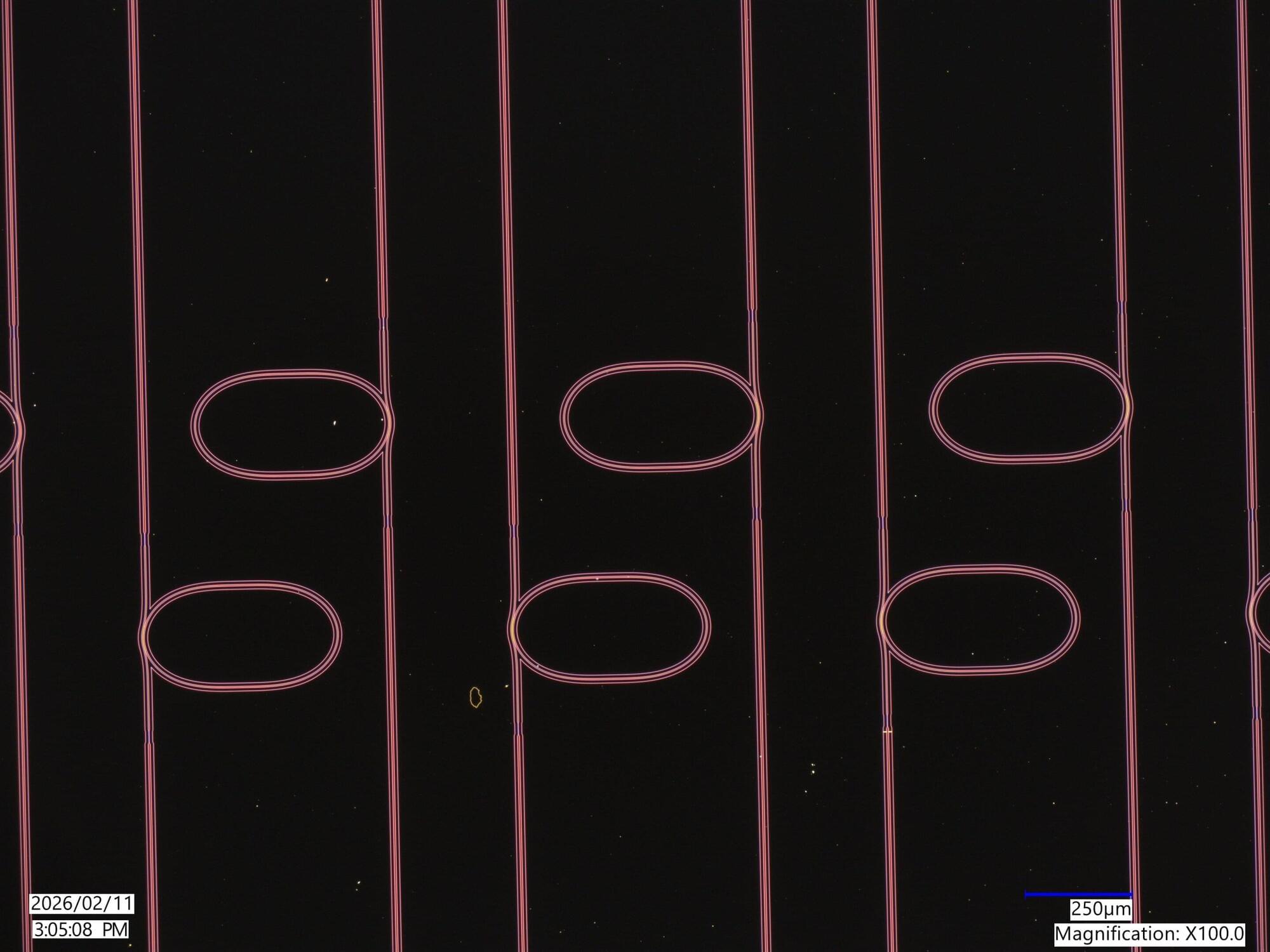
CU Boulder researchers have built high-performing optical microresonators, opening the door for new sensor technologies. At its simplest form, a microresonator is a tiny device that can trap light and build up its intensity. Once the intensity is high enough, researchers can perform unique light operations.

“Our work is about using less optical power with these resonators for future uses,” said Bright Lu, a fourth-year doctoral student in electrical and computer engineering and a lead author on the study. “One day these microresonators can be adapted for a wide range of sensors from navigation to identifying chemicals.”

For this endeavor, published in Applied Physics Letters, the team focused on “racetrack” resonators, named for their elongated shape that resembles a running track.
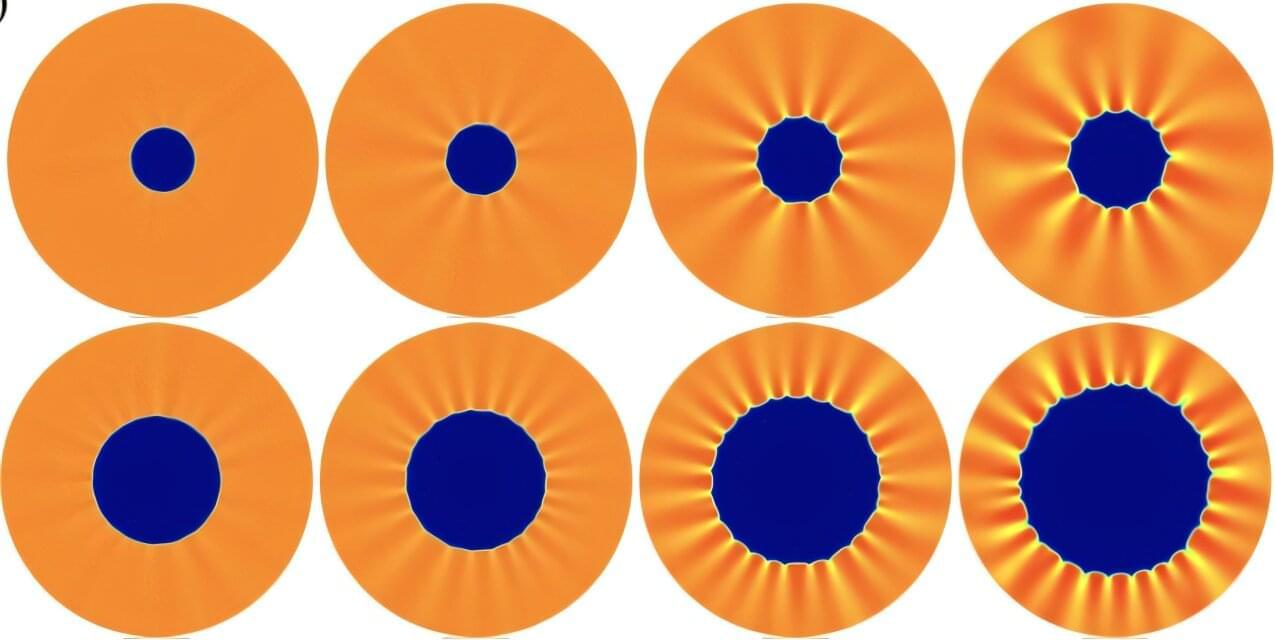

Sunray-like ripples emerge on a frozen reaction front

Researchers in Belgium have unveiled a striking chemical reaction in which ripples along a frozen reaction front resemble the rays of a shining star. Publishing their results in Physical Review Letters, Anne De Wit and colleagues at the Université Libre de Bruxelles have shed new light on the patterns that emerge in reaction–diffusion systems, offering fresh insight into how similar structures arise in the natural world.

From forest fires to the spread of infectious diseases, many natural processes involve a “front” forming between two distinct states: be they burned and unburned forest, infected and healthy individuals, or any number of other examples in which one state spreads by consuming another.

Such behavior is often described using reaction–diffusion systems, where local reactions are coupled to transport processes such as diffusion. In the lab, this mechanism can be recreated by injecting a chemical compound into the center of a circular chamber filled with another reactant. If the chemistry is autocatalytic —where one of the reaction products catalyzes its own formation—a circular reaction front will form around the injection point.

How to improve the performance of qubits: Super-fast fluctuation detection achieved

Using commercially available technology and innovative methods, researchers at NBI have pushed the limits of how fast you can detect changes in the sensitive quantum states in the qubit. Their work allows researchers to follow rapid changes in qubit performance that were previously invisible. The study is published in the journal Physical Review X.

The workhorse of any quantum-based application aimed at the coveted, but not yet fully realized quantum computer is the qubit. It is, however, a rather fragile workhorse.

Qubits, and quantum processors in general, are highly sensitive to their environment. Typically, the materials in which they are embedded contain microscopic defects that are still not fully understood. These defects can spatially fluctuate extremely fast, sometimes hundreds of times per second. As they fluctuate, the rate at which a qubit loses energy, and therefore useful quantum information, also changes.

/* */