Toggle light / dark theme

Get the latest international news and world events from around the world.

Log in for authorized contributors

Lifespan Extension Expert — AMA (pt.1)

Many people want to live longer than what is currently possible, but medical technology is not progressing fast enough. At Tomorrow Biostasis, we use the latest cryopreservation technology to medically preserve and protect you for as long as it is needed. When medical technology has solved the life extension and aging problems, you will be reanimated to enjoy an extended life.

On the YouTube channel of Tomorrow Biostasis you can find more information about the concepts of cryopreservation, cryonics, biostasis, vitrification, human revival, and more. We also provide you with practical information about signing up with Tomorrow Biostasis. Get ready to get an insight into the fascinating world of cryopreservation!

Visit our website at: https://bit.ly/35KsOIq.
Sign up for Biostasis: https://bit.ly/3hGb6sq.
Schedule a free Consultation: https://bit.ly/3IIwkll.

Also follow Tomorrow Biostasis on
Twitter: https://bit.ly/374bQ8z.
Instagram: https://bit.ly/3HFMpqr.
Facebook: https://bit.ly/3tt9bg3
LinkedIn: https://bit.ly/3hEtjX7
Reddit: https://bit.ly/3CeE8bY
Discord: / discord.

#TomorrowBiostasis #Cryopreservation #Cryonics.

Tomorrow Biostasis | © Copyright 2021–2022

Disruptive technologies are expected to transform the manufacturing of advanced semiconductors over the next five years

Gelonghui, July 13 | According to Science and Technology Daily, the surge in AI technology has driven strong demand for advanced chips, yet global chip supply remains constrained by the technology and production capacity of only a few companies. In a recent report, Forbes.com noted that as emerging technologies continue to rise, the global approach to manufacturing cutting-edge chips is expected to undergo a major transformation by 2030. Although extreme ultraviolet (EUV) lithography is currently dominant, it is not the only method for ‘drawing’ microscopic transistors onto silicon wafers. A new generation of forward-looking lithography technologies is poised to emerge, potentially replacing EUV lithography and reshaping how advanced chips are manufactured. Atomic lithography abandons ‘light’ and instead

This spray-on powder can stop life-threatening bleeding in 1 second

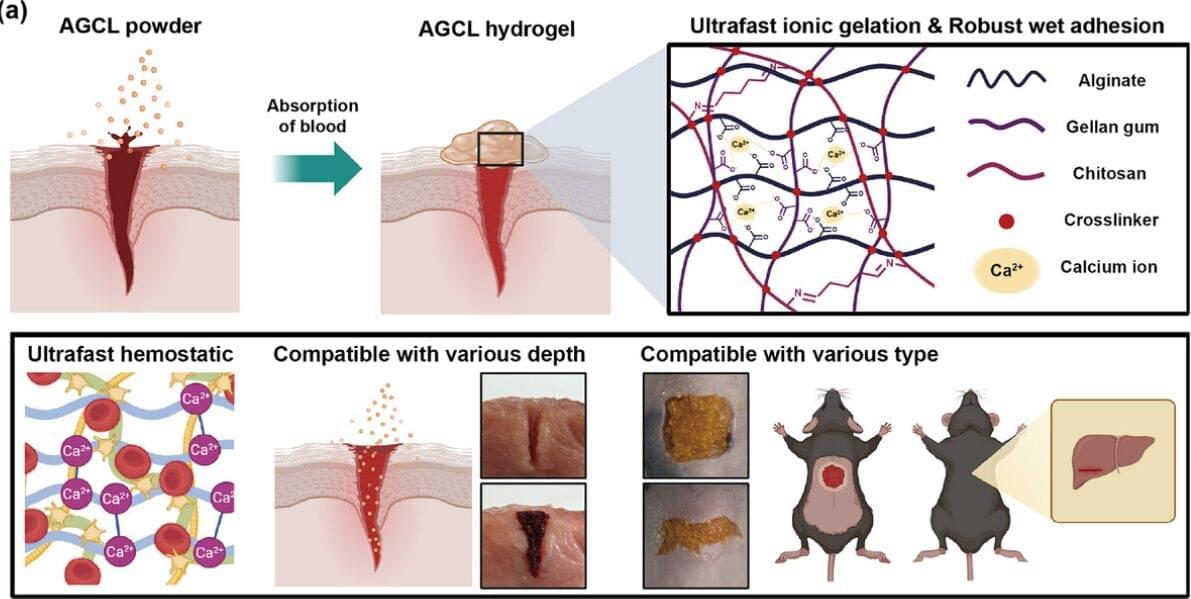
Excessive blood loss is the leading cause of death from combat injuries, making rapid bleeding control one of the biggest challenges in battlefield medicine. Researchers at KAIST, including an Army Major, have developed a next generation spray-on powder that can stop severe bleeding in about one second. The innovation could significantly improve survival for wounded soldiers while also offering broad potential for civilian emergency care.

The research team, led by Professor Steve Park of KAIST’s Department of Materials Science and Engineering and Professor Sangyong Jon of the Department of Biological Sciences, created a powder type hemostatic agent that quickly transforms into a strong hydrogel barrier when sprayed onto a wound.

Because an Army Major directly participated in the project, the technology was designed with real battlefield conditions in mind. The powder hardens almost instantly, remains stable during storage, and can be deployed quickly even in demanding environments such as combat zones and disaster areas.

Scientists map how the flu virus rewires the human cell from the inside

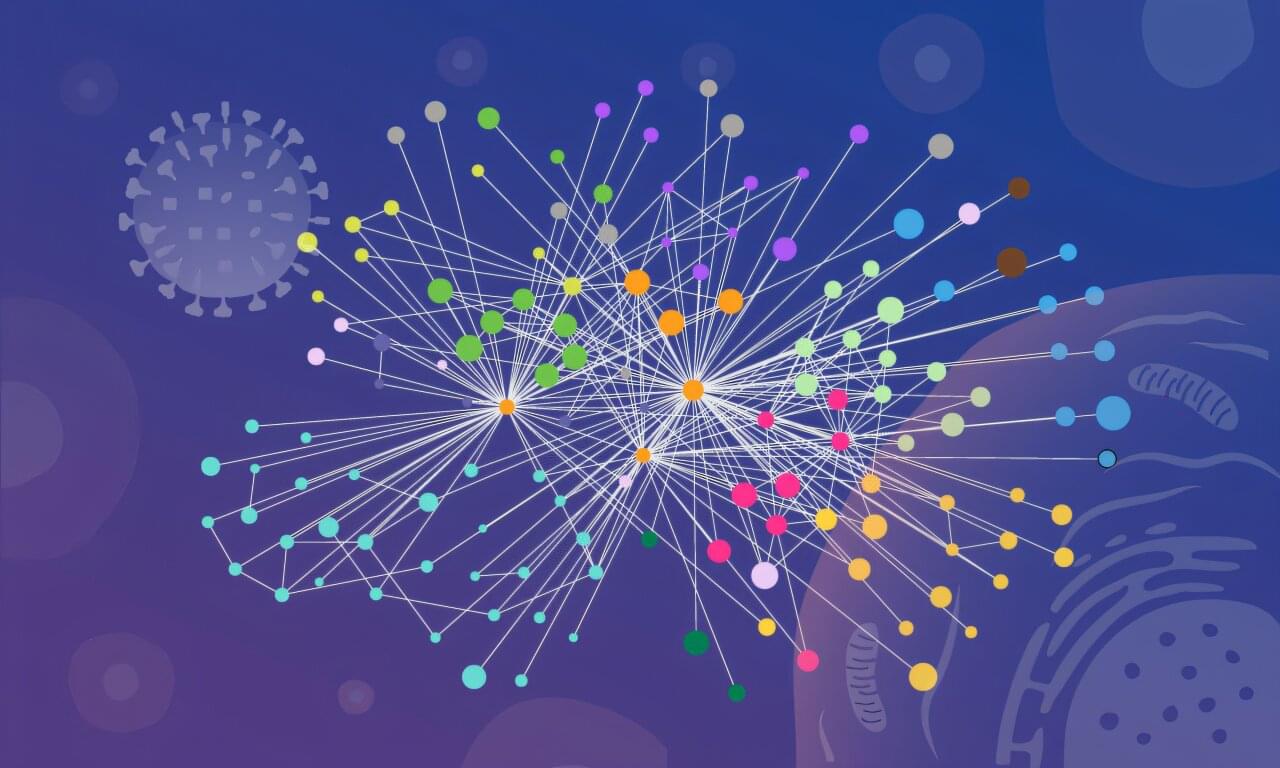
Researchers at EMBL Hamburg and collaborators at the Leibniz Research Institute for Molecular Pharmacology (FMP) have mapped how the influenza A virus rewires infected human cells in unprecedented detail. To do this, the researchers used a customized experimental workflow to directly observe how proteins interact inside intact infected cells.

Every year, seasonal influenza kills up to 650,000 people globally and causes serious illness for 3–5 million individuals. The influenza A virus, in particular, has been responsible for several pandemics, including the 1918 Spanish flu pandemic. When this virus infects cells, it releases its genetic material, called RNA, which contains blueprints for a handful of proteins. These proteins then spread throughout the host cell and repurpose its molecular machinery to make more viruses.

Scientists want to understand this process in detail because it would help in designing better drug therapies and vaccines against the flu virus. That’s why it’s crucial to figure out how proteins of the flu virus interact with proteins of host cells and subvert them to meet the virus’s needs. This is the first time scientists have mapped direct virus-host protein contacts at scale inside intact influenza-infected cells, with enough structural detail to model how the proteins fit together.

David Simpson on PostHuman, TransHuman and The God Killers

2011, I sat down with a young sci-fi writer from Vancouver named David Simpson.

Nobody was talking about AGI at dinner parties back then. There was no ChatGPT. No trillion-dollar AI race. Just a handful of us asking questions most people found eccentric at best.

David had written Post-Human and Trans-Human, novels imagining a world where artificial superintelligence remakes what it means to be human. He was also doing something the publishing industry considered heresy: ditching his traditional publisher to sell his books as 99-cent ebooks, betting that technology would flip the entire business on its head.

Fifteen years later, one of those bets looks obvious. The other one, well, you’ll have to watch the interview and judge for yourself.

We talked about why he writes, what science fiction owes to technology and what technology owes to science fiction, the authors who shaped him, and the meaning behind titles like The God Killers.

What strikes me most, rewatching it now, is not what we got right or wrong. It’s the questions themselves. The best #scifi doesn’t predict the future. It interrogates it. And the questions David was asking in 2011 about #AI, posthumanism, and human purpose are the same ones the entire world is scrambling to answer today.

/* */